

ITA1420
ITA1420
ITA1420
from
$526.00
Price in reward points: 526
- Catalog: ITA1420
- Gene/Protein: SMAD4
- Product Description: Immunotag™ Smad4 Antibody
-
Description
-
Specifications
Antibody Specification Datasheet 
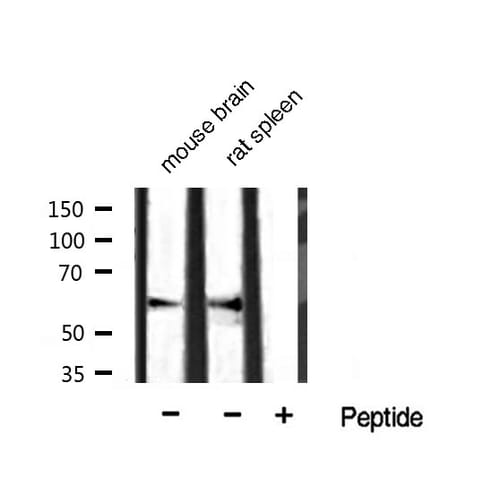
IMPORTANT NOTE This product is custom manufactured with a lead time of 3-4 weeks. Once in production, this item cannot be cancelled from an order and is not eligible for return. Target Protein Smad4 Clonality Polyclonal Storage/Stability -20°C/1 year Application WB,ELISA Recommended Dilution WB 1:500-1:2000 Concentration 1 mg/ml Reactive Species Human,Mouse,Rat Host Species Rabbit Immunogen A synthesized peptide derived from human Smad4 Specificity Smad4 Antibody detects endogenous levels of total Smad4 Purification The antiserum was purified by peptide affinity chromatography. Form Rabbit IgG in phosphate buffered saline , pH 7.4, 150mM NaCl, 0.02% sodium azide and 50% glycerol.Store at -20 °C.Stable for 12 months from date of receipt Gene Name SMAD4 Accession No. Q13485 Alternate Names (Small) Mothers Against Decapentaplegic; Deleted in Pancreatic Carcinoma 4; Deleted in Pancreatic Carcinoma; Deleted in pancreatic carcinoma locus 4; Deletion target in pancreatic carcinoma 4; DPC 4; DPC4; hSMAD4; JIP; MAD homolog 4; MAD mothers against decapentaplegic Drosophila homolog 4; MAD mothers against decapentaplegic homolog 4; MADH 4; MADH4; Med; Medea; Mothers against decapentaplegic homolog 4; Mothers against decapentaplegic, Drosophila, homolog of, 4; Mothers against DPP homolog 4; MYHRS; OTTHUMP00000163548; SMA- and MAD-related protein 4; SMAD 4; SMAD family member 4; SMAD mothers against DPP homolog 4; SMAD4; SMAD4_HUMAN; Description In muscle physiology, plays a central role in the balance between atrophy and hypertrophy. When recruited by MSTN, promotes atrophy response via phosphorylated SMAD2/4. MSTN decrease causes SMAD4 release and subsequent recruitment by the BMP pathway to promote hypertrophy via phosphorylated SMAD1/5/8. Acts synergistically with SMAD1 and YY1 in bone morphogenetic protein (BMP)-mediated cardiac-specific gene expression. Binds to SMAD binding elements (SBEs) (5'-GTCT/AGAC-3') within BMP response element (BMPRE) of cardiac activating regions (By similarity). Common SMAD (co-SMAD) is the coactivator and mediator of signal transduction by TGF-beta (transforming growth factor). Component of the heterotrimeric SMAD2/SMAD3-SMAD4 complex that forms in the nucleus and is required for the TGF-mediated signaling. Promotes binding of the SMAD2/SMAD4/FAST-1 complex to DNA and provides an activation function required for SMAD1 or SMAD2 to stimulate transcription. Component of the multimeric SMAD3/SMAD4/JUN/FOS complex which forms at the AP1 promoter site; required for synergistic transcriptional activity in response to TGF-beta. May act as a tumor suppressor. Positively regulates PDPK1 kinase activity by stimulating its dissociation from the 14-3-3 protein YWHAQ which acts as a negative regulator. Cell Pathway/ Category Primary Polyclonal Antibody Protein MW 65 kDa Usage For Research Use Only! Not for diagnostic or therapeutic procedures. - Reviews
| Antibody Specification | |
| Datasheet |
|
| IMPORTANT NOTE | This product is custom manufactured with a lead time of 3-4 weeks. Once in production, this item cannot be cancelled from an order and is not eligible for return. |
| Target Protein | Smad4 |
| Clonality | Polyclonal |
| Storage/Stability | -20°C/1 year |
| Application | WB,ELISA |
| Recommended Dilution | WB 1:500-1:2000 |
| Concentration | 1 mg/ml |
| Reactive Species | Human,Mouse,Rat |
| Host Species | Rabbit |
| Immunogen | A synthesized peptide derived from human Smad4 |
| Specificity | Smad4 Antibody detects endogenous levels of total Smad4 |
| Purification | The antiserum was purified by peptide affinity chromatography. |
| Form | Rabbit IgG in phosphate buffered saline , pH 7.4, 150mM NaCl, 0.02% sodium azide and 50% glycerol.Store at -20 °C.Stable for 12 months from date of receipt |
| Gene Name | SMAD4 |
| Accession No. | Q13485 |
| Alternate Names | (Small) Mothers Against Decapentaplegic; Deleted in Pancreatic Carcinoma 4; Deleted in Pancreatic Carcinoma; Deleted in pancreatic carcinoma locus 4; Deletion target in pancreatic carcinoma 4; DPC 4; DPC4; hSMAD4; JIP; MAD homolog 4; MAD mothers against decapentaplegic Drosophila homolog 4; MAD mothers against decapentaplegic homolog 4; MADH 4; MADH4; Med; Medea; Mothers against decapentaplegic homolog 4; Mothers against decapentaplegic, Drosophila, homolog of, 4; Mothers against DPP homolog 4; MYHRS; OTTHUMP00000163548; SMA- and MAD-related protein 4; SMAD 4; SMAD family member 4; SMAD mothers against DPP homolog 4; SMAD4; SMAD4_HUMAN; |
| Description | In muscle physiology, plays a central role in the balance between atrophy and hypertrophy. When recruited by MSTN, promotes atrophy response via phosphorylated SMAD2/4. MSTN decrease causes SMAD4 release and subsequent recruitment by the BMP pathway to promote hypertrophy via phosphorylated SMAD1/5/8. Acts synergistically with SMAD1 and YY1 in bone morphogenetic protein (BMP)-mediated cardiac-specific gene expression. Binds to SMAD binding elements (SBEs) (5'-GTCT/AGAC-3') within BMP response element (BMPRE) of cardiac activating regions (By similarity). Common SMAD (co-SMAD) is the coactivator and mediator of signal transduction by TGF-beta (transforming growth factor). Component of the heterotrimeric SMAD2/SMAD3-SMAD4 complex that forms in the nucleus and is required for the TGF-mediated signaling. Promotes binding of the SMAD2/SMAD4/FAST-1 complex to DNA and provides an activation function required for SMAD1 or SMAD2 to stimulate transcription. Component of the multimeric SMAD3/SMAD4/JUN/FOS complex which forms at the AP1 promoter site; required for synergistic transcriptional activity in response to TGF-beta. May act as a tumor suppressor. Positively regulates PDPK1 kinase activity by stimulating its dissociation from the 14-3-3 protein YWHAQ which acts as a negative regulator. |
| Cell Pathway/ Category | Primary Polyclonal Antibody |
| Protein MW | 65 kDa |
| Usage | For Research Use Only! Not for diagnostic or therapeutic procedures. |