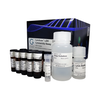
CytoScan™ LDH Cytotoxicity Assay

  • Protocol, Manual or Handbook Protocol MSDS, Material safety data sheet MSDS CofA, Certificate of Analysis Certificate of Analysis
  • Catalog
  • Description
  • Size
  • Price
  • Action
  • Shipping Condition
  • Files
  • 786-210
  • CytoScan™ LDH Cytotoxicity Assay

  • 1000 assays
  • $233.00
  •   Add to Cart
  • Ambient
  • Protocol, Manual or Handbook MSDS, Material safety data sheet

The CytoScan™ LDH Cytotoxicity Assay is a colorimetric method of assaying cellular cytotoxicity and is an alternative to 51Cr release cytotoxicity assays. The kit combines the advantages of reliability and simple evaluation, characteristic of radioisotope release assays, with the convenience of accuracy and avoidance of radioactivity. The CytoScan™ LDH Cytotoxicity Assay Kit can be used with different cell types for assaying cell mediated cytotoxicity as well as cytotoxicity mediated by chemicals and other test compounds.

The assay quantitatively measures the stable, cytosolic, lactate dehydrogenase (LDH) enzyme, which is released from damaged cells. The released LDH is measured with a coupled enzymatic reaction that results in the conversion of a tetrazolium salt (iodonitrotetrazolium (INT)) into a red color formazan (see figure) by diaphorase. The LDH activity is determined as NADH oxidation or INT reduction over a defined time period.

The resulting formazan absorbs maximally at 492nm and can be measured quantitatively at 490nm.

FEATURES

    • Quantitatively measures LDH release.
    • Colorimetric assay.
    • For cell free supernatants from cells in culture (adherent or suspension).

APPLICATIONS

    • For the detection of cell toxicity, death, viability or proliferation.
    • Ideal for high throughput screening.


References
    1. Haslam, G. et al (2005) Anal. Biochem. 336: 187
    2. Tarnawski, A. (2005) Biochem. Biophys. Res. Comm. 333: 207
    3. Round, J. L et al (2005) J. Exp. Med. 201: 419
    4. Bose, C. et al (2005) Am. J. Physiol. Gastr. L. 289: G926
    5. Chen, A. and Xu, J. (2005) Am. J. Physiol. Gastr. L. 288: G447

Newsletter

Enter email address to receive monthly newsletter and discounts


Technical Document