

ITA0888
ITA0888
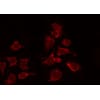
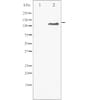
ITA0888
from
$526.00
Price in reward points: 526
- Catalog: ITA0888
- Gene/Protein: CSF1R
- Product Description: Immunotag™ Phospho-M-CSF Receptor (Tyr809) Antibody
-
Description
-
Specifications
Antibody Specification Datasheet 
IMPORTANT NOTE This product is custom manufactured with a lead time of 3-4 weeks. Once in production, this item cannot be cancelled from an order and is not eligible for return. Target Protein Phospho-M-CSF Receptor (Tyr809) Clonality Polyclonal Storage/Stability -20°C/1 year Application WB,IF/ICC,ELISA Recommended Dilution WB 1:500-1:2000, IF/ICC 1:100-1:500 Concentration 1 mg/ml Reactive Species Human,Mouse,Rat Host Species Rabbit Immunogen A synthesized peptide derived from human M-CSF Receptor around the phosphorylation site of Tyrosine 809 Specificity Phospho-M-CSF Receptor (Tyr809) Antibody detects endogenous levels of M-CSF Receptor only when phosphorylated at Tyrosine 809 Purification The antibody is from purified rabbit serum by affinity purification via sequential chromatography on phospho- and non-phospho-peptide affinity columns. Form Rabbit IgG in phosphate buffered saline , pH 7.4, 150mM NaCl, 0.02% sodium azide and 50% glycerol.Store at -20 °C.Stable for 12 months from date of receipt Gene Name CSF1R Accession No. P07333 Alternate Names C FMS; CD 115; CD115; CD115 antigen; CFMS; Colony stimulating factor 1 receptor; Colony stimulating factor I receptor; CSF 1 R; CSF 1R; CSF-1 receptor; CSF-1-R; CSF1 R; CSF1R; CSF1R_HUMAN; CSFR; EC 2.7.10.1; FIM 2; FIM2; FMS; FMS proto oncogene; FMS protooncogene; HDLS; M-CSF Receptor; M-CSF-R; Macrophage colony stimulating factor 1 receptor; Macrophage colony stimulating factor I receptor; Macrophage colony-stimulating factor 1 receptor; McDonough feline sarcoma viral (v fms) oncogene homolog; MCSFR; Oncogen FMS; Proto-oncogene c-Fms; V-FMS McDonough feline sarcoma viral oncogen homolog, formerly; Description Tyrosine-protein kinase that acts as cell-surface receptor for CSF1 and IL34 and plays an essential role in the regulation of survival, proliferation and differentiation of hematopoietic precursor cells, especially mononuclear phagocytes, such as macrophages and monocytes. Promotes the release of proinflammatory chemokines in response to IL34 and CSF1, and thereby plays an important role in innate immunity and in inflammatory processes. Plays an important role in the regulation of osteoclast proliferation and differentiation, the regulation of bone resorption, and is required for normal bone and tooth development. Required for normal male and female fertility, and for normal development of milk ducts and acinar structures in the mammary gland during pregnancy. Promotes reorganization of the actin cytoskeleton, regulates formation of membrane ruffles, cell adhesion and cell migration, and promotes cancer cell invasion. Activates several signaling pathways in response to ligand binding. Phosphorylates PIK3R1, PLCG2, GRB2, SLA2 and CBL. Activation of PLCG2 leads to the production of the cellular signaling molecules diacylglycerol and inositol 1,4,5-trisphosphate, that then lead to the activation of protein kinase C family members, especially PRKCD. Phosphorylation of PIK3R1, the regulatory subunit of phosphatidylinositol 3-kinase, leads to activation of the AKT1 signaling pathway. Activated CSF1R also mediates activation of the MAP kinases MAPK1/ERK2 and/or MAPK3/ERK1, and of the SRC family kinases SRC, FYN and YES1. Activated CSF1R transmits signals both via proteins that directly interact with phosphorylated tyrosine residues in its intracellular domain, or via adapter proteins, such as GRB2. Promotes activation of STAT family members STAT3, STAT5A and/or STAT5B. Promotes tyrosine phosphorylation of SHC1 and INPP5D/SHIP-1. Receptor signaling is down-regulated by protein phosphatases, such as INPP5D/SHIP-1, that dephosphorylate the receptor and its downstream effectors, and by rapid internalization of the activated receptor. Cell Pathway/ Category Primary Polyclonal Antibody Protein MW 108kDa Usage For Research Use Only! Not for diagnostic or therapeutic procedures. - Reviews
| Antibody Specification | |
| Datasheet |
|
| IMPORTANT NOTE | This product is custom manufactured with a lead time of 3-4 weeks. Once in production, this item cannot be cancelled from an order and is not eligible for return. |
| Target Protein | Phospho-M-CSF Receptor (Tyr809) |
| Clonality | Polyclonal |
| Storage/Stability | -20°C/1 year |
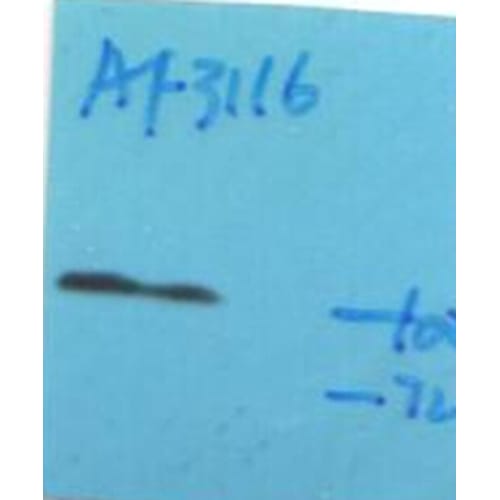
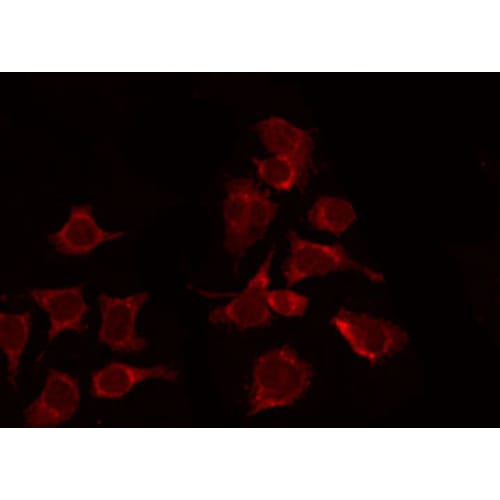
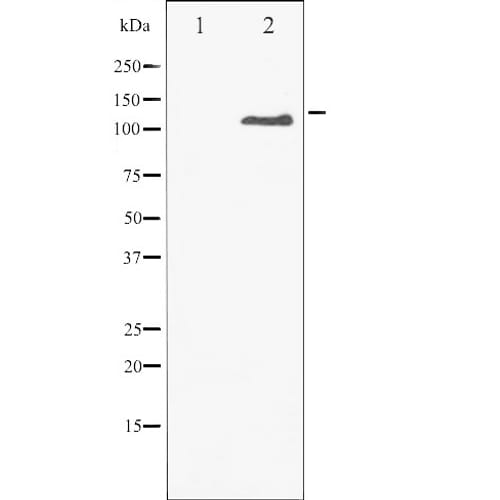
| Application | WB,IF/ICC,ELISA |
| Recommended Dilution | WB 1:500-1:2000, IF/ICC 1:100-1:500 |
| Concentration | 1 mg/ml |
| Reactive Species | Human,Mouse,Rat |
| Host Species | Rabbit |
| Immunogen | A synthesized peptide derived from human M-CSF Receptor around the phosphorylation site of Tyrosine 809 |
| Specificity | Phospho-M-CSF Receptor (Tyr809) Antibody detects endogenous levels of M-CSF Receptor only when phosphorylated at Tyrosine 809 |
| Purification | The antibody is from purified rabbit serum by affinity purification via sequential chromatography on phospho- and non-phospho-peptide affinity columns. |
| Form | Rabbit IgG in phosphate buffered saline , pH 7.4, 150mM NaCl, 0.02% sodium azide and 50% glycerol.Store at -20 °C.Stable for 12 months from date of receipt |
| Gene Name | CSF1R |
| Accession No. | P07333 |
| Alternate Names | C FMS; CD 115; CD115; CD115 antigen; CFMS; Colony stimulating factor 1 receptor; Colony stimulating factor I receptor; CSF 1 R; CSF 1R; CSF-1 receptor; CSF-1-R; CSF1 R; CSF1R; CSF1R_HUMAN; CSFR; EC 2.7.10.1; FIM 2; FIM2; FMS; FMS proto oncogene; FMS protooncogene; HDLS; M-CSF Receptor; M-CSF-R; Macrophage colony stimulating factor 1 receptor; Macrophage colony stimulating factor I receptor; Macrophage colony-stimulating factor 1 receptor; McDonough feline sarcoma viral (v fms) oncogene homolog; MCSFR; Oncogen FMS; Proto-oncogene c-Fms; V-FMS McDonough feline sarcoma viral oncogen homolog, formerly; |
| Description | Tyrosine-protein kinase that acts as cell-surface receptor for CSF1 and IL34 and plays an essential role in the regulation of survival, proliferation and differentiation of hematopoietic precursor cells, especially mononuclear phagocytes, such as macrophages and monocytes. Promotes the release of proinflammatory chemokines in response to IL34 and CSF1, and thereby plays an important role in innate immunity and in inflammatory processes. Plays an important role in the regulation of osteoclast proliferation and differentiation, the regulation of bone resorption, and is required for normal bone and tooth development. Required for normal male and female fertility, and for normal development of milk ducts and acinar structures in the mammary gland during pregnancy. Promotes reorganization of the actin cytoskeleton, regulates formation of membrane ruffles, cell adhesion and cell migration, and promotes cancer cell invasion. Activates several signaling pathways in response to ligand binding. Phosphorylates PIK3R1, PLCG2, GRB2, SLA2 and CBL. Activation of PLCG2 leads to the production of the cellular signaling molecules diacylglycerol and inositol 1,4,5-trisphosphate, that then lead to the activation of protein kinase C family members, especially PRKCD. Phosphorylation of PIK3R1, the regulatory subunit of phosphatidylinositol 3-kinase, leads to activation of the AKT1 signaling pathway. Activated CSF1R also mediates activation of the MAP kinases MAPK1/ERK2 and/or MAPK3/ERK1, and of the SRC family kinases SRC, FYN and YES1. Activated CSF1R transmits signals both via proteins that directly interact with phosphorylated tyrosine residues in its intracellular domain, or via adapter proteins, such as GRB2. Promotes activation of STAT family members STAT3, STAT5A and/or STAT5B. Promotes tyrosine phosphorylation of SHC1 and INPP5D/SHIP-1. Receptor signaling is down-regulated by protein phosphatases, such as INPP5D/SHIP-1, that dephosphorylate the receptor and its downstream effectors, and by rapid internalization of the activated receptor. |
| Cell Pathway/ Category | Primary Polyclonal Antibody |
| Protein MW | 108kDa |
| Usage | For Research Use Only! Not for diagnostic or therapeutic procedures. |