

ITA0992
ITA0992
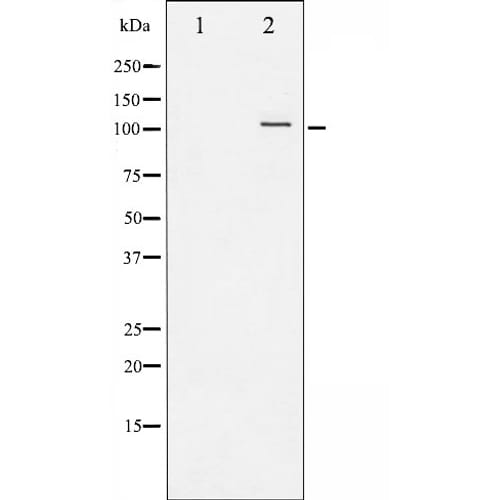
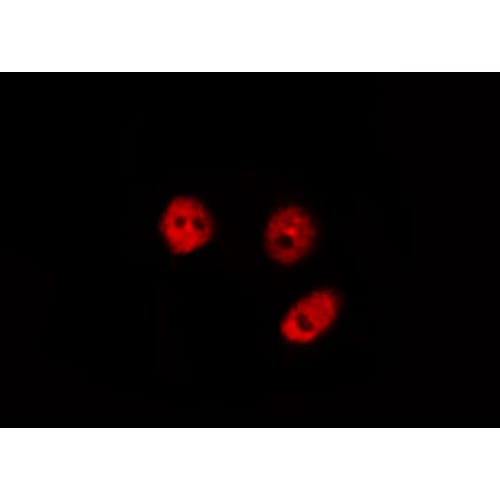
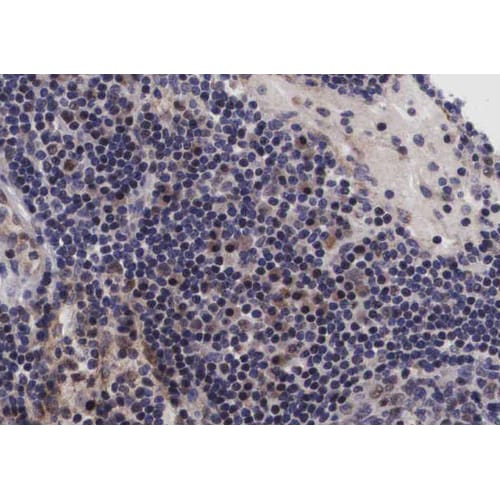
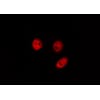
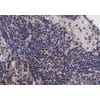
ITA0992
from
$526.00
Price in reward points: 526
- Catalog: ITA0992
- Gene/Protein: NFKB1
- Product Description: Immunotag™ Phospho-NF kappaB p105/p50 (Ser907) Antibody
-
Description
-
Specifications
Antibody Specification Datasheet 
IMPORTANT NOTE This product is custom manufactured with a lead time of 3-4 weeks. Once in production, this item cannot be cancelled from an order and is not eligible for return. Target Protein Phospho-NF kappaB p105/p50 (Ser907) Clonality Polyclonal Storage/Stability -20°C/1 year Application WB,IHC,IF/ICC,IP,ELISA Recommended Dilution WB 1:500-1:2000 IHC 1:50-1:200 IP, IF/ICC 1:100-1:500 Concentration 1 mg/ml Reactive Species Human Host Species Rabbit Immunogen A synthesized peptide derived from human NF- kappaB p105/p50 around the phosphorylation site of Serine 907 Specificity Phospho-NF- kappaB p105/p50 (Ser907) Antibody detects endogenous levels of NF- kappaB p105/p50 only when phosphorylated at Serine 907 Purification The antibody is from purified rabbit serum by affinity purification via sequential chromatography on phospho- and non-phospho-peptide affinity columns. Form Rabbit IgG in phosphate buffered saline , pH 7.4, 150mM NaCl, 0.02% sodium azide and 50% glycerol.Store at -20 °C.Stable for 12 months from date of receipt Gene Name NFKB1 Accession No. P19838 Alternate Names DKFZp686C01211; DNA binding factor KBF1; DNA binding factor KBF1 EBP1; DNA-binding factor KBF1; EBP 1; EBP-1; EBP1; KBF1; MGC54151; NF kappa B; NF kappaB; NF kappabeta; NF kB1; NFkappaB; NFKB 1; NFKB p105; NFKB p50; Nfkb1; NFKB1_HUMAN; Nuclear factor kappa B DNA binding subunit; Nuclear factor kappa-B, subunit 1; Nuclear factor NF kappa B p105 subunit; Nuclear factor NF kappa B p50 subunit; Nuclear factor NF-kappa-B p50 subunit; Nuclear factor of kappa light chain gene enhancer in B cells 1; Nuclear factor of kappa light polypeptide gene enhancer in B cells 1; Nuclear factor of kappa light polypeptide gene enhancer in B-cells 1; p105; p50; p84/NF-kappa-B1 p98; Transcription factor NFKB1; Description NF-kappa-B is a pleiotropic transcription factor present in almost all cell types and is the endpoint of a series of signal transduction events that are initiated by a vast array of stimuli related to many biological processes such as inflammation, immunity, differentiation, cell growth, tumorigenesis and apoptosis. NF-kappa-B is a homo- or heterodimeric complex formed by the Rel-like domain-containing proteins RELA/p65, RELB, NFKB1/p105, NFKB1/p50, REL and NFKB2/p52 and the heterodimeric p65-p50 complex appears to be most abundant one. The dimers bind at kappa-B sites in the DNA of their target genes and the individual dimers have distinct preferences for different kappa-B sites that they can bind with distinguishable affinity and specificity. Different dimer combinations act as transcriptional activators or repressors, respectively. NF-kappa-B is controlled by various mechanisms of post-translational modification and subcellular compartmentalization as well as by interactions with other cofactors or corepressors. NF-kappa-B complexes are held in the cytoplasm in an inactive state complexed with members of the NF-kappa-B inhibitor (I-kappa-B) family. In a conventional activation pathway, I-kappa-B is phosphorylated by I-kappa-B kinases (IKKs) in response to different activators, subsequently degraded thus liberating the active NF-kappa-B complex which translocates to the nucleus. NF-kappa-B heterodimeric p65-p50 and RelB-p50 complexes are transcriptional activators. The NF-kappa-B p50-p50 homodimer is a transcriptional repressor, but can act as a transcriptional activator when associated with BCL3. NFKB1 appears to have dual functions such as cytoplasmic retention of attached NF-kappa-B proteins by p105 and generation of p50 by a cotranslational processing. The proteasome-mediated process ensures the production of both p50 and p105 and preserves their independent function, although processing of NFKB1/p105 also appears to occur post-translationally. p50 binds to the kappa-B consensus sequence 5'-GGRNNYYCC-3', located in the enhancer region of genes involved in immune response and acute phase reactions. In a complex with MAP3K8, NFKB1/p105 represses MAP3K8-induced MAPK signaling; active MAP3K8 is released by proteasome-dependent degradation of NFKB1/p105. Cell Pathway/ Category Primary Polyclonal Antibody Protein MW 105kDa Usage For Research Use Only! Not for diagnostic or therapeutic procedures. - Reviews
| Antibody Specification | |
| Datasheet |
|
| IMPORTANT NOTE | This product is custom manufactured with a lead time of 3-4 weeks. Once in production, this item cannot be cancelled from an order and is not eligible for return. |
| Target Protein | Phospho-NF kappaB p105/p50 (Ser907) |
| Clonality | Polyclonal |
| Storage/Stability | -20°C/1 year |
| Application | WB,IHC,IF/ICC,IP,ELISA |
| Recommended Dilution | WB 1:500-1:2000 IHC 1:50-1:200 IP, IF/ICC 1:100-1:500 |
| Concentration | 1 mg/ml |
| Reactive Species | Human |
| Host Species | Rabbit |
| Immunogen | A synthesized peptide derived from human NF- kappaB p105/p50 around the phosphorylation site of Serine 907 |
| Specificity | Phospho-NF- kappaB p105/p50 (Ser907) Antibody detects endogenous levels of NF- kappaB p105/p50 only when phosphorylated at Serine 907 |
| Purification | The antibody is from purified rabbit serum by affinity purification via sequential chromatography on phospho- and non-phospho-peptide affinity columns. |
| Form | Rabbit IgG in phosphate buffered saline , pH 7.4, 150mM NaCl, 0.02% sodium azide and 50% glycerol.Store at -20 °C.Stable for 12 months from date of receipt |
| Gene Name | NFKB1 |
| Accession No. | P19838 |
| Alternate Names | DKFZp686C01211; DNA binding factor KBF1; DNA binding factor KBF1 EBP1; DNA-binding factor KBF1; EBP 1; EBP-1; EBP1; KBF1; MGC54151; NF kappa B; NF kappaB; NF kappabeta; NF kB1; NFkappaB; NFKB 1; NFKB p105; NFKB p50; Nfkb1; NFKB1_HUMAN; Nuclear factor kappa B DNA binding subunit; Nuclear factor kappa-B, subunit 1; Nuclear factor NF kappa B p105 subunit; Nuclear factor NF kappa B p50 subunit; Nuclear factor NF-kappa-B p50 subunit; Nuclear factor of kappa light chain gene enhancer in B cells 1; Nuclear factor of kappa light polypeptide gene enhancer in B cells 1; Nuclear factor of kappa light polypeptide gene enhancer in B-cells 1; p105; p50; p84/NF-kappa-B1 p98; Transcription factor NFKB1; |
| Description | NF-kappa-B is a pleiotropic transcription factor present in almost all cell types and is the endpoint of a series of signal transduction events that are initiated by a vast array of stimuli related to many biological processes such as inflammation, immunity, differentiation, cell growth, tumorigenesis and apoptosis. NF-kappa-B is a homo- or heterodimeric complex formed by the Rel-like domain-containing proteins RELA/p65, RELB, NFKB1/p105, NFKB1/p50, REL and NFKB2/p52 and the heterodimeric p65-p50 complex appears to be most abundant one. The dimers bind at kappa-B sites in the DNA of their target genes and the individual dimers have distinct preferences for different kappa-B sites that they can bind with distinguishable affinity and specificity. Different dimer combinations act as transcriptional activators or repressors, respectively. NF-kappa-B is controlled by various mechanisms of post-translational modification and subcellular compartmentalization as well as by interactions with other cofactors or corepressors. NF-kappa-B complexes are held in the cytoplasm in an inactive state complexed with members of the NF-kappa-B inhibitor (I-kappa-B) family. In a conventional activation pathway, I-kappa-B is phosphorylated by I-kappa-B kinases (IKKs) in response to different activators, subsequently degraded thus liberating the active NF-kappa-B complex which translocates to the nucleus. NF-kappa-B heterodimeric p65-p50 and RelB-p50 complexes are transcriptional activators. The NF-kappa-B p50-p50 homodimer is a transcriptional repressor, but can act as a transcriptional activator when associated with BCL3. NFKB1 appears to have dual functions such as cytoplasmic retention of attached NF-kappa-B proteins by p105 and generation of p50 by a cotranslational processing. The proteasome-mediated process ensures the production of both p50 and p105 and preserves their independent function, although processing of NFKB1/p105 also appears to occur post-translationally. p50 binds to the kappa-B consensus sequence 5'-GGRNNYYCC-3', located in the enhancer region of genes involved in immune response and acute phase reactions. In a complex with MAP3K8, NFKB1/p105 represses MAP3K8-induced MAPK signaling; active MAP3K8 is released by proteasome-dependent degradation of NFKB1/p105. |
| Cell Pathway/ Category | Primary Polyclonal Antibody |
| Protein MW | 105kDa |
| Usage | For Research Use Only! Not for diagnostic or therapeutic procedures. |