

ITA1705
ITA1705
ITA1705
from
$526.00
Price in reward points: 526
- Catalog: ITA1705
- Gene/Protein: ESR1
- Product Description: Immunotag™ Estrogen Receptor-alpha Antibody
-
Description
-
Specifications
Antibody Specification Datasheet 
IMPORTANT NOTE This product is custom manufactured with a lead time of 3-4 weeks. Once in production, this item cannot be cancelled from an order and is not eligible for return. Target Protein Estrogen Receptor-alpha Clonality Polyclonal Storage/Stability -20°C/1 year Application WB,IHC,IF/ICC,ELISA Recommended Dilution WB 1:500-1:2000 IHC 1:50-1:200 IF/ICC 1:100-1:500 Concentration 1 mg/ml Reactive Species Human,Mouse,Rat Host Species Rabbit Immunogen A synthesized peptide derived from human Estrogen Receptor-alpha Specificity Estrogen Receptor-alpha Antibody detects endogenous levels of total Estrogen Receptor-alpha Purification The antiserum was purified by peptide affinity chromatography. Form Rabbit IgG in phosphate buffered saline , pH 7.4, 150mM NaCl, 0.02% sodium azide and 50% glycerol.Store at -20 °C.Stable for 12 months from date of receipt Gene Name ESR1 Accession No. P03372 Alternate Names DKFZp686N23123; ER alpha; ER; ER-alpha; Era; ESR; ESR1; ESR1_HUMAN; ESRA; Estradiol receptor; Estrogen nuclear receptor alpha; Estrogen receptor 1; Estrogen receptor alpha 3*,4,5,6,7*/822 isoform; Estrogen receptor alpha; Estrogen receptor alpha delta 3*,4,5,6,7*,8*/941 isoform; Estrogen receptor alpha delta 3*,4,5,6,7*/819 2 isoform; Estrogen receptor alpha delta 4 +49 isoform; Estrogen receptor alpha delta 4*,5,6,7*/654 isoform; Estrogen receptor alpha delta 4*,5,6,7,8*/901 isoform; Estrogen receptor alpha E1 E2 1 2; Estrogen receptor alpha E1 N2 E2 1 2; Estrogen receptor; ESTRR; NR3A1; Nuclear receptor subfamily 3 group A member 1; Description Nuclear hormone receptor. The steroid hormones and their receptors are involved in the regulation of eukaryotic gene expression and affect cellular proliferation and differentiation in target tissues. Ligand-dependent nuclear transactivation involves either direct homodimer binding to a palindromic estrogen response element (ERE) sequence or association with other DNA-binding transcription factors, such as AP-1/c-Jun, c-Fos, ATF-2, Sp1 and Sp3, to mediate ERE-independent signaling. Ligand binding induces a conformational change allowing subsequent or combinatorial association with multiprotein coactivator complexes through LXXLL motifs of their respective components. Mutual transrepression occurs between the estrogen receptor (ER) and NF-kappa-B in a cell-type specific manner. Decreases NF-kappa-B DNA-binding activity and inhibits NF-kappa-B-mediated transcription from the IL6 promoter and displace RELA/p65 and associated coregulators from the promoter. Recruited to the NF-kappa-B response element of the CCL2 and IL8 promoters and can displace CREBBP. Present with NF-kappa-B components RELA/p65 and NFKB1/p50 on ERE sequences. Can also act synergistically with NF-kappa-B to activate transcription involving respective recruitment adjacent response elements; the function involves CREBBP. Can activate the transcriptional activity of TFF1. Also mediates membrane-initiated estrogen signaling involving various kinase cascades. Isoform 3 is involved in activation of NOS3 and endothelial nitric oxide production. Isoforms lacking one or several functional domains are thought to modulate transcriptional activity by competitive ligand or DNA binding and/or heterodimerization with the full-length receptor. Essential for MTA1-mediated transcriptional regulation of BRCA1 and BCAS3. Isoform 3 can bind to ERE and inhibit isoform 1. Cell Pathway/ Category Primary Polyclonal Antibody Protein MW 66kDa Usage For Research Use Only! Not for diagnostic or therapeutic procedures. - Reviews
| Antibody Specification | |
| Datasheet |
|
| IMPORTANT NOTE | This product is custom manufactured with a lead time of 3-4 weeks. Once in production, this item cannot be cancelled from an order and is not eligible for return. |
| Target Protein | Estrogen Receptor-alpha |
| Clonality | Polyclonal |
| Storage/Stability | -20°C/1 year |
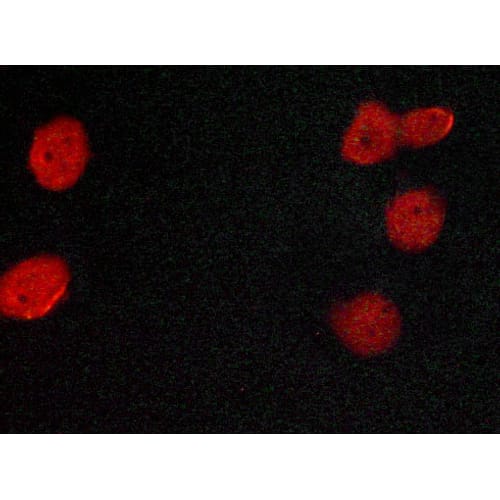
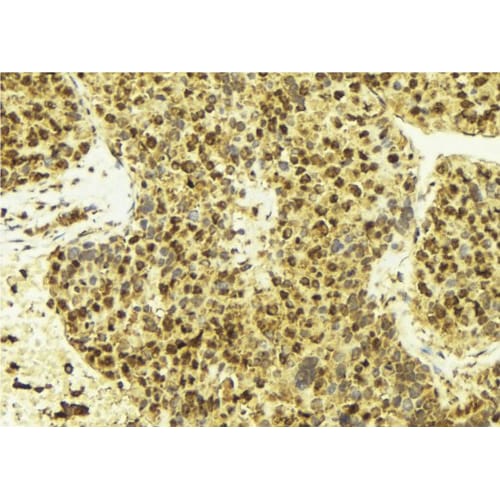
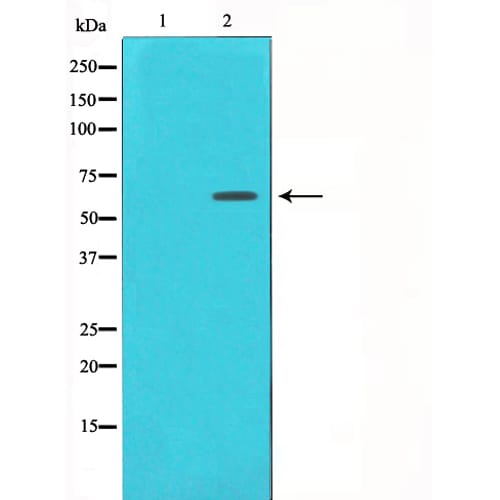
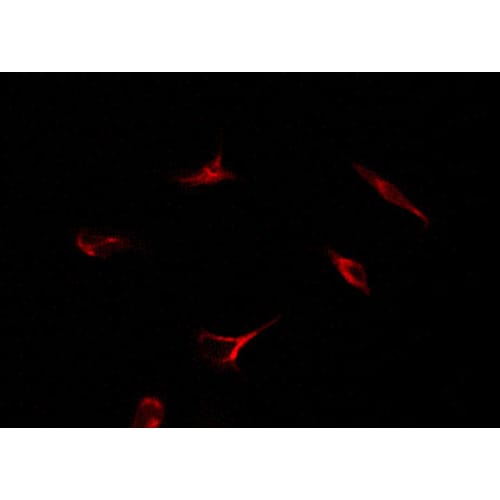
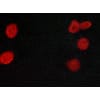
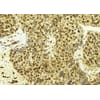
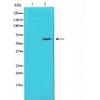
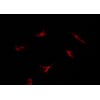
| Application | WB,IHC,IF/ICC,ELISA |
| Recommended Dilution | WB 1:500-1:2000 IHC 1:50-1:200 IF/ICC 1:100-1:500 |
| Concentration | 1 mg/ml |
| Reactive Species | Human,Mouse,Rat |
| Host Species | Rabbit |
| Immunogen | A synthesized peptide derived from human Estrogen Receptor-alpha |
| Specificity | Estrogen Receptor-alpha Antibody detects endogenous levels of total Estrogen Receptor-alpha |
| Purification | The antiserum was purified by peptide affinity chromatography. |
| Form | Rabbit IgG in phosphate buffered saline , pH 7.4, 150mM NaCl, 0.02% sodium azide and 50% glycerol.Store at -20 °C.Stable for 12 months from date of receipt |
| Gene Name | ESR1 |
| Accession No. | P03372 |
| Alternate Names | DKFZp686N23123; ER alpha; ER; ER-alpha; Era; ESR; ESR1; ESR1_HUMAN; ESRA; Estradiol receptor; Estrogen nuclear receptor alpha; Estrogen receptor 1; Estrogen receptor alpha 3*,4,5,6,7*/822 isoform; Estrogen receptor alpha; Estrogen receptor alpha delta 3*,4,5,6,7*,8*/941 isoform; Estrogen receptor alpha delta 3*,4,5,6,7*/819 2 isoform; Estrogen receptor alpha delta 4 +49 isoform; Estrogen receptor alpha delta 4*,5,6,7*/654 isoform; Estrogen receptor alpha delta 4*,5,6,7,8*/901 isoform; Estrogen receptor alpha E1 E2 1 2; Estrogen receptor alpha E1 N2 E2 1 2; Estrogen receptor; ESTRR; NR3A1; Nuclear receptor subfamily 3 group A member 1; |
| Description | Nuclear hormone receptor. The steroid hormones and their receptors are involved in the regulation of eukaryotic gene expression and affect cellular proliferation and differentiation in target tissues. Ligand-dependent nuclear transactivation involves either direct homodimer binding to a palindromic estrogen response element (ERE) sequence or association with other DNA-binding transcription factors, such as AP-1/c-Jun, c-Fos, ATF-2, Sp1 and Sp3, to mediate ERE-independent signaling. Ligand binding induces a conformational change allowing subsequent or combinatorial association with multiprotein coactivator complexes through LXXLL motifs of their respective components. Mutual transrepression occurs between the estrogen receptor (ER) and NF-kappa-B in a cell-type specific manner. Decreases NF-kappa-B DNA-binding activity and inhibits NF-kappa-B-mediated transcription from the IL6 promoter and displace RELA/p65 and associated coregulators from the promoter. Recruited to the NF-kappa-B response element of the CCL2 and IL8 promoters and can displace CREBBP. Present with NF-kappa-B components RELA/p65 and NFKB1/p50 on ERE sequences. Can also act synergistically with NF-kappa-B to activate transcription involving respective recruitment adjacent response elements; the function involves CREBBP. Can activate the transcriptional activity of TFF1. Also mediates membrane-initiated estrogen signaling involving various kinase cascades. Isoform 3 is involved in activation of NOS3 and endothelial nitric oxide production. Isoforms lacking one or several functional domains are thought to modulate transcriptional activity by competitive ligand or DNA binding and/or heterodimerization with the full-length receptor. Essential for MTA1-mediated transcriptional regulation of BRCA1 and BCAS3. Isoform 3 can bind to ERE and inhibit isoform 1. |
| Cell Pathway/ Category | Primary Polyclonal Antibody |
| Protein MW | 66kDa |
| Usage | For Research Use Only! Not for diagnostic or therapeutic procedures. |