

ITA2299
ITA2299
ITA2299
from
$526.00
Price in reward points: 526
- Catalog: ITA2299
- Gene/Protein: CACNA1G
- Product Description: Immunotag™ CACNA1G Antibody
-
Description
-
Specifications
Antibody Specification Datasheet 
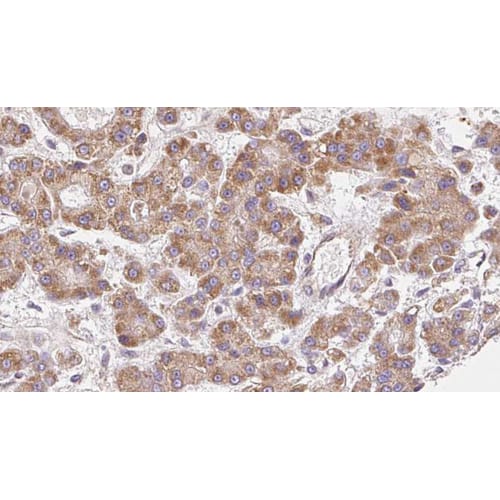
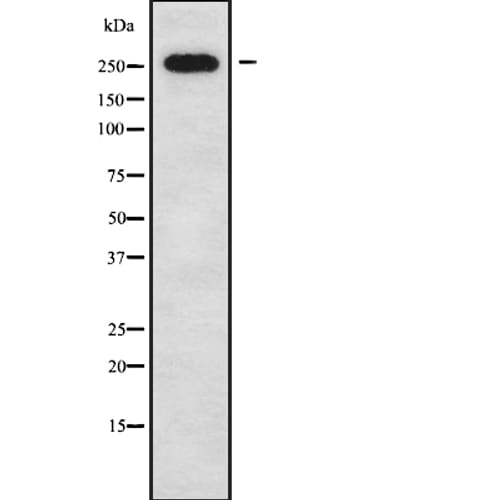
IMPORTANT NOTE This product is custom manufactured with a lead time of 3-4 weeks. Once in production, this item cannot be cancelled from an order and is not eligible for return. Target Protein CACNA1G Clonality Polyclonal Storage/Stability -20°C/1 year Application WB,IHC,ELISA Recommended Dilution WB 1:1000-3000 IHC 1:200 Concentration 1 mg/ml Reactive Species Human,Mouse,Rat Host Species Rabbit Immunogen A synthesized peptide derived from human CACNA1G Specificity CACNA1G Antibody detects endogenous levels of total CACNA1G Purification The antiserum was purified by peptide affinity chromatography. Form Rabbit IgG in phosphate buffered saline , pH 7.4, 150mM NaCl, 0.02% sodium azide and 50% glycerol.Store at -20 °C.Stable for 12 months from date of receipt Gene Name CACNA1G Accession No. O43497 Alternate Names Cav3.1c; Low voltage activated calcium channel alpha1 3.2 subunit; NBR13; Voltage dependent T type calcium channel subunit alpha 1G; Voltage dependent T type calcium channel subunit alpha 1H; Voltage gated calcium channel subunit alpha Cav3.1; Voltage gated calcium channel subunit alpha Cav3.2; Description Voltage-sensitive calcium channels (VSCC) mediate the entry of calcium ions into excitable cells and are also involved in a variety of calcium-dependent processes, including muscle contraction, hormone or neurotransmitter release, gene expression, cell motility, cell division and cell death. The isoform alpha-1G gives rise to T-type calcium currents. T-type calcium channels belong to the "low-voltage activated (LVA)" group and are strongly blocked by mibefradil. A particularity of this type of channel is an opening at quite negative potentials and a voltage-dependent inactivation. T-type channels serve pacemaking functions in both central neurons and cardiac nodal cells and support calcium signaling in secretory cells and vascular smooth muscle. They may also be involved in the modulation of firing patterns of neurons which is important for information processing as well as in cell growth processes. Cell Pathway/ Category Primary Polyclonal Antibody Protein MW 262 kDa Usage For Research Use Only! Not for diagnostic or therapeutic procedures. - Reviews
| Antibody Specification | |
| Datasheet |
|
| IMPORTANT NOTE | This product is custom manufactured with a lead time of 3-4 weeks. Once in production, this item cannot be cancelled from an order and is not eligible for return. |
| Target Protein | CACNA1G |
| Clonality | Polyclonal |
| Storage/Stability | -20°C/1 year |
| Application | WB,IHC,ELISA |
| Recommended Dilution | WB 1:1000-3000 IHC 1:200 |
| Concentration | 1 mg/ml |
| Reactive Species | Human,Mouse,Rat |
| Host Species | Rabbit |
| Immunogen | A synthesized peptide derived from human CACNA1G |
| Specificity | CACNA1G Antibody detects endogenous levels of total CACNA1G |
| Purification | The antiserum was purified by peptide affinity chromatography. |
| Form | Rabbit IgG in phosphate buffered saline , pH 7.4, 150mM NaCl, 0.02% sodium azide and 50% glycerol.Store at -20 °C.Stable for 12 months from date of receipt |
| Gene Name | CACNA1G |
| Accession No. | O43497 |
| Alternate Names | Cav3.1c; Low voltage activated calcium channel alpha1 3.2 subunit; NBR13; Voltage dependent T type calcium channel subunit alpha 1G; Voltage dependent T type calcium channel subunit alpha 1H; Voltage gated calcium channel subunit alpha Cav3.1; Voltage gated calcium channel subunit alpha Cav3.2; |
| Description | Voltage-sensitive calcium channels (VSCC) mediate the entry of calcium ions into excitable cells and are also involved in a variety of calcium-dependent processes, including muscle contraction, hormone or neurotransmitter release, gene expression, cell motility, cell division and cell death. The isoform alpha-1G gives rise to T-type calcium currents. T-type calcium channels belong to the "low-voltage activated (LVA)" group and are strongly blocked by mibefradil. A particularity of this type of channel is an opening at quite negative potentials and a voltage-dependent inactivation. T-type channels serve pacemaking functions in both central neurons and cardiac nodal cells and support calcium signaling in secretory cells and vascular smooth muscle. They may also be involved in the modulation of firing patterns of neurons which is important for information processing as well as in cell growth processes. |
| Cell Pathway/ Category | Primary Polyclonal Antibody |
| Protein MW | 262 kDa |
| Usage | For Research Use Only! Not for diagnostic or therapeutic procedures. |