

ITA2430
ITA2430
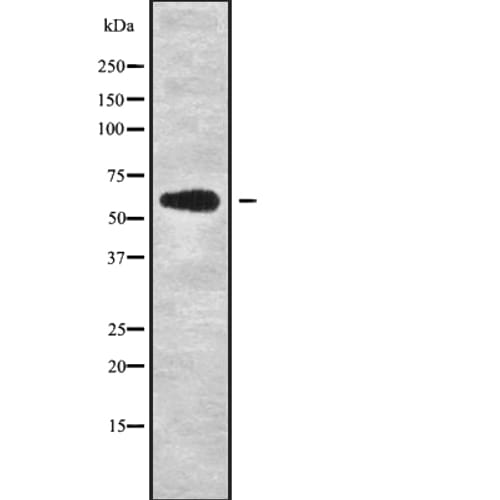
ITA2430
from
$526.00
Price in reward points: 526
- Catalog: ITA2430
- Gene/Protein: TXK
- Product Description: Immunotag™ TXK Antibody
-
Description
-
Specifications
Antibody Specification Datasheet 
IMPORTANT NOTE This product is custom manufactured with a lead time of 3-4 weeks. Once in production, this item cannot be cancelled from an order and is not eligible for return. Target Protein TXK Clonality Polyclonal Storage/Stability -20°C/1 year Application WB,ELISA Recommended Dilution WB 1:1000-3000 Concentration 1 mg/ml Reactive Species Human Host Species Rabbit Immunogen A synthesized peptide derived from human TXK Specificity TXK Antibody detects endogenous levels of total TXK Purification The antiserum was purified by peptide affinity chromatography. Form Rabbit IgG in phosphate buffered saline , pH 7.4, 150mM NaCl, 0.02% sodium azide and 50% glycerol.Store at -20 °C.Stable for 12 months from date of receipt Gene Name TXK Accession No. P42681 Alternate Names BTKL; EC 2.7.10.2; MGC22473; Protein-tyrosine kinase 4; PSCTK5; PTK4; Resting lymphocyte kinase; RLK; TKL; TXK; TXK tyrosine kinase; TXK_HUMAN; Tyrosine protein kinase TXK; Tyrosine-protein kinase TXK; Description Non-receptor tyrosine kinase that plays a redundant role with ITK in regulation of the adaptive immune response. Regulates the development, function and differentiation of conventional T-cells and nonconventional NKT-cells. When antigen presenting cells (APC) activate T-cell receptor (TCR), a series of phosphorylation lead to the recruitment of TXK to the cell membrane, where it is phosphorylated at Tyr-420. Phosphorylation leads to TXK full activation. Contributes also to signaling from many receptors and participates in multiple downstream pathways, including regulation of the actin cytoskeleton. Like ITK, can phosphorylate PLCG1, leading to its localization in lipid rafts and activation, followed by subsequent cleavage of its substrates. In turn, the endoplasmic reticulum releases calcium in the cytoplasm and the nuclear activator of activated T-cells (NFAT) translocates into the nucleus to perform its transcriptional duty. With PARP1 and EEF1A1, TXK forms a complex that acts as a T-helper 1 (Th1) cell-specific transcription factor and binds the promoter of IFNG to directly regulate its transcription, and is thus involved importantly in Th1 cytokine production. Phosphorylates both PARP1 and EEF1A1. Phosphorylates also key sites in LCP2 leading to the up-regulation of Th1 preferred cytokine IL-2. Phosphorylates 'Tyr-201' of CTLA4 which leads to the association of PI-3 kinase with the CTLA4 receptor. Cell Pathway/ Category Primary Polyclonal Antibody Protein MW 61 kDa Usage For Research Use Only! Not for diagnostic or therapeutic procedures. - Reviews
| Antibody Specification | |
| Datasheet |
|
| IMPORTANT NOTE | This product is custom manufactured with a lead time of 3-4 weeks. Once in production, this item cannot be cancelled from an order and is not eligible for return. |
| Target Protein | TXK |
| Clonality | Polyclonal |
| Storage/Stability | -20°C/1 year |
| Application | WB,ELISA |
| Recommended Dilution | WB 1:1000-3000 |
| Concentration | 1 mg/ml |
| Reactive Species | Human |
| Host Species | Rabbit |
| Immunogen | A synthesized peptide derived from human TXK |
| Specificity | TXK Antibody detects endogenous levels of total TXK |
| Purification | The antiserum was purified by peptide affinity chromatography. |
| Form | Rabbit IgG in phosphate buffered saline , pH 7.4, 150mM NaCl, 0.02% sodium azide and 50% glycerol.Store at -20 °C.Stable for 12 months from date of receipt |
| Gene Name | TXK |
| Accession No. | P42681 |
| Alternate Names | BTKL; EC 2.7.10.2; MGC22473; Protein-tyrosine kinase 4; PSCTK5; PTK4; Resting lymphocyte kinase; RLK; TKL; TXK; TXK tyrosine kinase; TXK_HUMAN; Tyrosine protein kinase TXK; Tyrosine-protein kinase TXK; |
| Description | Non-receptor tyrosine kinase that plays a redundant role with ITK in regulation of the adaptive immune response. Regulates the development, function and differentiation of conventional T-cells and nonconventional NKT-cells. When antigen presenting cells (APC) activate T-cell receptor (TCR), a series of phosphorylation lead to the recruitment of TXK to the cell membrane, where it is phosphorylated at Tyr-420. Phosphorylation leads to TXK full activation. Contributes also to signaling from many receptors and participates in multiple downstream pathways, including regulation of the actin cytoskeleton. Like ITK, can phosphorylate PLCG1, leading to its localization in lipid rafts and activation, followed by subsequent cleavage of its substrates. In turn, the endoplasmic reticulum releases calcium in the cytoplasm and the nuclear activator of activated T-cells (NFAT) translocates into the nucleus to perform its transcriptional duty. With PARP1 and EEF1A1, TXK forms a complex that acts as a T-helper 1 (Th1) cell-specific transcription factor and binds the promoter of IFNG to directly regulate its transcription, and is thus involved importantly in Th1 cytokine production. Phosphorylates both PARP1 and EEF1A1. Phosphorylates also key sites in LCP2 leading to the up-regulation of Th1 preferred cytokine IL-2. Phosphorylates 'Tyr-201' of CTLA4 which leads to the association of PI-3 kinase with the CTLA4 receptor. |
| Cell Pathway/ Category | Primary Polyclonal Antibody |
| Protein MW | 61 kDa |
| Usage | For Research Use Only! Not for diagnostic or therapeutic procedures. |