

ITA2731
ITA2731
ITA2731
from
$526.00
Price in reward points: 526
- Catalog: ITA2731
- Gene/Protein: IST1
- Product Description: Immunotag™ IST1 Antibody
-
Description
-
Specifications
Antibody Specification Datasheet 
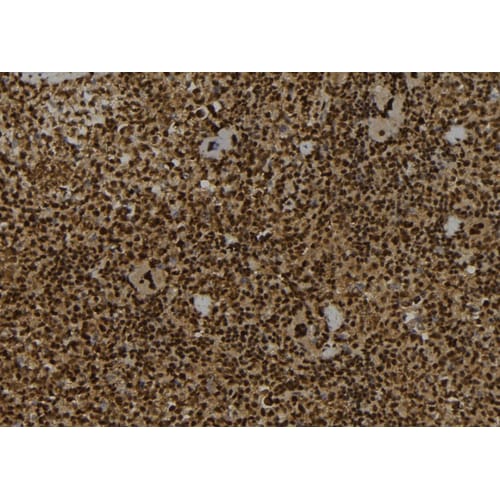
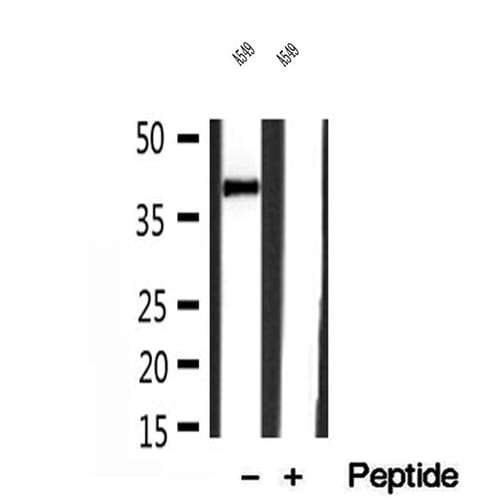
IMPORTANT NOTE This product is custom manufactured with a lead time of 3-4 weeks. Once in production, this item cannot be cancelled from an order and is not eligible for return. Target Protein IST1 Clonality Polyclonal Storage/Stability -20°C/1 year Application WB,IHC Recommended Dilution WB 1:500-1:2000, IHC 1:50-1:200 Concentration 1 mg/ml Reactive Species Human,Mouse Host Species Rabbit Immunogen A synthesized peptide derived from human IST1. Specificity IST1 antibody detects endogenous levels of IST1. Purification The antiserum was purified by peptide affinity chromatography. Form Rabbit IgG in phosphate buffered saline , pH 7.4, 150mM NaCl, 0.02% sodium azide and 50% glycerol.Store at -20 °C.Stable for 12 months from date of receipt Gene Name IST1 Accession No. P53990 Alternate Names hIST1; Increased sodium tolerance 1; Increased sodium tolerance 1 homolog; IST1 homolog; IST1_HUMAN; KIAA0174; MAPK activating protein PM28; MGC117220; MGC128433; Putative MAPK-activating protein PM28; Description ESCRT-III-like protein involved in specific functions of the ESCRT machinery. Is required for efficient abscission during cytokinesis, but not for HIV-1 budding. The involvement in the MVB pathway is not established. Involved in recruiting VPS4A and/or VPS4B to the midbody of dividing cells (PubMed:19129479, PubMed:19129480). During late anaphase, involved in nuclear envelope reassembly and mitotic spindle disassembly together with the ESCRT-III complex: IST1 acts by mediating the recruitment of SPAST to the nuclear membrane, leading to microtubule severing (PubMed:26040712). Regulates early endosomal tubulation together with the ESCRT-III complex by mediating the recruitment of SPAST (PubMed:23897888). Cell Pathway/ Category Primary Polyclonal Antibody Protein MW 40 kDa Usage For Research Use Only! Not for diagnostic or therapeutic procedures. - Reviews
| Antibody Specification | |
| Datasheet |
|
| IMPORTANT NOTE | This product is custom manufactured with a lead time of 3-4 weeks. Once in production, this item cannot be cancelled from an order and is not eligible for return. |
| Target Protein | IST1 |
| Clonality | Polyclonal |
| Storage/Stability | -20°C/1 year |
| Application | WB,IHC |
| Recommended Dilution | WB 1:500-1:2000, IHC 1:50-1:200 |
| Concentration | 1 mg/ml |
| Reactive Species | Human,Mouse |
| Host Species | Rabbit |
| Immunogen | A synthesized peptide derived from human IST1. |
| Specificity | IST1 antibody detects endogenous levels of IST1. |
| Purification | The antiserum was purified by peptide affinity chromatography. |
| Form | Rabbit IgG in phosphate buffered saline , pH 7.4, 150mM NaCl, 0.02% sodium azide and 50% glycerol.Store at -20 °C.Stable for 12 months from date of receipt |
| Gene Name | IST1 |
| Accession No. | P53990 |
| Alternate Names | hIST1; Increased sodium tolerance 1; Increased sodium tolerance 1 homolog; IST1 homolog; IST1_HUMAN; KIAA0174; MAPK activating protein PM28; MGC117220; MGC128433; Putative MAPK-activating protein PM28; |
| Description | ESCRT-III-like protein involved in specific functions of the ESCRT machinery. Is required for efficient abscission during cytokinesis, but not for HIV-1 budding. The involvement in the MVB pathway is not established. Involved in recruiting VPS4A and/or VPS4B to the midbody of dividing cells (PubMed:19129479, PubMed:19129480). During late anaphase, involved in nuclear envelope reassembly and mitotic spindle disassembly together with the ESCRT-III complex: IST1 acts by mediating the recruitment of SPAST to the nuclear membrane, leading to microtubule severing (PubMed:26040712). Regulates early endosomal tubulation together with the ESCRT-III complex by mediating the recruitment of SPAST (PubMed:23897888). |
| Cell Pathway/ Category | Primary Polyclonal Antibody |
| Protein MW | 40 kDa |
| Usage | For Research Use Only! Not for diagnostic or therapeutic procedures. |