

ITA2796
ITA2796
ITA2796
from
$526.00
Price in reward points: 526
- Catalog: ITA2796
- Gene/Protein: ADRM1
- Product Description: Immunotag™ ADRM1 Antibody
-
Description
-
Specifications
Antibody Specification Datasheet 
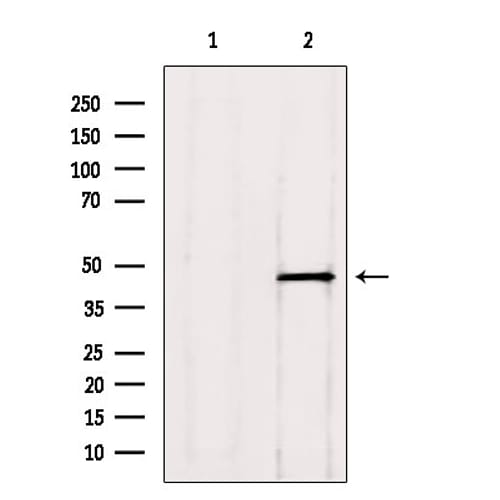
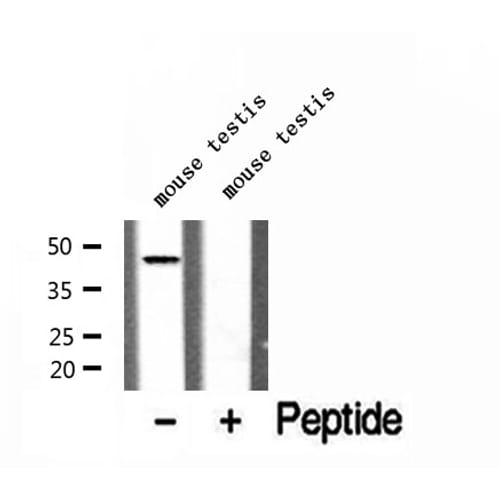
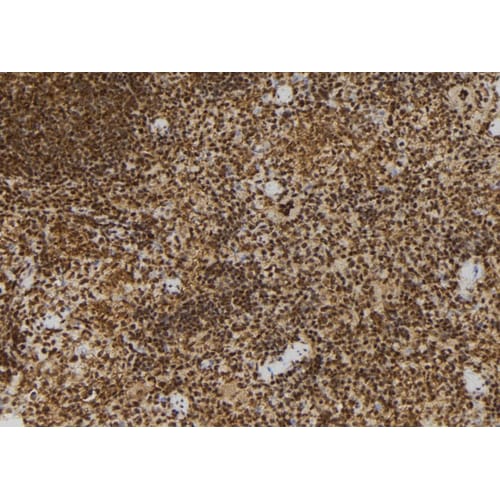
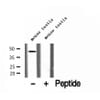
IMPORTANT NOTE This product is custom manufactured with a lead time of 3-4 weeks. Once in production, this item cannot be cancelled from an order and is not eligible for return. Target Protein ADRM1 Clonality Polyclonal Storage/Stability -20°C/1 year Application WB,IHC Recommended Dilution WB 1:500-1:2000, IHC 1:50-1:200 Concentration 1 mg/ml Reactive Species Human,Mouse,Rat Host Species Rabbit Immunogen A synthesized peptide derived from human ADRM1. Specificity ADRM1 antibody detects endogenous levels of ADRM1. Purification The antiserum was purified by peptide affinity chromatography. Form Rabbit IgG in phosphate buffered saline , pH 7.4, 150mM NaCl, 0.02% sodium azide and 50% glycerol.Store at -20 °C.Stable for 12 months from date of receipt Gene Name ADRM1 Accession No. Q16186 Alternate Names 110 kDa cell membrane glycoprotein; adhesion regulating molecule 1; Adhesion-regulating molecule 1; ADRM 1; Adrm1; ADRM1_HUMAN; ARM 1; ARM-1; ARM1; Gp110; hRpn13; M(r) 110,000 surface antigen; Proteasomal ubiquitin receptor ADRM1; proteasome regulatory particle non ATPase 13; Proteasome regulatory particle non-ATPase 13; Regulatory particle non ATPase 13; Rpn13; Rpn13 homolog; Description Component of the 26S proteasome, a multiprotein complex involved in the ATP-dependent degradation of ubiquitinated proteins. This complex plays a key role in the maintenance of protein homeostasis by removing misfolded or damaged proteins, which could impair cellular functions, and by removing proteins whose functions are no longer required. Therefore, the proteasome participates in numerous cellular processes, including cell cycle progression, apoptosis, or DNA damage repair. Within the complex, functions as a proteasomal ubiquitin receptor. Engages and activates 19S-associated deubiquitinases UCHL5 and PSMD14 during protein degradation. UCHL5 reversibly associate with the 19S regulatory particle whereas PSMD14 is an intrinsic subunit of the proteasome lid subcomplex. Cell Pathway/ Category Primary Polyclonal Antibody Protein MW 46 kDa Usage For Research Use Only! Not for diagnostic or therapeutic procedures. - Reviews
| Antibody Specification | |
| Datasheet |
|
| IMPORTANT NOTE | This product is custom manufactured with a lead time of 3-4 weeks. Once in production, this item cannot be cancelled from an order and is not eligible for return. |
| Target Protein | ADRM1 |
| Clonality | Polyclonal |
| Storage/Stability | -20°C/1 year |
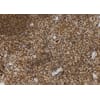
| Application | WB,IHC |
| Recommended Dilution | WB 1:500-1:2000, IHC 1:50-1:200 |
| Concentration | 1 mg/ml |
| Reactive Species | Human,Mouse,Rat |
| Host Species | Rabbit |
| Immunogen | A synthesized peptide derived from human ADRM1. |
| Specificity | ADRM1 antibody detects endogenous levels of ADRM1. |
| Purification | The antiserum was purified by peptide affinity chromatography. |
| Form | Rabbit IgG in phosphate buffered saline , pH 7.4, 150mM NaCl, 0.02% sodium azide and 50% glycerol.Store at -20 °C.Stable for 12 months from date of receipt |
| Gene Name | ADRM1 |
| Accession No. | Q16186 |
| Alternate Names | 110 kDa cell membrane glycoprotein; adhesion regulating molecule 1; Adhesion-regulating molecule 1; ADRM 1; Adrm1; ADRM1_HUMAN; ARM 1; ARM-1; ARM1; Gp110; hRpn13; M(r) 110,000 surface antigen; Proteasomal ubiquitin receptor ADRM1; proteasome regulatory particle non ATPase 13; Proteasome regulatory particle non-ATPase 13; Regulatory particle non ATPase 13; Rpn13; Rpn13 homolog; |
| Description | Component of the 26S proteasome, a multiprotein complex involved in the ATP-dependent degradation of ubiquitinated proteins. This complex plays a key role in the maintenance of protein homeostasis by removing misfolded or damaged proteins, which could impair cellular functions, and by removing proteins whose functions are no longer required. Therefore, the proteasome participates in numerous cellular processes, including cell cycle progression, apoptosis, or DNA damage repair. Within the complex, functions as a proteasomal ubiquitin receptor. Engages and activates 19S-associated deubiquitinases UCHL5 and PSMD14 during protein degradation. UCHL5 reversibly associate with the 19S regulatory particle whereas PSMD14 is an intrinsic subunit of the proteasome lid subcomplex. |
| Cell Pathway/ Category | Primary Polyclonal Antibody |
| Protein MW | 46 kDa |
| Usage | For Research Use Only! Not for diagnostic or therapeutic procedures. |