

ITA2925
ITA2925
ITA2925
from
$526.00
Price in reward points: 526
- Catalog: ITA2925
- Gene/Protein: EXOSC3
- Product Description: Immunotag™ EXOSC3 Antibody
-
Description
-
Specifications
Antibody Specification Datasheet 
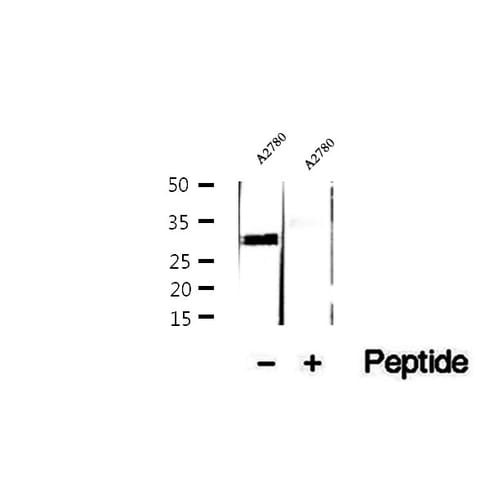
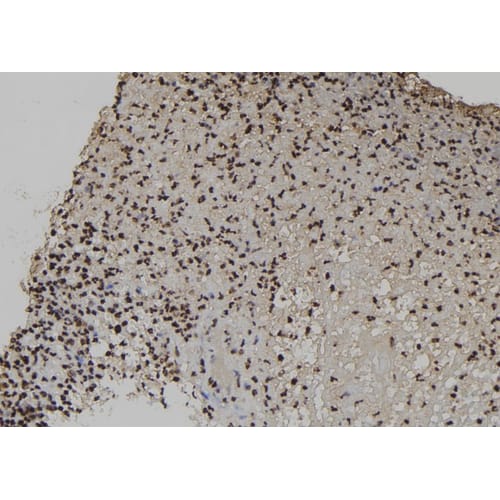
IMPORTANT NOTE This product is custom manufactured with a lead time of 3-4 weeks. Once in production, this item cannot be cancelled from an order and is not eligible for return. Target Protein EXOSC3 Clonality Polyclonal Storage/Stability -20°C/1 year Application WB,IHC Recommended Dilution WB 1:500-1:2000, IHC 1:50-1:200 Concentration 1 mg/ml Reactive Species Human,Mouse,Rat Host Species Rabbit Immunogen A synthesized peptide derived from human EXOSC3. Specificity EXOSC3 antibody detects endogenous levels of EXOSC3. Purification The antiserum was purified by peptide affinity chromatography. Form Rabbit IgG in phosphate buffered saline , pH 7.4, 150mM NaCl, 0.02% sodium azide and 50% glycerol.Store at -20 °C.Stable for 12 months from date of receipt Gene Name EXOSC3 Accession No. Q9NQT5 Alternate Names bA3J10.7; CGI 102; CGI-102; Exosome complex component RRP40; Exosome complex exonuclease RRP40; Exosome component 3; hRrp 40; hRrp-40; hRrp40; hRrp40p; p10; PCH1B; Ribosomal RNA processing protein 40; Ribosomal RNA-processing protein 40, S. cerevisiae, homolog of; RP11-3J10.8; RRP 40; Rrp40; Rrp40p; Description Non-catalytic component of the RNA exosome complex which has 3'->5' exoribonuclease activity and participates in a multitude of cellular RNA processing and degradation events. In the nucleus, the RNA exosome complex is involved in proper maturation of stable RNA species such as rRNA, snRNA and snoRNA, in the elimination of RNA processing by-products and non-coding 'pervasive' transcripts, such as antisense RNA species and promoter-upstream transcripts (PROMPTs), and of mRNAs with processing defects, thereby limiting or excluding their export to the cytoplasm. The RNA exosome may be involved in Ig class switch recombination (CSR) and/or Ig variable region somatic hypermutation (SHM) by targeting AICDA deamination activity to transcribed dsDNA substrates. In the cytoplasm, the RNA exosome complex is involved in general mRNA turnover and specifically degrades inherently unstable mRNAs containing AU-rich elements (AREs) within their 3' untranslated regions, and in RNA surveillance pathways, preventing translation of aberrant mRNAs. It seems to be involved in degradation of histone mRNA. The catalytic inactive RNA exosome core complex of 9 subunits (Exo-9) is proposed to play a pivotal role in the binding and presentation of RNA for ribonucleolysis, and to serve as a scaffold for the association with catalytic subunits and accessory proteins or complexes. EXOSC3 as peripheral part of the Exo-9 complex stabilizes the hexameric ring of RNase PH-domain subunits through contacts with EXOSC9 and EXOSC5. Cell Pathway/ Category Primary Polyclonal Antibody Protein MW 31 kDa Usage For Research Use Only! Not for diagnostic or therapeutic procedures. - Reviews
| Antibody Specification | |
| Datasheet |
|
| IMPORTANT NOTE | This product is custom manufactured with a lead time of 3-4 weeks. Once in production, this item cannot be cancelled from an order and is not eligible for return. |
| Target Protein | EXOSC3 |
| Clonality | Polyclonal |
| Storage/Stability | -20°C/1 year |
| Application | WB,IHC |
| Recommended Dilution | WB 1:500-1:2000, IHC 1:50-1:200 |
| Concentration | 1 mg/ml |
| Reactive Species | Human,Mouse,Rat |
| Host Species | Rabbit |
| Immunogen | A synthesized peptide derived from human EXOSC3. |
| Specificity | EXOSC3 antibody detects endogenous levels of EXOSC3. |
| Purification | The antiserum was purified by peptide affinity chromatography. |
| Form | Rabbit IgG in phosphate buffered saline , pH 7.4, 150mM NaCl, 0.02% sodium azide and 50% glycerol.Store at -20 °C.Stable for 12 months from date of receipt |
| Gene Name | EXOSC3 |
| Accession No. | Q9NQT5 |
| Alternate Names | bA3J10.7; CGI 102; CGI-102; Exosome complex component RRP40; Exosome complex exonuclease RRP40; Exosome component 3; hRrp 40; hRrp-40; hRrp40; hRrp40p; p10; PCH1B; Ribosomal RNA processing protein 40; Ribosomal RNA-processing protein 40, S. cerevisiae, homolog of; RP11-3J10.8; RRP 40; Rrp40; Rrp40p; |
| Description | Non-catalytic component of the RNA exosome complex which has 3'->5' exoribonuclease activity and participates in a multitude of cellular RNA processing and degradation events. In the nucleus, the RNA exosome complex is involved in proper maturation of stable RNA species such as rRNA, snRNA and snoRNA, in the elimination of RNA processing by-products and non-coding 'pervasive' transcripts, such as antisense RNA species and promoter-upstream transcripts (PROMPTs), and of mRNAs with processing defects, thereby limiting or excluding their export to the cytoplasm. The RNA exosome may be involved in Ig class switch recombination (CSR) and/or Ig variable region somatic hypermutation (SHM) by targeting AICDA deamination activity to transcribed dsDNA substrates. In the cytoplasm, the RNA exosome complex is involved in general mRNA turnover and specifically degrades inherently unstable mRNAs containing AU-rich elements (AREs) within their 3' untranslated regions, and in RNA surveillance pathways, preventing translation of aberrant mRNAs. It seems to be involved in degradation of histone mRNA. The catalytic inactive RNA exosome core complex of 9 subunits (Exo-9) is proposed to play a pivotal role in the binding and presentation of RNA for ribonucleolysis, and to serve as a scaffold for the association with catalytic subunits and accessory proteins or complexes. EXOSC3 as peripheral part of the Exo-9 complex stabilizes the hexameric ring of RNase PH-domain subunits through contacts with EXOSC9 and EXOSC5. |
| Cell Pathway/ Category | Primary Polyclonal Antibody |
| Protein MW | 31 kDa |
| Usage | For Research Use Only! Not for diagnostic or therapeutic procedures. |