

ITA3746
ITA3746
ITA3746
from
$526.00
Price in reward points: 526
- Catalog: ITA3746
- Gene/Protein: PTGDR2
- Product Description: Immunotag™ GPR44 Antibody
-
Description
-
Specifications
Antibody Specification Datasheet 
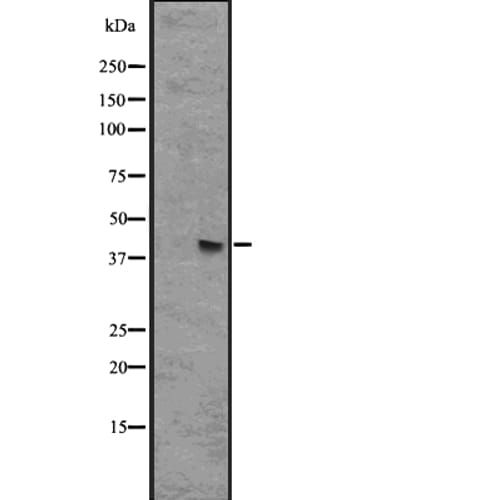
IMPORTANT NOTE This product is custom manufactured with a lead time of 3-4 weeks. Once in production, this item cannot be cancelled from an order and is not eligible for return. Target Protein GPR44 Clonality Polyclonal Storage/Stability -20°C/1 year Application WB,ELISA Recommended Dilution WB 1:500-1:2000 Concentration 1 mg/ml Reactive Species Human,Mouse Host Species Rabbit Immunogen A synthesized peptide Specificity GPR44 antibody detects endogenous levels of total GPR44 Purification The antiserum was purified by peptide affinity chromatography. Form Rabbit IgG in phosphate buffered saline, pH 7.4, 150mM NaCl, 0.02% sodium azide and 50% glycerol. Gene Name PTGDR2 Accession No. Q9Y5Y4 Alternate Names CD294; CD294 antigen; Chemoattractant receptor homologous molecule expressed on Th2 cells; chemoattractant receptor-homologous; Chemoattractant receptor-homologous molecule expressed on Th2 cells; CRTH 2; CRTH2; DL1R; DP2 prostaglandin receptor; G Protein Coupled Receptor 44; GPR 44; Gpr44; GPR44_HUMAN; PTGDR2; Putative G protein coupled receptor 44; Putative G-protein coupled receptor 44; Description Receptor for prostaglandin D2 (PGD2). Coupled to the G(i)-protein. Receptor activation may result in pertussis toxin-sensitive decreases in cAMP levels and Ca2+ mobilization. PI3K signaling is also implicated in mediating PTGDR2 effects. PGD2 induced receptor internalization. CRTH2 internalization can be regulated by diverse kinases such as, PKC, PKA, GRK2, GPRK5/GRK5 and GRK6. Receptor activation is responsible, at least in part, in immune regulation and allergic/inflammation responses. Cell Pathway/ Category Primary Polyclonal Antibody Protein MW 43 kDa Usage For Research Use Only! Not for diagnostic or therapeutic procedures. - Reviews
| Antibody Specification | |
| Datasheet |
|
| IMPORTANT NOTE | This product is custom manufactured with a lead time of 3-4 weeks. Once in production, this item cannot be cancelled from an order and is not eligible for return. |
| Target Protein | GPR44 |
| Clonality | Polyclonal |
| Storage/Stability | -20°C/1 year |
| Application | WB,ELISA |
| Recommended Dilution | WB 1:500-1:2000 |
| Concentration | 1 mg/ml |
| Reactive Species | Human,Mouse |
| Host Species | Rabbit |
| Immunogen | A synthesized peptide |
| Specificity | GPR44 antibody detects endogenous levels of total GPR44 |
| Purification | The antiserum was purified by peptide affinity chromatography. |
| Form | Rabbit IgG in phosphate buffered saline, pH 7.4, 150mM NaCl, 0.02% sodium azide and 50% glycerol. |
| Gene Name | PTGDR2 |
| Accession No. | Q9Y5Y4 |
| Alternate Names | CD294; CD294 antigen; Chemoattractant receptor homologous molecule expressed on Th2 cells; chemoattractant receptor-homologous; Chemoattractant receptor-homologous molecule expressed on Th2 cells; CRTH 2; CRTH2; DL1R; DP2 prostaglandin receptor; G Protein Coupled Receptor 44; GPR 44; Gpr44; GPR44_HUMAN; PTGDR2; Putative G protein coupled receptor 44; Putative G-protein coupled receptor 44; |
| Description | Receptor for prostaglandin D2 (PGD2). Coupled to the G(i)-protein. Receptor activation may result in pertussis toxin-sensitive decreases in cAMP levels and Ca2+ mobilization. PI3K signaling is also implicated in mediating PTGDR2 effects. PGD2 induced receptor internalization. CRTH2 internalization can be regulated by diverse kinases such as, PKC, PKA, GRK2, GPRK5/GRK5 and GRK6. Receptor activation is responsible, at least in part, in immune regulation and allergic/inflammation responses. |
| Cell Pathway/ Category | Primary Polyclonal Antibody |
| Protein MW | 43 kDa |
| Usage | For Research Use Only! Not for diagnostic or therapeutic procedures. |