

ITA3890
ITA3890
ITA3890
from
$526.00
Price in reward points: 526
- Catalog: ITA3890
- Gene/Protein: JMY
- Product Description: Immunotag™ JMY Antibody
-
Description
-
Specifications
Antibody Specification Datasheet 
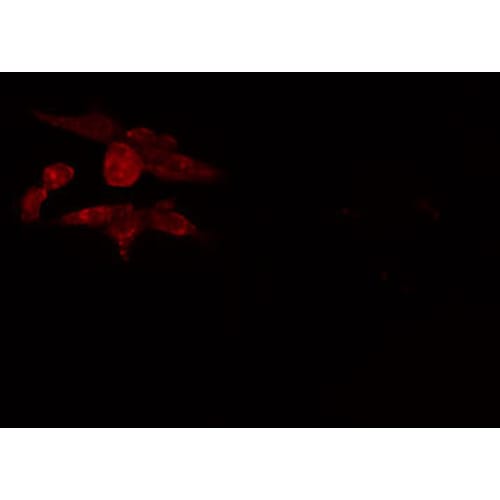
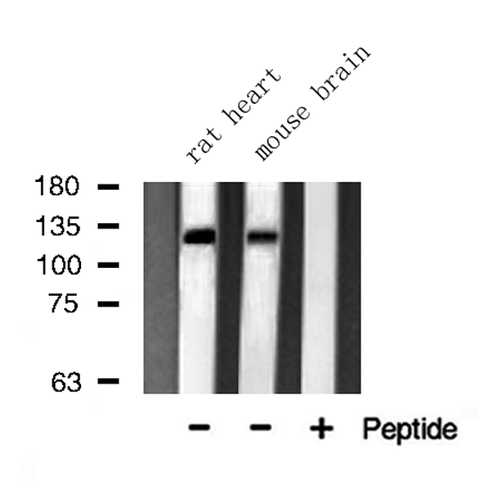
IMPORTANT NOTE This product is custom manufactured with a lead time of 3-4 weeks. Once in production, this item cannot be cancelled from an order and is not eligible for return. Target Protein JMY Clonality Polyclonal Storage/Stability -20°C/1 year Application WB,IF/ICC,ELISA Recommended Dilution WB 1:1000-3000, IF/ICC 1:100-1:500 Concentration 1 mg/ml Reactive Species Human,Mouse Host Species Rabbit Immunogen A synthesized peptide derived from human JMY Specificity JMY Antibody detects endogenous levels of total JMY Purification The antiserum was purified by peptide affinity chromatography. Form Rabbit IgG in phosphate buffered saline , pH 7.4, 150mM NaCl, 0.02% sodium azide and 50% glycerol.Store at -20 °C.Stable for 12 months from date of receipt Gene Name JMY Accession No. Q8N9B5 Alternate Names FLJ37870; Jmy; JMY protein; JMY_HUMAN; junction mediating and regulatory protein; Junction mediating and regulatory protein p53 cofactor; Junction-mediating and -regulatory protein; MGC163496; OTTHUMP00000161976; WAS protein homology region 2 domain containing 1-like 3; WHDC1L3; Description Acts both as a nuclear p53/TP53-cofactor and a cytoplasmic regulator of actin dynamics depending on conditions. In nucleus, acts as a cofactor that increases p53/TP53 response via its interaction with p300/EP300. Increases p53/TP53-dependent transcription and apoptosis, suggesting an important role in p53/TP53 stress response such as DNA damage. In cytoplasm, acts as a nucleation-promoting factor for both branched and unbranched actin filaments. Activates the Arp2/3 complex to induce branched actin filament networks. Also catalyzes actin polymerization in the absence of Arp2/3, creating unbranched filaments. Contributes to cell motility by controlling actin dynamics. May promote the rapid formation of a branched actin network by first nucleating new mother filaments and then activating Arp2/3 to branch off these filaments. The p53/TP53-cofactor and actin activator activities are regulated via its subcellular location (By similarity). Cell Pathway/ Category Primary Polyclonal Antibody Protein MW 130 KD Usage For Research Use Only! Not for diagnostic or therapeutic procedures. - Reviews
| Antibody Specification | |
| Datasheet |
|
| IMPORTANT NOTE | This product is custom manufactured with a lead time of 3-4 weeks. Once in production, this item cannot be cancelled from an order and is not eligible for return. |
| Target Protein | JMY |
| Clonality | Polyclonal |
| Storage/Stability | -20°C/1 year |
| Application | WB,IF/ICC,ELISA |
| Recommended Dilution | WB 1:1000-3000, IF/ICC 1:100-1:500 |
| Concentration | 1 mg/ml |
| Reactive Species | Human,Mouse |
| Host Species | Rabbit |
| Immunogen | A synthesized peptide derived from human JMY |
| Specificity | JMY Antibody detects endogenous levels of total JMY |
| Purification | The antiserum was purified by peptide affinity chromatography. |
| Form | Rabbit IgG in phosphate buffered saline , pH 7.4, 150mM NaCl, 0.02% sodium azide and 50% glycerol.Store at -20 °C.Stable for 12 months from date of receipt |
| Gene Name | JMY |
| Accession No. | Q8N9B5 |
| Alternate Names | FLJ37870; Jmy; JMY protein; JMY_HUMAN; junction mediating and regulatory protein; Junction mediating and regulatory protein p53 cofactor; Junction-mediating and -regulatory protein; MGC163496; OTTHUMP00000161976; WAS protein homology region 2 domain containing 1-like 3; WHDC1L3; |
| Description | Acts both as a nuclear p53/TP53-cofactor and a cytoplasmic regulator of actin dynamics depending on conditions. In nucleus, acts as a cofactor that increases p53/TP53 response via its interaction with p300/EP300. Increases p53/TP53-dependent transcription and apoptosis, suggesting an important role in p53/TP53 stress response such as DNA damage. In cytoplasm, acts as a nucleation-promoting factor for both branched and unbranched actin filaments. Activates the Arp2/3 complex to induce branched actin filament networks. Also catalyzes actin polymerization in the absence of Arp2/3, creating unbranched filaments. Contributes to cell motility by controlling actin dynamics. May promote the rapid formation of a branched actin network by first nucleating new mother filaments and then activating Arp2/3 to branch off these filaments. The p53/TP53-cofactor and actin activator activities are regulated via its subcellular location (By similarity). |
| Cell Pathway/ Category | Primary Polyclonal Antibody |
| Protein MW | 130 KD |
| Usage | For Research Use Only! Not for diagnostic or therapeutic procedures. |