

ITA4363
ITA4363
ITA4363
from
$526.00
Price in reward points: 526
- Catalog: ITA4363
- Gene/Protein: ATF5
- Product Description: Immunotag™ ATF5 Antibody
-
Description
-
Specifications
Antibody Specification Datasheet 
IMPORTANT NOTE This product is custom manufactured with a lead time of 3-4 weeks. Once in production, this item cannot be cancelled from an order and is not eligible for return. Target Protein ATF5 Clonality Polyclonal Storage/Stability -20°C/1 year Application WB,IF/ICC,ELISA Recommended Dilution WB 1:500~1:1000, IF/ICC 1:100-1:500 Concentration 1 mg/ml Reactive Species Human,Mouse,Rat Host Species Rabbit Immunogen A synthesized peptide Specificity ATF5 Antibody detects endogenous levels of total ATF5 Purification The antiserum was purified by peptide affinity chromatography. Form Rabbit IgG in phosphate buffered saline , pH 7.4, 150mM NaCl, 0.02% sodium azide and 50% glycerol.Store at -20 °C.Stable for 12 months from date of receipt Gene Name ATF5 Accession No. Q9Y2D1 Alternate Names Activating transcription factor 5 alpha/beta; Activating transcription factor 5; Activating transcription factor X; AFTA; ATF 5; ATF 7; ATF7; ATFX; BZIP protein ATF7; cAMP dependent transcription factor ATF 5; cAMP dependent transcription factor ATF5; Cyclic AMP dependent transcription factor ATF 5; Cyclic AMP dependent transcription factor ATF5; FLJ34666; HMFN0395; MGC102397; NAP1; NRIF3 associated protein; ODA 10; Transcription factor ATFx; Transcription factor like protein ODA 10; Transcription factor like protein ODA10; Description Transcription factor that either stimulates or represses gene transcription through binding of different DNA regulatory elements such as cAMP response element (CRE) (consensus: 5'-GTGACGT[AC][AG]-3'), ATF5-specific response element (ARE) (consensus: 5'-C[CT]TCT[CT]CCTT[AT]-3') but also the amino acid response element (AARE), present in many viral and cellular promoters. Critically involved, often in a cell type-dependent manner, in cell survival, proliferation, and differentiation (PubMed:10373550, PubMed:15358120, PubMed:21212266, PubMed:20654631). Its transcriptional activity is enhanced by CCND3 and slightly inhibited by CDK4 (PubMed:15358120). Important regulator of the cerebral cortex formation, functions in cerebral cortical neuroprogenitor cells to maintain proliferation and to block differentiation into neurons. Must be down-regulated in order for such cells to exit the cycle and differentiate (By similarity). Participates in the pathways by which SHH promotes cerebellar granule neuron progenitor cells proliferation (By similarity). Critical for survival of mature olfactory sensory neurons (OSN), directs expression of OSN-specific genes (By similarity). May be involved in osteogenic differentiation (PubMed:22442021). Promotes cell proliferation and survival by inducing the expression of EGR1 sinergistically with ELK1. Once acetylated by EP300, binds to ARE sequences on target genes promoters, such as BCL2 and EGR1 (PubMed:21791614). Plays an anti-apoptotic role through the transcriptional regulation of BCL2, this function seems to be cell type-dependent (By similarity). Cooperates with NR1I3/CAR in the transcriptional activation of CYP2B6 in liver (PubMed:18332083). In hepatic cells, represses CRE-dependent transcription and inhibits proliferation by blocking at G2/M phase (PubMed:22528486, PubMed:18701499). May act as a negative regulator of IL1B transduction pathway in liver (PubMed:24379400). Upon IL1B stimulus, cooperates with NLK to activate the transactivation activity of C/EBP subfamily members (PubMed:25512613). Besides its function of transcription factor, acts as a cofactor of CEBPB to activate CEBPA and promote adipocyte differentiation (PubMed:24216764). Regulates centrosome dynamics in a cell-cycle- and centriole-age-dependent manner. Forms 9-foci symmetrical ring scaffold around the mother centriole to control centrosome function and the interaction between centrioles and pericentriolar material (PubMed:26213385). Cell Pathway/ Category Primary Polyclonal Antibody Protein MW 31 KD Usage For Research Use Only! Not for diagnostic or therapeutic procedures. - Reviews
| Antibody Specification | |
| Datasheet |
|
| IMPORTANT NOTE | This product is custom manufactured with a lead time of 3-4 weeks. Once in production, this item cannot be cancelled from an order and is not eligible for return. |
| Target Protein | ATF5 |
| Clonality | Polyclonal |
| Storage/Stability | -20°C/1 year |
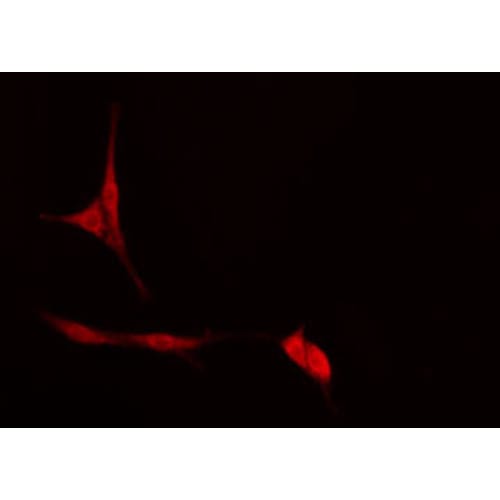
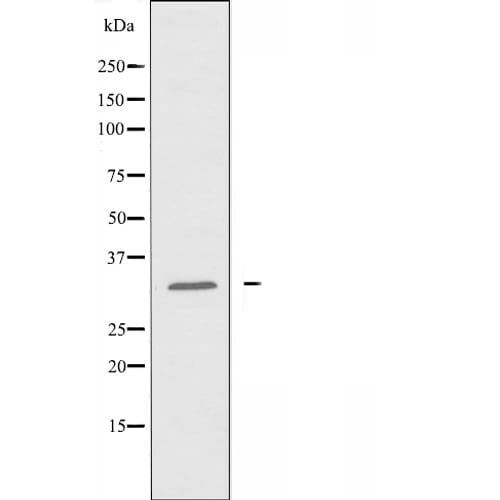
| Application | WB,IF/ICC,ELISA |
| Recommended Dilution | WB 1:500~1:1000, IF/ICC 1:100-1:500 |
| Concentration | 1 mg/ml |
| Reactive Species | Human,Mouse,Rat |
| Host Species | Rabbit |
| Immunogen | A synthesized peptide |
| Specificity | ATF5 Antibody detects endogenous levels of total ATF5 |
| Purification | The antiserum was purified by peptide affinity chromatography. |
| Form | Rabbit IgG in phosphate buffered saline , pH 7.4, 150mM NaCl, 0.02% sodium azide and 50% glycerol.Store at -20 °C.Stable for 12 months from date of receipt |
| Gene Name | ATF5 |
| Accession No. | Q9Y2D1 |
| Alternate Names | Activating transcription factor 5 alpha/beta; Activating transcription factor 5; Activating transcription factor X; AFTA; ATF 5; ATF 7; ATF7; ATFX; BZIP protein ATF7; cAMP dependent transcription factor ATF 5; cAMP dependent transcription factor ATF5; Cyclic AMP dependent transcription factor ATF 5; Cyclic AMP dependent transcription factor ATF5; FLJ34666; HMFN0395; MGC102397; NAP1; NRIF3 associated protein; ODA 10; Transcription factor ATFx; Transcription factor like protein ODA 10; Transcription factor like protein ODA10; |
| Description | Transcription factor that either stimulates or represses gene transcription through binding of different DNA regulatory elements such as cAMP response element (CRE) (consensus: 5'-GTGACGT[AC][AG]-3'), ATF5-specific response element (ARE) (consensus: 5'-C[CT]TCT[CT]CCTT[AT]-3') but also the amino acid response element (AARE), present in many viral and cellular promoters. Critically involved, often in a cell type-dependent manner, in cell survival, proliferation, and differentiation (PubMed:10373550, PubMed:15358120, PubMed:21212266, PubMed:20654631). Its transcriptional activity is enhanced by CCND3 and slightly inhibited by CDK4 (PubMed:15358120). Important regulator of the cerebral cortex formation, functions in cerebral cortical neuroprogenitor cells to maintain proliferation and to block differentiation into neurons. Must be down-regulated in order for such cells to exit the cycle and differentiate (By similarity). Participates in the pathways by which SHH promotes cerebellar granule neuron progenitor cells proliferation (By similarity). Critical for survival of mature olfactory sensory neurons (OSN), directs expression of OSN-specific genes (By similarity). May be involved in osteogenic differentiation (PubMed:22442021). Promotes cell proliferation and survival by inducing the expression of EGR1 sinergistically with ELK1. Once acetylated by EP300, binds to ARE sequences on target genes promoters, such as BCL2 and EGR1 (PubMed:21791614). Plays an anti-apoptotic role through the transcriptional regulation of BCL2, this function seems to be cell type-dependent (By similarity). Cooperates with NR1I3/CAR in the transcriptional activation of CYP2B6 in liver (PubMed:18332083). In hepatic cells, represses CRE-dependent transcription and inhibits proliferation by blocking at G2/M phase (PubMed:22528486, PubMed:18701499). May act as a negative regulator of IL1B transduction pathway in liver (PubMed:24379400). Upon IL1B stimulus, cooperates with NLK to activate the transactivation activity of C/EBP subfamily members (PubMed:25512613). Besides its function of transcription factor, acts as a cofactor of CEBPB to activate CEBPA and promote adipocyte differentiation (PubMed:24216764). Regulates centrosome dynamics in a cell-cycle- and centriole-age-dependent manner. Forms 9-foci symmetrical ring scaffold around the mother centriole to control centrosome function and the interaction between centrioles and pericentriolar material (PubMed:26213385). |
| Cell Pathway/ Category | Primary Polyclonal Antibody |
| Protein MW | 31 KD |
| Usage | For Research Use Only! Not for diagnostic or therapeutic procedures. |