

ITA4565
ITA4565
ITA4565
from
$526.00
Price in reward points: 526
- Catalog: ITA4565
- Gene/Protein: RPS3
- Product Description: Immunotag™ RPS3 Antibody
-
Description
-
Specifications
Antibody Specification Datasheet 
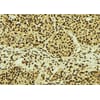
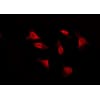
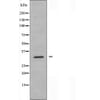
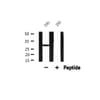
IMPORTANT NOTE This product is custom manufactured with a lead time of 3-4 weeks. Once in production, this item cannot be cancelled from an order and is not eligible for return. Target Protein RPS3 Clonality Polyclonal Storage/Stability -20°C/1 year Application WB,IHC,IF/ICC,ELISA Recommended Dilution WB 1:500~1:1000 IHC: 1:50~1:200, IF/ICC 1:100-1:500 Concentration 1 mg/ml Reactive Species Human,Mouse,Rat Host Species Rabbit Immunogen A synthesized peptide Specificity RPS3 Antibody detects endogenous levels of total RPS3 Purification The antiserum was purified by peptide affinity chromatography. Form Rabbit IgG in phosphate buffered saline , pH 7.4, 150mM NaCl, 0.02% sodium azide and 50% glycerol.Store at -20 °C.Stable for 12 months from date of receipt Gene Name RPS3 Accession No. P23396 Alternate Names 40S ribosomal protein S3; fb13d09; FLJ26283; FLJ27450; IMR 90 ribosomal protein S3; MGC56088; MGC87870; OTTHUMP00000229804; OTTHUMP00000229805; OTTHUMP00000229874; OTTHUMP00000229877; OTTHUMP00000229878; OTTHUMP00000229879; OTTHUMP00000229880; OTTHUMP00000229882; OTTHUMP00000229883; OTTHUMP00000229886; Ribosomal protein S3; rps3; RS3_HUMAN; S3; wu:fb13d09; zgc:56088; Description Involved in translation as a component of the 40S small ribosomal subunit (PubMed:8706699). Has endonuclease activity and plays a role in repair of damaged DNA (PubMed:7775413). Cleaves phosphodiester bonds of DNAs containing altered bases with broad specificity and cleaves supercoiled DNA more efficiently than relaxed DNA (PubMed:15707971). Displays high binding affinity for 7,8-dihydro-8-oxoguanine (8-oxoG), a common DNA lesion caused by reactive oxygen species (ROS) (PubMed:14706345). Has also been shown to bind with similar affinity to intact and damaged DNA (PubMed:18610840). Stimulates the N-glycosylase activity of the base excision protein OGG1 (PubMed:15518571). Enhances the uracil excision activity of UNG1 (PubMed:18973764). Also stimulates the cleavage of the phosphodiester backbone by APEX1 (PubMed:18973764). When located in the mitochondrion, reduces cellular ROS levels and mitochondrial DNA damage (PubMed:23911537). Has also been shown to negatively regulate DNA repair in cells exposed to hydrogen peroxide (PubMed:17049931). Plays a role in regulating transcription as part of the NF-kappa-B p65-p50 complex where it binds to the RELA/p65 subunit, enhances binding of the complex to DNA and promotes transcription of target genes (PubMed:18045535). Represses its own translation by binding to its cognate mRNA (PubMed:20217897). Binds to and protects TP53/p53 from MDM2-mediated ubiquitination (PubMed:19656744). Involved in spindle formation and chromosome movement during mitosis by regulating microtubule polymerization (PubMed:23131551). Involved in induction of apoptosis through its role in activation of CASP8 (PubMed:14988002). Induces neuronal apoptosis by interacting with the E2F1 transcription factor and acting synergistically with it to up-regulate pro-apoptotic proteins BCL2L11/BIM and HRK/Dp5 (PubMed:20605787). Interacts with TRADD following exposure to UV radiation and induces apoptosis by caspase-dependent JNK activation (PubMed:22510408). Cell Pathway/ Category Primary Polyclonal Antibody Protein MW 30 KD Usage For Research Use Only! Not for diagnostic or therapeutic procedures. - Reviews
| Antibody Specification | |
| Datasheet |
|
| IMPORTANT NOTE | This product is custom manufactured with a lead time of 3-4 weeks. Once in production, this item cannot be cancelled from an order and is not eligible for return. |
| Target Protein | RPS3 |
| Clonality | Polyclonal |
| Storage/Stability | -20°C/1 year |
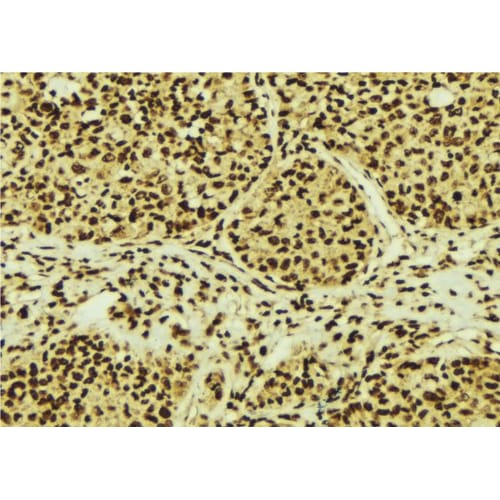
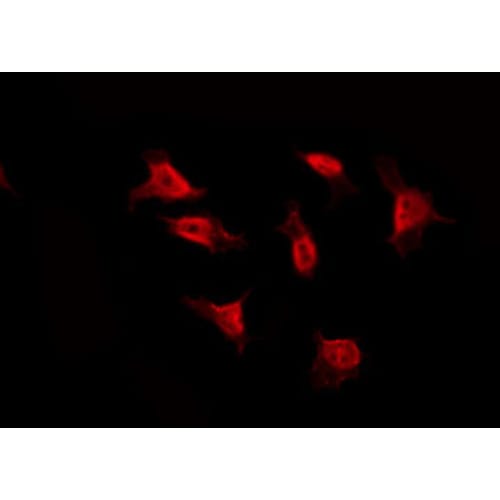
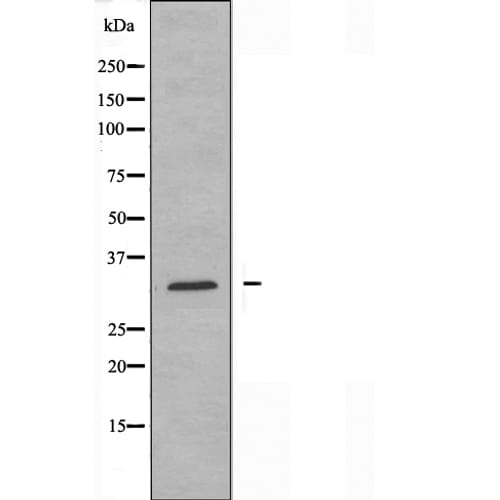
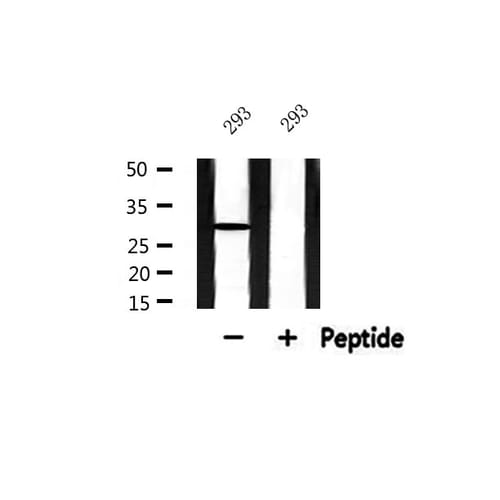
| Application | WB,IHC,IF/ICC,ELISA |
| Recommended Dilution | WB 1:500~1:1000 IHC: 1:50~1:200, IF/ICC 1:100-1:500 |
| Concentration | 1 mg/ml |
| Reactive Species | Human,Mouse,Rat |
| Host Species | Rabbit |
| Immunogen | A synthesized peptide |
| Specificity | RPS3 Antibody detects endogenous levels of total RPS3 |
| Purification | The antiserum was purified by peptide affinity chromatography. |
| Form | Rabbit IgG in phosphate buffered saline , pH 7.4, 150mM NaCl, 0.02% sodium azide and 50% glycerol.Store at -20 °C.Stable for 12 months from date of receipt |
| Gene Name | RPS3 |
| Accession No. | P23396 |
| Alternate Names | 40S ribosomal protein S3; fb13d09; FLJ26283; FLJ27450; IMR 90 ribosomal protein S3; MGC56088; MGC87870; OTTHUMP00000229804; OTTHUMP00000229805; OTTHUMP00000229874; OTTHUMP00000229877; OTTHUMP00000229878; OTTHUMP00000229879; OTTHUMP00000229880; OTTHUMP00000229882; OTTHUMP00000229883; OTTHUMP00000229886; Ribosomal protein S3; rps3; RS3_HUMAN; S3; wu:fb13d09; zgc:56088; |
| Description | Involved in translation as a component of the 40S small ribosomal subunit (PubMed:8706699). Has endonuclease activity and plays a role in repair of damaged DNA (PubMed:7775413). Cleaves phosphodiester bonds of DNAs containing altered bases with broad specificity and cleaves supercoiled DNA more efficiently than relaxed DNA (PubMed:15707971). Displays high binding affinity for 7,8-dihydro-8-oxoguanine (8-oxoG), a common DNA lesion caused by reactive oxygen species (ROS) (PubMed:14706345). Has also been shown to bind with similar affinity to intact and damaged DNA (PubMed:18610840). Stimulates the N-glycosylase activity of the base excision protein OGG1 (PubMed:15518571). Enhances the uracil excision activity of UNG1 (PubMed:18973764). Also stimulates the cleavage of the phosphodiester backbone by APEX1 (PubMed:18973764). When located in the mitochondrion, reduces cellular ROS levels and mitochondrial DNA damage (PubMed:23911537). Has also been shown to negatively regulate DNA repair in cells exposed to hydrogen peroxide (PubMed:17049931). Plays a role in regulating transcription as part of the NF-kappa-B p65-p50 complex where it binds to the RELA/p65 subunit, enhances binding of the complex to DNA and promotes transcription of target genes (PubMed:18045535). Represses its own translation by binding to its cognate mRNA (PubMed:20217897). Binds to and protects TP53/p53 from MDM2-mediated ubiquitination (PubMed:19656744). Involved in spindle formation and chromosome movement during mitosis by regulating microtubule polymerization (PubMed:23131551). Involved in induction of apoptosis through its role in activation of CASP8 (PubMed:14988002). Induces neuronal apoptosis by interacting with the E2F1 transcription factor and acting synergistically with it to up-regulate pro-apoptotic proteins BCL2L11/BIM and HRK/Dp5 (PubMed:20605787). Interacts with TRADD following exposure to UV radiation and induces apoptosis by caspase-dependent JNK activation (PubMed:22510408). |
| Cell Pathway/ Category | Primary Polyclonal Antibody |
| Protein MW | 30 KD |
| Usage | For Research Use Only! Not for diagnostic or therapeutic procedures. |