

ITA4683
ITA4683
ITA4683
from
$526.00
Price in reward points: 526
- Catalog: ITA4683
- Gene/Protein: ATP5I
- Product Description: Immunotag™ ATP5I Antibody
-
Description
-
Specifications
Antibody Specification Datasheet 
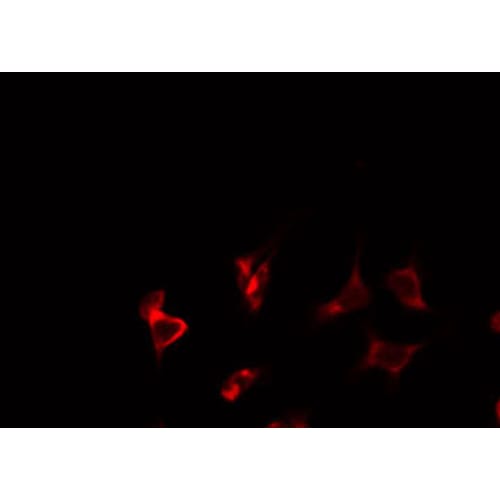
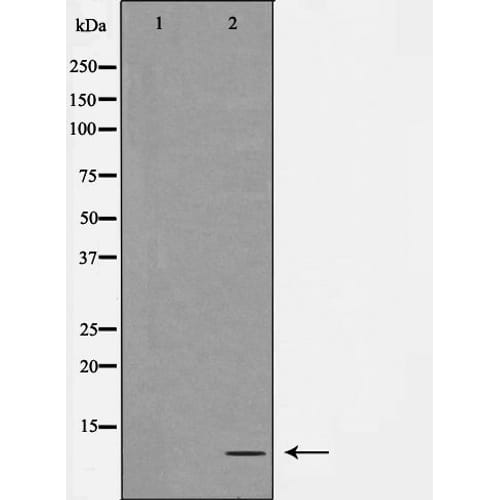
IMPORTANT NOTE This product is custom manufactured with a lead time of 3-4 weeks. Once in production, this item cannot be cancelled from an order and is not eligible for return. Target Protein ATP5I Clonality Polyclonal Storage/Stability -20°C/1 year Application WB,IF/ICC,ELISA Recommended Dilution WB 1:500~1:1000, IF/ICC 1:100-1:500 Concentration 1 mg/ml Reactive Species Human Host Species Rabbit Immunogen A synthesized peptide Specificity ATP5I Antibody detects endogenous levels of total ATP5I Purification The antiserum was purified by peptide affinity chromatography. Form Rabbit IgG in phosphate buffered saline , pH 7.4, 150mM NaCl, 0.02% sodium azide and 50% glycerol.Store at -20 °C.Stable for 12 months from date of receipt Gene Name ATP5I Accession No. P56385 Alternate Names ATP 5I; ATP 5K; ATP synthase e chain mitochondrial; ATP synthase H+ transporting mitochondrial F0 complex subunit E; ATP synthase subunit e; ATP synthase subunit e mitochondrial; ATP5I; ATP5I_HUMAN; ATP5K; ATPase subunit e; F1F0 ATP synthase murine e subunit; MGC12532; mitochondrial; Description Mitochondrial membrane ATP synthase (F1F0 ATP synthase or Complex V) produces ATP from ADP in the presence of a proton gradient across the membrane which is generated by electron transport complexes of the respiratory chain. F-type ATPases consist of two structural domains, F1 - containing the extramembraneous catalytic core, and F0 - containing the membrane proton channel, linked together by a central stalk and a peripheral stalk. During catalysis, ATP synthesis in the catalytic domain of F1 is coupled via a rotary mechanism of the central stalk subunits to proton translocation. Part of the complex F0 domain. Minor subunit located with subunit a in the membrane. Cell Pathway/ Category Primary Polyclonal Antibody Protein MW 8 KD Usage For Research Use Only! Not for diagnostic or therapeutic procedures. - Reviews
| Antibody Specification | |
| Datasheet |
|
| IMPORTANT NOTE | This product is custom manufactured with a lead time of 3-4 weeks. Once in production, this item cannot be cancelled from an order and is not eligible for return. |
| Target Protein | ATP5I |
| Clonality | Polyclonal |
| Storage/Stability | -20°C/1 year |
| Application | WB,IF/ICC,ELISA |
| Recommended Dilution | WB 1:500~1:1000, IF/ICC 1:100-1:500 |
| Concentration | 1 mg/ml |
| Reactive Species | Human |
| Host Species | Rabbit |
| Immunogen | A synthesized peptide |
| Specificity | ATP5I Antibody detects endogenous levels of total ATP5I |
| Purification | The antiserum was purified by peptide affinity chromatography. |
| Form | Rabbit IgG in phosphate buffered saline , pH 7.4, 150mM NaCl, 0.02% sodium azide and 50% glycerol.Store at -20 °C.Stable for 12 months from date of receipt |
| Gene Name | ATP5I |
| Accession No. | P56385 |
| Alternate Names | ATP 5I; ATP 5K; ATP synthase e chain mitochondrial; ATP synthase H+ transporting mitochondrial F0 complex subunit E; ATP synthase subunit e; ATP synthase subunit e mitochondrial; ATP5I; ATP5I_HUMAN; ATP5K; ATPase subunit e; F1F0 ATP synthase murine e subunit; MGC12532; mitochondrial; |
| Description | Mitochondrial membrane ATP synthase (F1F0 ATP synthase or Complex V) produces ATP from ADP in the presence of a proton gradient across the membrane which is generated by electron transport complexes of the respiratory chain. F-type ATPases consist of two structural domains, F1 - containing the extramembraneous catalytic core, and F0 - containing the membrane proton channel, linked together by a central stalk and a peripheral stalk. During catalysis, ATP synthesis in the catalytic domain of F1 is coupled via a rotary mechanism of the central stalk subunits to proton translocation. Part of the complex F0 domain. Minor subunit located with subunit a in the membrane. |
| Cell Pathway/ Category | Primary Polyclonal Antibody |
| Protein MW | 8 KD |
| Usage | For Research Use Only! Not for diagnostic or therapeutic procedures. |