

ITA4795
ITA4795
ITA4795
from
$526.00
Price in reward points: 526
- Catalog: ITA4795
- Gene/Protein: CEP290
- Product Description: Immunotag™ CEP290 Antibody
-
Description
-
Specifications
Antibody Specification Datasheet 
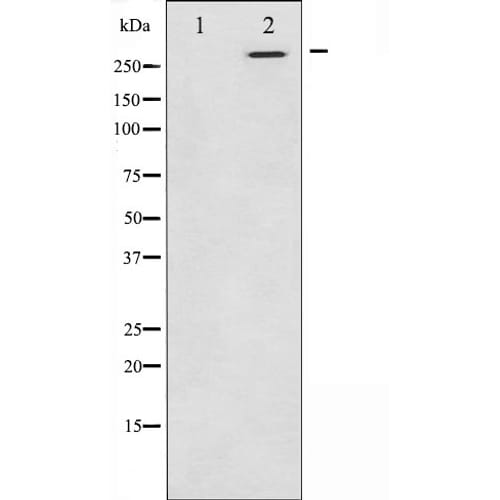
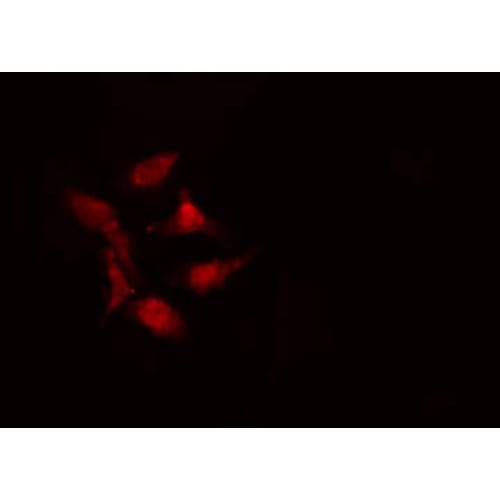
IMPORTANT NOTE This product is custom manufactured with a lead time of 3-4 weeks. Once in production, this item cannot be cancelled from an order and is not eligible for return. Target Protein CEP290 Clonality Polyclonal Storage/Stability -20°C/1 year Application WB,IF/ICC,ELISA Recommended Dilution WB 1:500~1:1000, IF/ICC 1:100-1:500 Concentration 1 mg/ml Reactive Species Human,Mouse Host Species Rabbit Immunogen A synthesized peptide Specificity CEP290 Antibody detects endogenous levels of total CEP290 Purification The antiserum was purified by peptide affinity chromatography. Form Rabbit IgG in phosphate buffered saline , pH 7.4, 150mM NaCl, 0.02% sodium azide and 50% glycerol.Store at -20 °C.Stable for 12 months from date of receipt Gene Name CEP290 Accession No. O15078 Alternate Names 3H11AG; Bardet-Biedl syndrome 14 protein; BBS14; Cancer/testis antigen 87; CE290_HUMAN; Centrosomal protein 290kDa; Centrosomal protein of 290 kDa; Cep290; CT87; CTCL tumor antigen se2 2; FLJ13615; FLJ21979; JBTS5; JBTS6; KIAA0373; LCA10; Meckel syndrome, type 4; MKS4; Monoclonal antibody 3H11 antigen; Nephrocystin 6; Nephrocystin-6; NPHP6; POC3; POC3 centriolar protein homolog; Prostate cancer antigen T21; rd16; SLSN6 1, 2, 5; SLSN6; Tumor antigen se2-2; Description Involved in early and late steps in cilia formation. Its association with CCP110 is required for inhibition of primary cilia formation by CCP110 (PubMed:18694559). May play a role in early ciliogenesis in the disappearance of centriolar satellites and in the transition of primary ciliar vesicles (PCVs) to capped ciliary vesicles (CCVs). Required for the centrosomal recruitment of RAB8A and for the targeting of centriole satellite proteins to centrosomes such as of PCM1 (PubMed:24421332). Required for the correct localization of ciliary and phototransduction proteins in retinal photoreceptor cells; may play a role in ciliary transport processes (By similarity). Required for efficient recruitment of RAB8A to primary cilium (PubMed:17705300). In the ciliary transition zone is part of the tectonic-like complex which is required for tissue-specific ciliogenesis and may regulate ciliary membrane composition (By similarity). Involved in regulation of the BBSome complex integrity, specifically for presence of BBS2, BBS5 and BBS8/TTC8 in the complex, and in ciliary targeting of selected BBSome cargos. May play a role in controlling entry of the BBSome complex to cilia possibly implicating IQCB1/NPHP5 (PubMed:25552655). Activates ATF4-mediated transcription (PubMed:16682973). Cell Pathway/ Category Primary Polyclonal Antibody Protein MW 290 KD Usage For Research Use Only! Not for diagnostic or therapeutic procedures. - Reviews
| Antibody Specification | |
| Datasheet |
|
| IMPORTANT NOTE | This product is custom manufactured with a lead time of 3-4 weeks. Once in production, this item cannot be cancelled from an order and is not eligible for return. |
| Target Protein | CEP290 |
| Clonality | Polyclonal |
| Storage/Stability | -20°C/1 year |
| Application | WB,IF/ICC,ELISA |
| Recommended Dilution | WB 1:500~1:1000, IF/ICC 1:100-1:500 |
| Concentration | 1 mg/ml |
| Reactive Species | Human,Mouse |
| Host Species | Rabbit |
| Immunogen | A synthesized peptide |
| Specificity | CEP290 Antibody detects endogenous levels of total CEP290 |
| Purification | The antiserum was purified by peptide affinity chromatography. |
| Form | Rabbit IgG in phosphate buffered saline , pH 7.4, 150mM NaCl, 0.02% sodium azide and 50% glycerol.Store at -20 °C.Stable for 12 months from date of receipt |
| Gene Name | CEP290 |
| Accession No. | O15078 |
| Alternate Names | 3H11AG; Bardet-Biedl syndrome 14 protein; BBS14; Cancer/testis antigen 87; CE290_HUMAN; Centrosomal protein 290kDa; Centrosomal protein of 290 kDa; Cep290; CT87; CTCL tumor antigen se2 2; FLJ13615; FLJ21979; JBTS5; JBTS6; KIAA0373; LCA10; Meckel syndrome, type 4; MKS4; Monoclonal antibody 3H11 antigen; Nephrocystin 6; Nephrocystin-6; NPHP6; POC3; POC3 centriolar protein homolog; Prostate cancer antigen T21; rd16; SLSN6 1, 2, 5; SLSN6; Tumor antigen se2-2; |
| Description | Involved in early and late steps in cilia formation. Its association with CCP110 is required for inhibition of primary cilia formation by CCP110 (PubMed:18694559). May play a role in early ciliogenesis in the disappearance of centriolar satellites and in the transition of primary ciliar vesicles (PCVs) to capped ciliary vesicles (CCVs). Required for the centrosomal recruitment of RAB8A and for the targeting of centriole satellite proteins to centrosomes such as of PCM1 (PubMed:24421332). Required for the correct localization of ciliary and phototransduction proteins in retinal photoreceptor cells; may play a role in ciliary transport processes (By similarity). Required for efficient recruitment of RAB8A to primary cilium (PubMed:17705300). In the ciliary transition zone is part of the tectonic-like complex which is required for tissue-specific ciliogenesis and may regulate ciliary membrane composition (By similarity). Involved in regulation of the BBSome complex integrity, specifically for presence of BBS2, BBS5 and BBS8/TTC8 in the complex, and in ciliary targeting of selected BBSome cargos. May play a role in controlling entry of the BBSome complex to cilia possibly implicating IQCB1/NPHP5 (PubMed:25552655). Activates ATF4-mediated transcription (PubMed:16682973). |
| Cell Pathway/ Category | Primary Polyclonal Antibody |
| Protein MW | 290 KD |
| Usage | For Research Use Only! Not for diagnostic or therapeutic procedures. |