

ITA7534
ITA7534
ITA7534
from
$526.00
Price in reward points: 526
- Catalog: ITA7534
- Gene/Protein: TEK
- Product Description: Immunotag™ Tie-2 Antibody
-
Description
-
Specifications
Antibody Specification Datasheet 
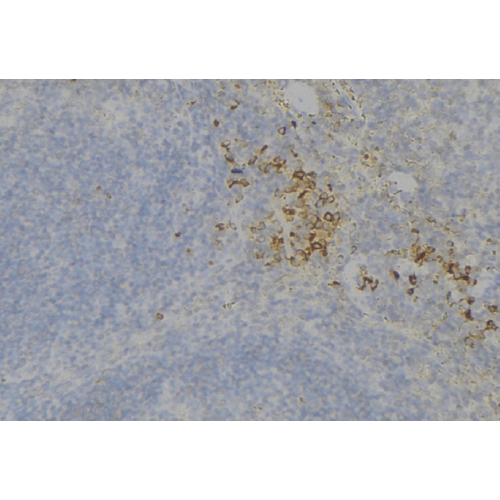
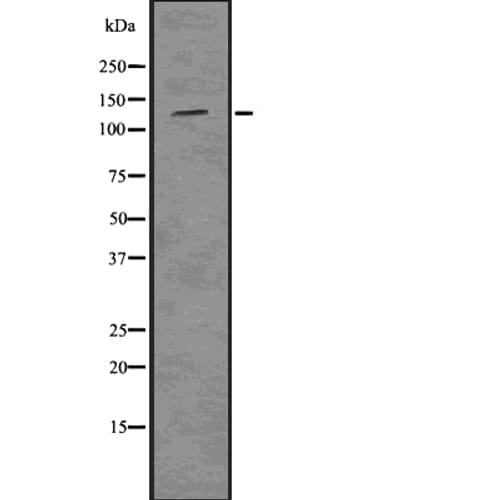
IMPORTANT NOTE This product is custom manufactured with a lead time of 3-4 weeks. Once in production, this item cannot be cancelled from an order and is not eligible for return. Target Protein Tie-2 Clonality Polyclonal Storage/Stability -20°C/1 year Application WB,IHC,ELISA Recommended Dilution WB 1:1000-3000 IHC 1:200 Concentration 1 mg/ml Reactive Species Human,Mouse,Rat Host Species Rabbit Immunogen A synthesized peptide derived from human Tie-2 Specificity Tie-2 Antibody detects endogenous levels of total Tie-2 Purification The antiserum was purified by peptide affinity chromatography. Form Rabbit IgG in phosphate buffered saline , pH 7.4, 150mM NaCl, 0.02% sodium azide and 50% glycerol.Store at -20 °C.Stable for 12 months from date of receipt Gene Name TEK Accession No. Q02763 Alternate Names Angiopoietin 1 receptor; Angiopoietin-1 receptor; CD202b; CD202b antigen; Endothelial tyrosine kinase; Endothelium specific receptor tyrosine kinase 2; hTIE 2; hTIE2; Hyk; p140 TEK; Soluble TIE2 variant 1; Soluble TIE2 variant 2; Tek; tek tyrosine kinase; TEK tyrosine kinase endothelial; tek tyrosine kinase, endothelial; TIE 2; TIE2; TIE2_HUMAN; Tunica interna endothelial cell kinase; Tyrosine kinase with Ig and EGF homology domains 2; Tyrosine kinase with Ig and EGF homology domains-2; Tyrosine protein kinase receptor TEK; Tyrosine protein kinase receptor TIE 2; Tyrosine-protein kinase receptor TEK; Tyrosine-protein kinase receptor TIE-2; Venous malformations multiple cutaneous and mucosal; VMCM 1; VMCM; VMCM1; Description Tyrosine-protein kinase that acts as cell-surface receptor for ANGPT1, ANGPT2 and ANGPT4 and regulates angiogenesis, endothelial cell survival, proliferation, migration, adhesion and cell spreading, reorganization of the actin cytoskeleton, but also maintenance of vascular quiescence. Has anti-inflammatory effects by preventing the leakage of proinflammatory plasma proteins and leukocytes from blood vessels. Required for normal angiogenesis and heart development during embryogenesis. Required for post-natal hematopoiesis. After birth, activates or inhibits angiogenesis, depending on the context. Inhibits angiogenesis and promotes vascular stability in quiescent vessels, where endothelial cells have tight contacts. In quiescent vessels, ANGPT1 oligomers recruit TEK to cell-cell contacts, forming complexes with TEK molecules from adjoining cells, and this leads to preferential activation of phosphatidylinositol 3-kinase and the AKT1 signaling cascades. In migrating endothelial cells that lack cell-cell adhesions, ANGT1 recruits TEK to contacts with the extracellular matrix, leading to the formation of focal adhesion complexes, activation of PTK2/FAK and of the downstream kinases MAPK1/ERK2 and MAPK3/ERK1, and ultimately to the stimulation of sprouting angiogenesis. ANGPT1 signaling triggers receptor dimerization and autophosphorylation at specific tyrosine residues that then serve as binding sites for scaffold proteins and effectors. Signaling is modulated by ANGPT2 that has lower affinity for TEK, can promote TEK autophosphorylation in the absence of ANGPT1, but inhibits ANGPT1-mediated signaling by competing for the same binding site. Signaling is also modulated by formation of heterodimers with TIE1, and by proteolytic processing that gives rise to a soluble TEK extracellular domain. The soluble extracellular domain modulates signaling by functioning as decoy receptor for angiopoietins. TEK phosphorylates DOK2, GRB7, GRB14, PIK3R1; SHC1 and TIE1. Cell Pathway/ Category Primary Polyclonal Antibody Protein MW 126 kDa Usage For Research Use Only! Not for diagnostic or therapeutic procedures. - Reviews
| Antibody Specification | |
| Datasheet |
|
| IMPORTANT NOTE | This product is custom manufactured with a lead time of 3-4 weeks. Once in production, this item cannot be cancelled from an order and is not eligible for return. |
| Target Protein | Tie-2 |
| Clonality | Polyclonal |
| Storage/Stability | -20°C/1 year |
| Application | WB,IHC,ELISA |
| Recommended Dilution | WB 1:1000-3000 IHC 1:200 |
| Concentration | 1 mg/ml |
| Reactive Species | Human,Mouse,Rat |
| Host Species | Rabbit |
| Immunogen | A synthesized peptide derived from human Tie-2 |
| Specificity | Tie-2 Antibody detects endogenous levels of total Tie-2 |
| Purification | The antiserum was purified by peptide affinity chromatography. |
| Form | Rabbit IgG in phosphate buffered saline , pH 7.4, 150mM NaCl, 0.02% sodium azide and 50% glycerol.Store at -20 °C.Stable for 12 months from date of receipt |
| Gene Name | TEK |
| Accession No. | Q02763 |
| Alternate Names | Angiopoietin 1 receptor; Angiopoietin-1 receptor; CD202b; CD202b antigen; Endothelial tyrosine kinase; Endothelium specific receptor tyrosine kinase 2; hTIE 2; hTIE2; Hyk; p140 TEK; Soluble TIE2 variant 1; Soluble TIE2 variant 2; Tek; tek tyrosine kinase; TEK tyrosine kinase endothelial; tek tyrosine kinase, endothelial; TIE 2; TIE2; TIE2_HUMAN; Tunica interna endothelial cell kinase; Tyrosine kinase with Ig and EGF homology domains 2; Tyrosine kinase with Ig and EGF homology domains-2; Tyrosine protein kinase receptor TEK; Tyrosine protein kinase receptor TIE 2; Tyrosine-protein kinase receptor TEK; Tyrosine-protein kinase receptor TIE-2; Venous malformations multiple cutaneous and mucosal; VMCM 1; VMCM; VMCM1; |
| Description | Tyrosine-protein kinase that acts as cell-surface receptor for ANGPT1, ANGPT2 and ANGPT4 and regulates angiogenesis, endothelial cell survival, proliferation, migration, adhesion and cell spreading, reorganization of the actin cytoskeleton, but also maintenance of vascular quiescence. Has anti-inflammatory effects by preventing the leakage of proinflammatory plasma proteins and leukocytes from blood vessels. Required for normal angiogenesis and heart development during embryogenesis. Required for post-natal hematopoiesis. After birth, activates or inhibits angiogenesis, depending on the context. Inhibits angiogenesis and promotes vascular stability in quiescent vessels, where endothelial cells have tight contacts. In quiescent vessels, ANGPT1 oligomers recruit TEK to cell-cell contacts, forming complexes with TEK molecules from adjoining cells, and this leads to preferential activation of phosphatidylinositol 3-kinase and the AKT1 signaling cascades. In migrating endothelial cells that lack cell-cell adhesions, ANGT1 recruits TEK to contacts with the extracellular matrix, leading to the formation of focal adhesion complexes, activation of PTK2/FAK and of the downstream kinases MAPK1/ERK2 and MAPK3/ERK1, and ultimately to the stimulation of sprouting angiogenesis. ANGPT1 signaling triggers receptor dimerization and autophosphorylation at specific tyrosine residues that then serve as binding sites for scaffold proteins and effectors. Signaling is modulated by ANGPT2 that has lower affinity for TEK, can promote TEK autophosphorylation in the absence of ANGPT1, but inhibits ANGPT1-mediated signaling by competing for the same binding site. Signaling is also modulated by formation of heterodimers with TIE1, and by proteolytic processing that gives rise to a soluble TEK extracellular domain. The soluble extracellular domain modulates signaling by functioning as decoy receptor for angiopoietins. TEK phosphorylates DOK2, GRB7, GRB14, PIK3R1; SHC1 and TIE1. |
| Cell Pathway/ Category | Primary Polyclonal Antibody |
| Protein MW | 126 kDa |
| Usage | For Research Use Only! Not for diagnostic or therapeutic procedures. |