

ITA7890
ITA7890
ITA7890
from
$526.00
Price in reward points: 526
- Catalog: ITA7890
- Gene/Protein: RALA
- Product Description: Immunotag™ RALA Antibody
-
Description
-
Specifications
Antibody Specification Datasheet 
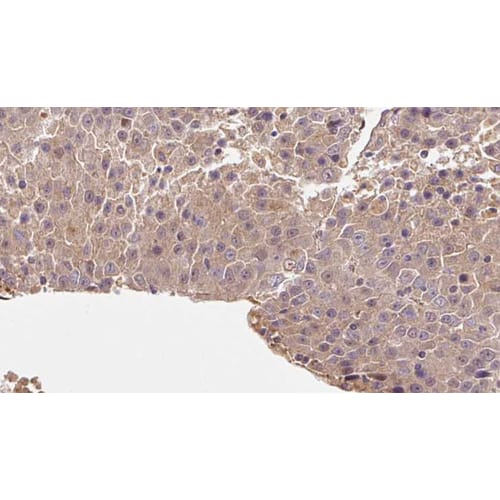
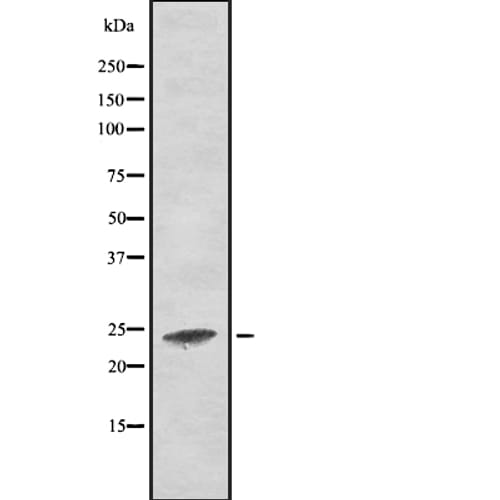
IMPORTANT NOTE This product is custom manufactured with a lead time of 3-4 weeks. Once in production, this item cannot be cancelled from an order and is not eligible for return. Target Protein RALA Clonality Polyclonal Storage/Stability -20°C/1 year Application WB,IHC,ELISA Recommended Dilution WB 1:1000-3000, IHC 1:50-1:200 Concentration 1 mg/ml Reactive Species Human Host Species Rabbit Immunogen A synthesized peptide derived from human RALA Specificity RALA Antibody detects endogenous levels of total RALA Purification The antiserum was purified by peptide affinity chromatography. Form Rabbit IgG in phosphate buffered saline , pH 7.4, 150mM NaCl, 0.02% sodium azide and 50% glycerol.Store at -20 °C.Stable for 12 months from date of receipt Gene Name RALA Accession No. P11233 Alternate Names MGC48949; Ral a; Ral A protein; RAL; RALA; RALA_HUMAN; Ras family small GTP binding protein RALA; RAS like protein A; Ras related protein RalA; Ras-related protein Ral-A; v ral simian leukemia viral oncogene homolog A (ras related); v ral simian leukemia viral oncogene homolog A; Description Multifunctional GTPase involved in a variety of cellular processes including gene expression, cell migration, cell proliferation, oncogenic transformation and membrane trafficking. Accomplishes its multiple functions by interacting with distinct downstream effectors. Acts as a GTP sensor for GTP-dependent exocytosis of dense core vesicles. The RALA-exocyst complex regulates integrin-dependent membrane raft exocytosis and growth signaling (PubMed:20005108). Key regulator of LPAR1 signaling and competes with GRK2 for binding to LPAR1 thus affecting the signaling properties of the receptor. Required for anchorage-independent proliferation of transformed cells (PubMed:19306925). During mitosis, supports the stabilization and elongation of the intracellular bridge between dividing cells. Cooperates with EXOC2 to recruit other components of the exocyst to the early midbody (PubMed:18756269). Cell Pathway/ Category Primary Polyclonal Antibody Protein MW 24 kDa Usage For Research Use Only! Not for diagnostic or therapeutic procedures. - Reviews
| Antibody Specification | |
| Datasheet |
|
| IMPORTANT NOTE | This product is custom manufactured with a lead time of 3-4 weeks. Once in production, this item cannot be cancelled from an order and is not eligible for return. |
| Target Protein | RALA |
| Clonality | Polyclonal |
| Storage/Stability | -20°C/1 year |
| Application | WB,IHC,ELISA |
| Recommended Dilution | WB 1:1000-3000, IHC 1:50-1:200 |
| Concentration | 1 mg/ml |
| Reactive Species | Human |
| Host Species | Rabbit |
| Immunogen | A synthesized peptide derived from human RALA |
| Specificity | RALA Antibody detects endogenous levels of total RALA |
| Purification | The antiserum was purified by peptide affinity chromatography. |
| Form | Rabbit IgG in phosphate buffered saline , pH 7.4, 150mM NaCl, 0.02% sodium azide and 50% glycerol.Store at -20 °C.Stable for 12 months from date of receipt |
| Gene Name | RALA |
| Accession No. | P11233 |
| Alternate Names | MGC48949; Ral a; Ral A protein; RAL; RALA; RALA_HUMAN; Ras family small GTP binding protein RALA; RAS like protein A; Ras related protein RalA; Ras-related protein Ral-A; v ral simian leukemia viral oncogene homolog A (ras related); v ral simian leukemia viral oncogene homolog A; |
| Description | Multifunctional GTPase involved in a variety of cellular processes including gene expression, cell migration, cell proliferation, oncogenic transformation and membrane trafficking. Accomplishes its multiple functions by interacting with distinct downstream effectors. Acts as a GTP sensor for GTP-dependent exocytosis of dense core vesicles. The RALA-exocyst complex regulates integrin-dependent membrane raft exocytosis and growth signaling (PubMed:20005108). Key regulator of LPAR1 signaling and competes with GRK2 for binding to LPAR1 thus affecting the signaling properties of the receptor. Required for anchorage-independent proliferation of transformed cells (PubMed:19306925). During mitosis, supports the stabilization and elongation of the intracellular bridge between dividing cells. Cooperates with EXOC2 to recruit other components of the exocyst to the early midbody (PubMed:18756269). |
| Cell Pathway/ Category | Primary Polyclonal Antibody |
| Protein MW | 24 kDa |
| Usage | For Research Use Only! Not for diagnostic or therapeutic procedures. |