

ITA7981
ITA7981
ITA7981
from
$526.00
Price in reward points: 526
- Catalog: ITA7981
- Gene/Protein: HSPA2
- Product Description: Immunotag™ HSPA2 Antibody
-
Description
-
Specifications
Antibody Specification Datasheet 
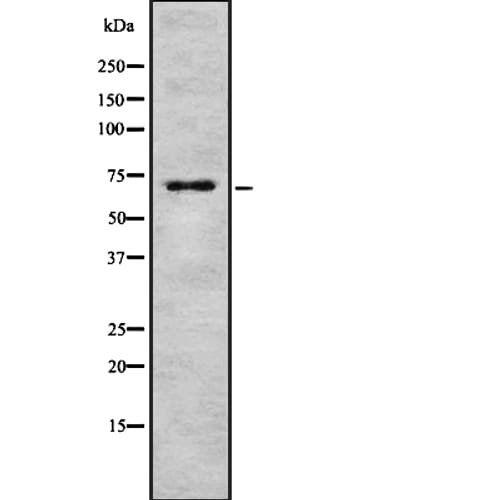
IMPORTANT NOTE This product is custom manufactured with a lead time of 3-4 weeks. Once in production, this item cannot be cancelled from an order and is not eligible for return. Target Protein HSPA2 Clonality Polyclonal Storage/Stability -20°C/1 year Application WB,ELISA Recommended Dilution WB 1:1000-3000 Concentration 1 mg/ml Reactive Species Human Host Species Rabbit Immunogen A synthesized peptide derived from human HSPA2 Specificity HSPA2 Antibody detects endogenous levels of total HSPA2 Purification The antiserum was purified by peptide affinity chromatography. Form Rabbit IgG in phosphate buffered saline , pH 7.4, 150mM NaCl, 0.02% sodium azide and 50% glycerol.Store at -20 °C.Stable for 12 months from date of receipt Gene Name HSPA2 Accession No. P54652 Alternate Names 70kDa; Hcp70.2; Heat shock 70 kDa protein 2; Heat shock protein 2; Heat shock protein 70.2; Heat shock related 70 kDa protein 2; Heat shock-related 70 kDa protein 2; Heat-shock protein, 70-KD, 2; Heat-shock protein, 70-KD, 3; HSP70 2; HSP70 3; Hsp70-2; HSP70-3; HSP70.2; HSP70A2; HSP72; HSP72_HUMAN; HSPA2; Hspt70; Hst70; MGC58299; MGC7795; MGC93458; OTTHUMP00000180664; Testis-specific heat shock protein-related; Description Molecular chaperone implicated in a wide variety of cellular processes, including protection of the proteome from stress, folding and transport of newly synthesized polypeptides, activation of proteolysis of misfolded proteins and the formation and dissociation of protein complexes. Plays a pivotal role in the protein quality control system, ensuring the correct folding of proteins, the re-folding of misfolded proteins and controlling the targeting of proteins for subsequent degradation. This is achieved through cycles of ATP binding, ATP hydrolysis and ADP release, mediated by co-chaperones. The affinity for polypeptides is regulated by its nucleotide bound state. In the ATP-bound form, it has a low affinity for substrate proteins. However, upon hydrolysis of the ATP to ADP, it undergoes a conformational change that increases its affinity for substrate proteins. It goes through repeated cycles of ATP hydrolysis and nucleotide exchange, which permits cycles of substrate binding and release (PubMed:26865365). Plays a role in spermatogenesis. In association with SHCBP1L may participate in the maintenance of spindle integrity during meiosis in male germ cells (By similarity). Cell Pathway/ Category Primary Polyclonal Antibody Protein MW 70 kDa Usage For Research Use Only! Not for diagnostic or therapeutic procedures. - Reviews
| Antibody Specification | |
| Datasheet |
|
| IMPORTANT NOTE | This product is custom manufactured with a lead time of 3-4 weeks. Once in production, this item cannot be cancelled from an order and is not eligible for return. |
| Target Protein | HSPA2 |
| Clonality | Polyclonal |
| Storage/Stability | -20°C/1 year |
| Application | WB,ELISA |
| Recommended Dilution | WB 1:1000-3000 |
| Concentration | 1 mg/ml |
| Reactive Species | Human |
| Host Species | Rabbit |
| Immunogen | A synthesized peptide derived from human HSPA2 |
| Specificity | HSPA2 Antibody detects endogenous levels of total HSPA2 |
| Purification | The antiserum was purified by peptide affinity chromatography. |
| Form | Rabbit IgG in phosphate buffered saline , pH 7.4, 150mM NaCl, 0.02% sodium azide and 50% glycerol.Store at -20 °C.Stable for 12 months from date of receipt |
| Gene Name | HSPA2 |
| Accession No. | P54652 |
| Alternate Names | 70kDa; Hcp70.2; Heat shock 70 kDa protein 2; Heat shock protein 2; Heat shock protein 70.2; Heat shock related 70 kDa protein 2; Heat shock-related 70 kDa protein 2; Heat-shock protein, 70-KD, 2; Heat-shock protein, 70-KD, 3; HSP70 2; HSP70 3; Hsp70-2; HSP70-3; HSP70.2; HSP70A2; HSP72; HSP72_HUMAN; HSPA2; Hspt70; Hst70; MGC58299; MGC7795; MGC93458; OTTHUMP00000180664; Testis-specific heat shock protein-related; |
| Description | Molecular chaperone implicated in a wide variety of cellular processes, including protection of the proteome from stress, folding and transport of newly synthesized polypeptides, activation of proteolysis of misfolded proteins and the formation and dissociation of protein complexes. Plays a pivotal role in the protein quality control system, ensuring the correct folding of proteins, the re-folding of misfolded proteins and controlling the targeting of proteins for subsequent degradation. This is achieved through cycles of ATP binding, ATP hydrolysis and ADP release, mediated by co-chaperones. The affinity for polypeptides is regulated by its nucleotide bound state. In the ATP-bound form, it has a low affinity for substrate proteins. However, upon hydrolysis of the ATP to ADP, it undergoes a conformational change that increases its affinity for substrate proteins. It goes through repeated cycles of ATP hydrolysis and nucleotide exchange, which permits cycles of substrate binding and release (PubMed:26865365). Plays a role in spermatogenesis. In association with SHCBP1L may participate in the maintenance of spindle integrity during meiosis in male germ cells (By similarity). |
| Cell Pathway/ Category | Primary Polyclonal Antibody |
| Protein MW | 70 kDa |
| Usage | For Research Use Only! Not for diagnostic or therapeutic procedures. |