

ITA8768
ITA8768
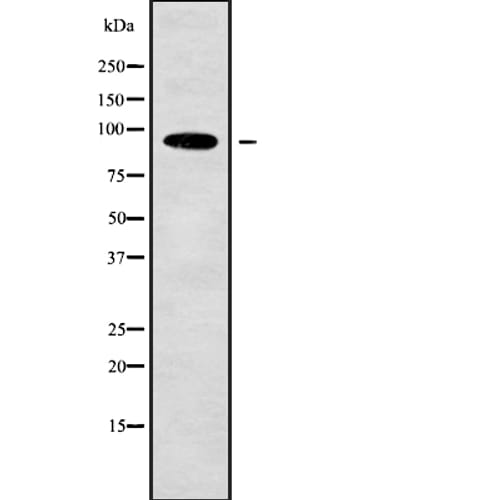
ITA8768
from
$526.00
Price in reward points: 526
- Catalog: ITA8768
- Gene/Protein: PDCD6IP
- Product Description: Immunotag™ PDCD6IP Antibody
-
Description
-
Specifications
Antibody Specification Datasheet 
IMPORTANT NOTE This product is custom manufactured with a lead time of 3-4 weeks. Once in production, this item cannot be cancelled from an order and is not eligible for return. Target Protein PDCD6IP Clonality Polyclonal Storage/Stability -20°C/1 year Application WB,ELISA Recommended Dilution WB 1:1000-3000 Concentration 1 mg/ml Reactive Species Human,Mouse,Rat Host Species Rabbit Immunogen A synthesized peptide derived from human PDCD6IP Specificity PDCD6IP Antibody detects endogenous levels of total PDCD6IP Purification The antiserum was purified by peptide affinity chromatography. Form Rabbit IgG in phosphate buffered saline , pH 7.4, 150mM NaCl, 0.02% sodium azide and 50% glycerol.Store at -20 °C.Stable for 12 months from date of receipt Gene Name PDCD6IP Accession No. Q8WUM4 Alternate Names AIP1; ALG 2 interacting protein 1; ALG-2-interacting protein 1; ALG2 interacting protein X; Alix; Apoptosis linked gene 2 interacting protein X; Dopamine receptor interacting protein 4; DRIP4; Hp95; KIAA1375; MGC17003; PDC6I_HUMAN; PDCD6 interacting protein; PDCD6-interacting protein; PDCD6IP; Programmed cell death 6 interacting protein; Programmed cell death 6-interacting protein; Description Multifunctional protein involved in endocytosis, multivesicular body biogenesis, membrane repair, cytokinesis, apoptosis and maintenance of tight junction integrity. Class E VPS protein involved in concentration and sorting of cargo proteins of the multivesicular body (MVB) for incorporation into intralumenal vesicles (ILVs) that are generated by invagination and scission from the limiting membrane of the endosome. Binds to the phospholipid lysobisphosphatidic acid (LBPA) which is abundant in MVBs internal membranes. The MVB pathway requires the sequential function of ESCRT-O, -I,-II and -III complexes (PubMed:14739459). The ESCRT machinery also functions in topologically equivalent membrane fission events, such as the terminal stages of cytokinesis (PubMed:17853893, PubMed:17556548). Adapter for a subset of ESCRT-III proteins, such as CHMP4, to function at distinct membranes. Required for completion of cytokinesis (PubMed:17853893, PubMed:17556548, PubMed:18641129). May play a role in the regulation of both apoptosis and cell proliferation. Regulates exosome biogenesis in concert with SDC1/4 and SDCBP (PubMed:22660413). By interacting with F-actin, PARD3 and TJP1 secures the proper assembly and positioning of actomyosin-tight junction complex at the apical sides of adjacent epithelial cells that defines a spatial membrane domain essential for the maintenance of epithelial cell polarity and barrier (By similarity). Cell Pathway/ Category Primary Polyclonal Antibody Protein MW 96 kDa Usage For Research Use Only! Not for diagnostic or therapeutic procedures. - Reviews
| Antibody Specification | |
| Datasheet |
|
| IMPORTANT NOTE | This product is custom manufactured with a lead time of 3-4 weeks. Once in production, this item cannot be cancelled from an order and is not eligible for return. |
| Target Protein | PDCD6IP |
| Clonality | Polyclonal |
| Storage/Stability | -20°C/1 year |
| Application | WB,ELISA |
| Recommended Dilution | WB 1:1000-3000 |
| Concentration | 1 mg/ml |
| Reactive Species | Human,Mouse,Rat |
| Host Species | Rabbit |
| Immunogen | A synthesized peptide derived from human PDCD6IP |
| Specificity | PDCD6IP Antibody detects endogenous levels of total PDCD6IP |
| Purification | The antiserum was purified by peptide affinity chromatography. |
| Form | Rabbit IgG in phosphate buffered saline , pH 7.4, 150mM NaCl, 0.02% sodium azide and 50% glycerol.Store at -20 °C.Stable for 12 months from date of receipt |
| Gene Name | PDCD6IP |
| Accession No. | Q8WUM4 |
| Alternate Names | AIP1; ALG 2 interacting protein 1; ALG-2-interacting protein 1; ALG2 interacting protein X; Alix; Apoptosis linked gene 2 interacting protein X; Dopamine receptor interacting protein 4; DRIP4; Hp95; KIAA1375; MGC17003; PDC6I_HUMAN; PDCD6 interacting protein; PDCD6-interacting protein; PDCD6IP; Programmed cell death 6 interacting protein; Programmed cell death 6-interacting protein; |
| Description | Multifunctional protein involved in endocytosis, multivesicular body biogenesis, membrane repair, cytokinesis, apoptosis and maintenance of tight junction integrity. Class E VPS protein involved in concentration and sorting of cargo proteins of the multivesicular body (MVB) for incorporation into intralumenal vesicles (ILVs) that are generated by invagination and scission from the limiting membrane of the endosome. Binds to the phospholipid lysobisphosphatidic acid (LBPA) which is abundant in MVBs internal membranes. The MVB pathway requires the sequential function of ESCRT-O, -I,-II and -III complexes (PubMed:14739459). The ESCRT machinery also functions in topologically equivalent membrane fission events, such as the terminal stages of cytokinesis (PubMed:17853893, PubMed:17556548). Adapter for a subset of ESCRT-III proteins, such as CHMP4, to function at distinct membranes. Required for completion of cytokinesis (PubMed:17853893, PubMed:17556548, PubMed:18641129). May play a role in the regulation of both apoptosis and cell proliferation. Regulates exosome biogenesis in concert with SDC1/4 and SDCBP (PubMed:22660413). By interacting with F-actin, PARD3 and TJP1 secures the proper assembly and positioning of actomyosin-tight junction complex at the apical sides of adjacent epithelial cells that defines a spatial membrane domain essential for the maintenance of epithelial cell polarity and barrier (By similarity). |
| Cell Pathway/ Category | Primary Polyclonal Antibody |
| Protein MW | 96 kDa |
| Usage | For Research Use Only! Not for diagnostic or therapeutic procedures. |