

ITA8826
ITA8826
ITA8826
from
$526.00
Price in reward points: 526
- Catalog: ITA8826
- Gene/Protein: ORC2
- Product Description: Immunotag™ ORC2L Antibody
-
Description
-
Specifications
Antibody Specification Datasheet 
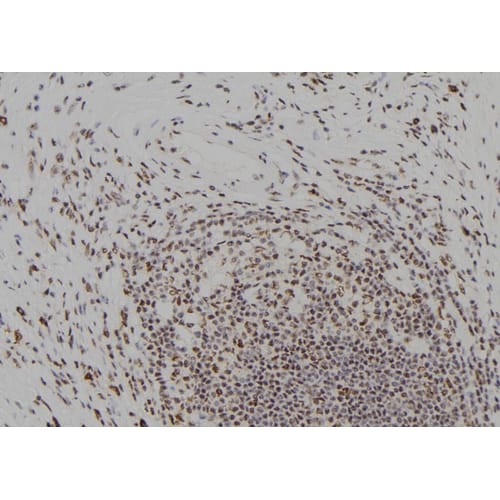
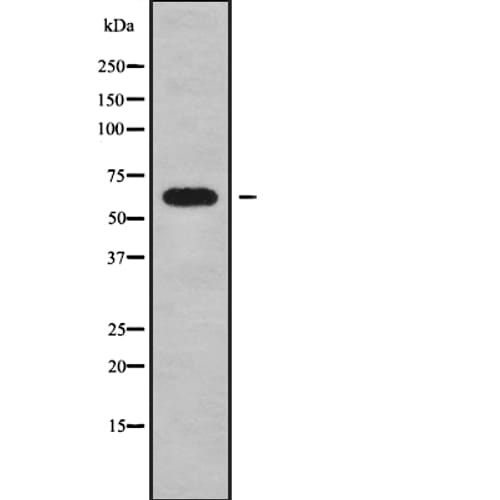
IMPORTANT NOTE This product is custom manufactured with a lead time of 3-4 weeks. Once in production, this item cannot be cancelled from an order and is not eligible for return. Target Protein ORC2L Clonality Polyclonal Storage/Stability -20°C/1 year Application WB,IHC,ELISA Recommended Dilution WB 1:1000-3000 IHC 1:200 Concentration 1 mg/ml Reactive Species Human Host Species Rabbit Immunogen A synthesized peptide derived from human ORC2L Specificity ORC2L Antibody detects endogenous levels of total ORC2L Purification The antiserum was purified by peptide affinity chromatography. Form Rabbit IgG in phosphate buffered saline , pH 7.4, 150mM NaCl, 0.02% sodium azide and 50% glycerol.Store at -20 °C.Stable for 12 months from date of receipt Gene Name ORC2 Accession No. Q13416 Alternate Names orc2; ORC2_HUMAN; ORC2L; Origin of replication 2 (yeast homolog) like; Origin recognition complex protein 2 homolog; Origin recognition complex subunit 2; Origin recognition complex subunit 2 isoform B; Origin recognition complex subunit 2 like (yeast); Origin recognition complex, subunit 2 homolog; Origin recognition complex, subunit 2, S. cerevisiae, homolog of; Origin recognition complex, subunit 2-like (S. cerevisiae); Description Component of the origin recognition complex (ORC) that binds origins of replication. DNA-binding is ATP-dependent. The specific DNA sequences that define origins of replication have not been identified yet. ORC is required to assemble the pre-replication complex necessary to initiate DNA replication. Binds histone H3 and H4 trimethylation marks H3K9me3, H3K20me3 and H4K27me3. Stabilizes LRWD1, by protecting it from ubiquitin-mediated proteasomal degradation. Also stabilizes ORC3. Cell Pathway/ Category Primary Polyclonal Antibody Protein MW 66 kDa Usage For Research Use Only! Not for diagnostic or therapeutic procedures. - Reviews
| Antibody Specification | |
| Datasheet |
|
| IMPORTANT NOTE | This product is custom manufactured with a lead time of 3-4 weeks. Once in production, this item cannot be cancelled from an order and is not eligible for return. |
| Target Protein | ORC2L |
| Clonality | Polyclonal |
| Storage/Stability | -20°C/1 year |
| Application | WB,IHC,ELISA |
| Recommended Dilution | WB 1:1000-3000 IHC 1:200 |
| Concentration | 1 mg/ml |
| Reactive Species | Human |
| Host Species | Rabbit |
| Immunogen | A synthesized peptide derived from human ORC2L |
| Specificity | ORC2L Antibody detects endogenous levels of total ORC2L |
| Purification | The antiserum was purified by peptide affinity chromatography. |
| Form | Rabbit IgG in phosphate buffered saline , pH 7.4, 150mM NaCl, 0.02% sodium azide and 50% glycerol.Store at -20 °C.Stable for 12 months from date of receipt |
| Gene Name | ORC2 |
| Accession No. | Q13416 |
| Alternate Names | orc2; ORC2_HUMAN; ORC2L; Origin of replication 2 (yeast homolog) like; Origin recognition complex protein 2 homolog; Origin recognition complex subunit 2; Origin recognition complex subunit 2 isoform B; Origin recognition complex subunit 2 like (yeast); Origin recognition complex, subunit 2 homolog; Origin recognition complex, subunit 2, S. cerevisiae, homolog of; Origin recognition complex, subunit 2-like (S. cerevisiae); |
| Description | Component of the origin recognition complex (ORC) that binds origins of replication. DNA-binding is ATP-dependent. The specific DNA sequences that define origins of replication have not been identified yet. ORC is required to assemble the pre-replication complex necessary to initiate DNA replication. Binds histone H3 and H4 trimethylation marks H3K9me3, H3K20me3 and H4K27me3. Stabilizes LRWD1, by protecting it from ubiquitin-mediated proteasomal degradation. Also stabilizes ORC3. |
| Cell Pathway/ Category | Primary Polyclonal Antibody |
| Protein MW | 66 kDa |
| Usage | For Research Use Only! Not for diagnostic or therapeutic procedures. |