

ITA9186
ITA9186
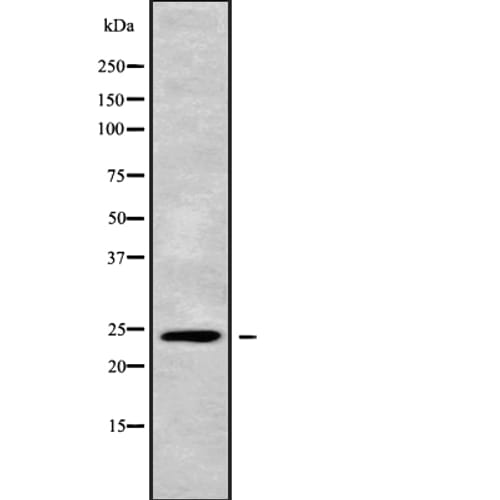
ITA9186
from
$526.00
Price in reward points: 526
- Catalog: ITA9186
- Gene/Protein: APOBEC3H
- Product Description: Immunotag™ APOBEC3H Antibody
-
Description
-
Specifications
Antibody Specification Datasheet 
IMPORTANT NOTE This product is custom manufactured with a lead time of 3-4 weeks. Once in production, this item cannot be cancelled from an order and is not eligible for return. Target Protein APOBEC3H Clonality Polyclonal Storage/Stability -20°C/1 year Application WB,ELISA Recommended Dilution WB 1:1000-3000 Concentration 1 mg/ml Reactive Species Human Host Species Rabbit Immunogen A synthesized peptide derived from human APOBEC3H Specificity APOBEC3H Antibody detects endogenous levels of total APOBEC3H Purification The antiserum was purified by peptide affinity chromatography. Form Rabbit IgG in phosphate buffered saline , pH 7.4, 150mM NaCl, 0.02% sodium azide and 50% glycerol.Store at -20 °C.Stable for 12 months from date of receipt Gene Name APOBEC3H Accession No. Q6NTF7 Alternate Names A3H; APOBEC related protein 10; APOBEC3H; Apolipoprotein B mRNA editing enzyme catalytic polypeptide like 3H; ARP 10; DNA dC->dU-editing enzyme APOBEC-3H; Description DNA deaminase (cytidine deaminase) which acts as an inhibitor of retrovirus replication and retrotransposon mobility via deaminase-dependent and -independent mechanisms. The A3H-var/haplotype 2 exhibits antiviral activity against vif-deficient HIV-1. After the penetration of retroviral nucleocapsids into target cells of infection and the initiation of reverse transcription, it can induce the conversion of cytosine to uracil in the minus-sense single-strand viral DNA, leading to G-to-A hypermutations in the subsequent plus-strand viral DNA. The resultant detrimental levels of mutations in the proviral genome, along with a deamination-independent mechanism that works prior to the proviral integration, together exert efficient antiretroviral effects in infected target cells. Selectively targets single-stranded DNA and does not deaminate double-stranded DNA or single- or double-stranded RNA. Exhibits antiviral activity also against T-cell leukemia virus type 1 (HTLV-1) and may inhibit the mobility of LTR and non-LTR retrotransposons. Cell Pathway/ Category Primary Polyclonal Antibody Protein MW 24 kDa Usage For Research Use Only! Not for diagnostic or therapeutic procedures. - Reviews
| Antibody Specification | |
| Datasheet |
|
| IMPORTANT NOTE | This product is custom manufactured with a lead time of 3-4 weeks. Once in production, this item cannot be cancelled from an order and is not eligible for return. |
| Target Protein | APOBEC3H |
| Clonality | Polyclonal |
| Storage/Stability | -20°C/1 year |
| Application | WB,ELISA |
| Recommended Dilution | WB 1:1000-3000 |
| Concentration | 1 mg/ml |
| Reactive Species | Human |
| Host Species | Rabbit |
| Immunogen | A synthesized peptide derived from human APOBEC3H |
| Specificity | APOBEC3H Antibody detects endogenous levels of total APOBEC3H |
| Purification | The antiserum was purified by peptide affinity chromatography. |
| Form | Rabbit IgG in phosphate buffered saline , pH 7.4, 150mM NaCl, 0.02% sodium azide and 50% glycerol.Store at -20 °C.Stable for 12 months from date of receipt |
| Gene Name | APOBEC3H |
| Accession No. | Q6NTF7 |
| Alternate Names | A3H; APOBEC related protein 10; APOBEC3H; Apolipoprotein B mRNA editing enzyme catalytic polypeptide like 3H; ARP 10; DNA dC->dU-editing enzyme APOBEC-3H; |
| Description | DNA deaminase (cytidine deaminase) which acts as an inhibitor of retrovirus replication and retrotransposon mobility via deaminase-dependent and -independent mechanisms. The A3H-var/haplotype 2 exhibits antiviral activity against vif-deficient HIV-1. After the penetration of retroviral nucleocapsids into target cells of infection and the initiation of reverse transcription, it can induce the conversion of cytosine to uracil in the minus-sense single-strand viral DNA, leading to G-to-A hypermutations in the subsequent plus-strand viral DNA. The resultant detrimental levels of mutations in the proviral genome, along with a deamination-independent mechanism that works prior to the proviral integration, together exert efficient antiretroviral effects in infected target cells. Selectively targets single-stranded DNA and does not deaminate double-stranded DNA or single- or double-stranded RNA. Exhibits antiviral activity also against T-cell leukemia virus type 1 (HTLV-1) and may inhibit the mobility of LTR and non-LTR retrotransposons. |
| Cell Pathway/ Category | Primary Polyclonal Antibody |
| Protein MW | 24 kDa |
| Usage | For Research Use Only! Not for diagnostic or therapeutic procedures. |