

ITC0032
ITC0032
ITC0032
from
$447.00
Price in reward points: 447
- Catalog: ITC0032
- Gene/Protein: CASP7
- Product Description: Immunotag™ Caspase-7 Polyclonal Antibody
-
Description
-
Specifications
Antibody Specification Datasheet 
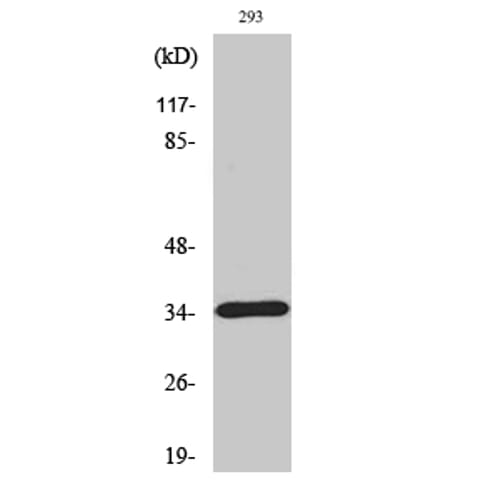
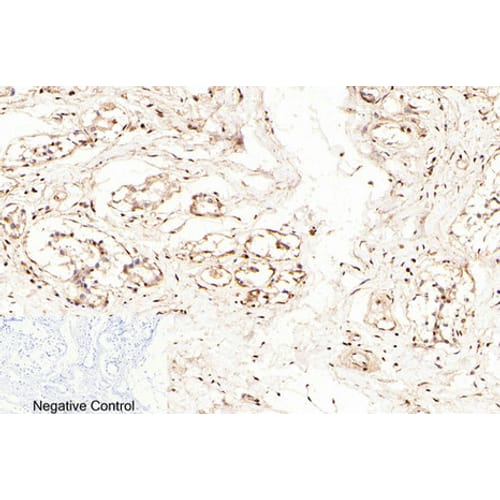
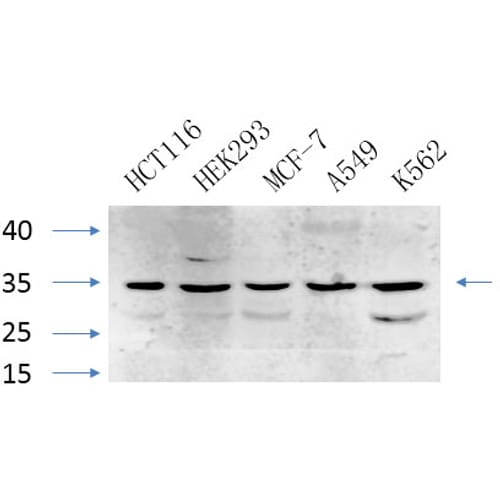
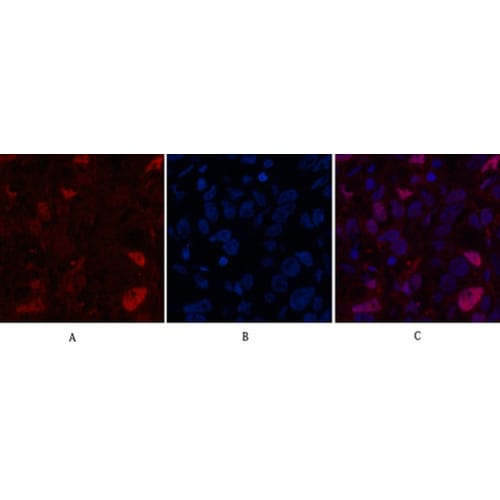
IMPORTANT NOTE This product is custom manufactured with a lead time of 3-4 weeks. Once in production, this item cannot be cancelled from an order and is not eligible for return. Target Protein Caspase-7 Clonality Polyclonal Storage/Stability -20°C/1 year Application WB,IHC-p,IF,ELISA Recommended Dilution WB 1:500-2000, IF 1:50-300, IHC 1:50-300 Concentration 1 mg/ml Reactive Species Human Host Species Rabbit Immunogen Synthesized peptide derived from Caspase-7 . at AA range: 160-240 Specificity Caspase-7 Polyclonal Antibody detects endogenous levels of Caspase-7 protein. Purification The antibody was affinity-purified from rabbit antiserum by affinity-chromatography using epitope-specific immunogen Form Liquid in PBS containing 50% glycerol, 0.5% BSA and 0.02% sodium azide. Gene Name CASP7 Accession No. P55210 P97864 Alternate Names CASP7; MCH3; Caspase-7; CASP-7; Apoptotic protease Mch-3; CMH-1; ICE-like apoptotic protease 3; ICE-LAP3 Description caspase 7(CASP7) Homo sapiens This gene encodes a member of the cysteine-aspartic acid protease (caspase) family. Sequential activation of caspases plays a central role in the execution-phase of cell apoptosis. Caspases exist as inactive proenzymes which undergo proteolytic processing at conserved aspartic residues to produce two subunits, large and small, that dimerize to form the active enzyme. The precursor of the encoded protein is cleaved by caspase 3 and 10, is activated upon cell death stimuli and induces apoptosis. Alternatively spliced transcript variants encoding multiple isoforms have been observed for this gene. [provided by RefSeq, May 2012], Cell Pathway/ Category Apoptosis_Inhibition,Apoptosis_Mitochondrial,Apoptosis_Overview,Alzheimer's disease, Protein Expression Fetal lung,Fetal spleen,Skin,Spleen,T-cell, Subcellular Localization nucleus,nucleoplasm,cytoplasm,cytosol,intracellular membrane-bounded organelle, Protein Function catalytic activity:Strict requirement for an Asp residue at position P1 and has a preferred cleavage sequence of Asp-Glu-Val-Asp-|-.,enzyme regulation:Inhibited by isatin sulfonamides.,function:Involved in the activation cascade of caspases responsible for apoptosis execution. Cleaves and activates sterol regulatory element binding proteins (SREBPs). Proteolytically cleaves poly(ADP-ribose) polymerase (PARP) at a '216-Asp-|-Gly-217' bond. Overexpression promotes programmed cell death.,PTM:Cleavages by granzyme B or caspase-10 generate the two active subunits. Propeptide domains can also be cleaved efficiently by caspase-3. Active heterodimers between the small subunit of caspase-7 and the large subunit of caspase-3, and vice versa, also occur.,similarity:Belongs to the peptidase C14A family.,subunit:Heterotetramer that consists of two anti-parallel arranged heterodimers, each one formed by a 20 kDa (p20) and a 11 kDa (p11) subunit.,tissue specificity:Highly expressed in lung, skeletal muscle, liver, kidney, spleen and heart, and moderately in testis. No expression in the brain., Usage For Research Use Only! Not for diagnostic or therapeutic procedures. - Reviews
| Antibody Specification | |
| Datasheet | |
| IMPORTANT NOTE | This product is custom manufactured with a lead time of 3-4 weeks. Once in production, this item cannot be cancelled from an order and is not eligible for return. |
| Target Protein | Caspase-7 |
| Clonality | Polyclonal |
| Storage/Stability | -20°C/1 year |
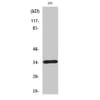
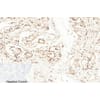
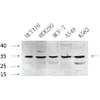
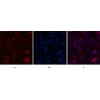
| Application | WB,IHC-p,IF,ELISA |
| Recommended Dilution | WB 1:500-2000, IF 1:50-300, IHC 1:50-300 |
| Concentration | 1 mg/ml |
| Reactive Species | Human |
| Host Species | Rabbit |
| Immunogen | Synthesized peptide derived from Caspase-7 . at AA range: 160-240 |
| Specificity | Caspase-7 Polyclonal Antibody detects endogenous levels of Caspase-7 protein. |
| Purification | The antibody was affinity-purified from rabbit antiserum by affinity-chromatography using epitope-specific immunogen |
| Form | Liquid in PBS containing 50% glycerol, 0.5% BSA and 0.02% sodium azide. |
| Gene Name | CASP7 |
| Accession No. | P55210 P97864 |
| Alternate Names | CASP7; MCH3; Caspase-7; CASP-7; Apoptotic protease Mch-3; CMH-1; ICE-like apoptotic protease 3; ICE-LAP3 |
| Description | caspase 7(CASP7) Homo sapiens This gene encodes a member of the cysteine-aspartic acid protease (caspase) family. Sequential activation of caspases plays a central role in the execution-phase of cell apoptosis. Caspases exist as inactive proenzymes which undergo proteolytic processing at conserved aspartic residues to produce two subunits, large and small, that dimerize to form the active enzyme. The precursor of the encoded protein is cleaved by caspase 3 and 10, is activated upon cell death stimuli and induces apoptosis. Alternatively spliced transcript variants encoding multiple isoforms have been observed for this gene. [provided by RefSeq, May 2012], |
| Cell Pathway/ Category | Apoptosis_Inhibition,Apoptosis_Mitochondrial,Apoptosis_Overview,Alzheimer's disease, |
| Protein Expression | Fetal lung,Fetal spleen,Skin,Spleen,T-cell, |
| Subcellular Localization | nucleus,nucleoplasm,cytoplasm,cytosol,intracellular membrane-bounded organelle, |
| Protein Function | catalytic activity:Strict requirement for an Asp residue at position P1 and has a preferred cleavage sequence of Asp-Glu-Val-Asp-|-.,enzyme regulation:Inhibited by isatin sulfonamides.,function:Involved in the activation cascade of caspases responsible for apoptosis execution. Cleaves and activates sterol regulatory element binding proteins (SREBPs). Proteolytically cleaves poly(ADP-ribose) polymerase (PARP) at a '216-Asp-|-Gly-217' bond. Overexpression promotes programmed cell death.,PTM:Cleavages by granzyme B or caspase-10 generate the two active subunits. Propeptide domains can also be cleaved efficiently by caspase-3. Active heterodimers between the small subunit of caspase-7 and the large subunit of caspase-3, and vice versa, also occur.,similarity:Belongs to the peptidase C14A family.,subunit:Heterotetramer that consists of two anti-parallel arranged heterodimers, each one formed by a 20 kDa (p20) and a 11 kDa (p11) subunit.,tissue specificity:Highly expressed in lung, skeletal muscle, liver, kidney, spleen and heart, and moderately in testis. No expression in the brain., |
| Usage | For Research Use Only! Not for diagnostic or therapeutic procedures. |