

ITM3043
ITM3043

ITM3043
from
$447.00
Price in reward points: 447
- Catalog: ITM3043
- Gene/Protein: LGALS3
- Product Description: Immunotag™ Galectin-3 Monoclonal Antibody(6G2)
-
Description
-
Specifications
Antibody Specification Datasheet 
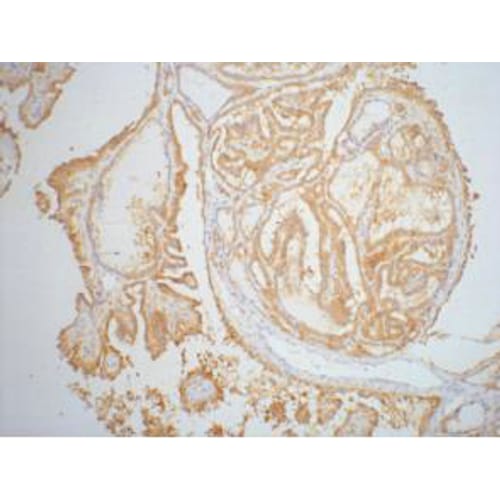
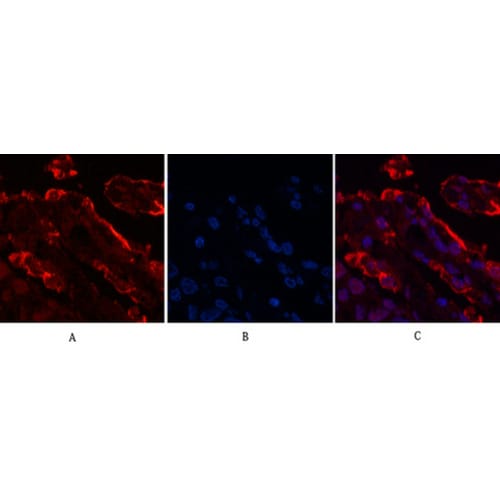
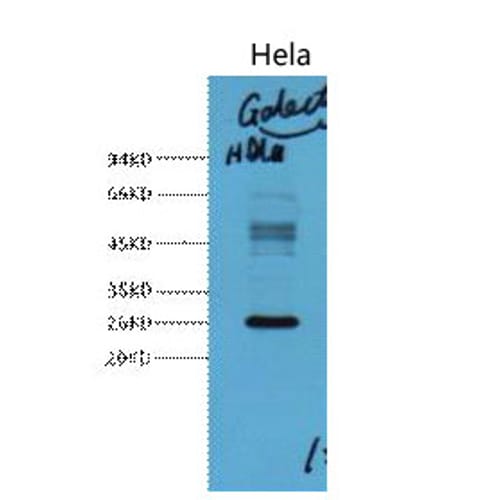
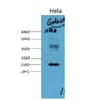
IMPORTANT NOTE This product is custom manufactured with a lead time of 3-4 weeks. Once in production, this item cannot be cancelled from an order and is not eligible for return. Target Protein Galectin-3 (6G2) Clonality Monoclonal Storage/Stability -20°C/1 year Application WB,IF,IHC-p Recommended Dilution WB: 1:2000 IHC: 1:200 IF: 1:100-200 Concentration 1 mg/ml Reactive Species Human Host Species Mouse Immunogen Synthetic Peptide of Galectin-3 Specificity The antibody detects endogenous Galectin-3 proteins. Purification The antibody was affinity-purified from mouse ascites by affinity-chromatography using specific immunogen Form PBS, pH 7.4, containing 0.02% sodium azide as Preservative and 50% Glycerol. Gene Name LGALS3 Accession No. P17931 P16110 P08699 Alternate Names LGALS3; MAC2; Galectin-3; Gal-3; 35 kDa lectin; Carbohydrate-binding protein 35; CBP 35; Galactose-specific lectin 3; Galactoside-binding protein; GALBP; IgE-binding protein; L-31; Laminin-binding protein; Lectin L-29; Mac-2 antigen Description galectin 3(LGALS3) Homo sapiens This gene encodes a member of the galectin family of carbohydrate binding proteins. Members of this protein family have an affinity for beta-galactosides. The encoded protein is characterized by an N-terminal proline-rich tandem repeat domain and a single C-terminal carbohydrate recognition domain. This protein can self-associate through the N-terminal domain allowing it to bind to multivalent saccharide ligands. This protein localizes to the extracellular matrix, the cytoplasm and the nucleus. This protein plays a role in numerous cellular functions including apoptosis, innate immunity, cell adhesion and T-cell regulation. The protein exhibits antimicrobial activity against bacteria and fungi. Alternate splicing results in multiple transcript variants.[provided by RefSeq, Oct 2014], Protein Expression Carcinoma,Gastric adenocarcinoma,Human small intestine,Lung,Placenta,Skin,Thalamus, Subcellular Localization immunological synapse,extracellular space,nucleus,spliceosomal complex,cytoplasm,mitochondrial inner membrane,plasma membrane,membrane,extracellular matrix,extracellular exosome, Protein Function function:Galactose-specific lectin which binds IgE. May mediate with the alpha-3, beta-1 integrin the stimulation by CSPG4 of endothelial cells migration. Together with DMBT1, required for terminal differentiation of columnar epithelial cells during early embryogenesis.,online information:Galectin-3,similarity:Contains 1 galectin domain.,subcellular location:Cytoplasmic in adenomas and carcinomas. May be secreted by a non-classical secretory pathway and associate with the cell surface.,subunit:Probably forms homo- or heterodimers. Interacts with DMBT1 (By similarity). Forms a complex with the ITGA3, ITGB1 and CSPG4. Interacts with LGALS3BP, LYPD3, CYHR1 and UACA.,tissue specificity:A major expression is found in the colonic epithelium. It is also abundant in the activated macrophages., Usage For Research Use Only! Not for diagnostic or therapeutic procedures. - Reviews
| Antibody Specification | |
| Datasheet | |
| IMPORTANT NOTE | This product is custom manufactured with a lead time of 3-4 weeks. Once in production, this item cannot be cancelled from an order and is not eligible for return. |
| Target Protein | Galectin-3 (6G2) |
| Clonality | Monoclonal |
| Storage/Stability | -20°C/1 year |
| Application | WB,IF,IHC-p |
| Recommended Dilution | WB: 1:2000 IHC: 1:200 IF: 1:100-200 |
| Concentration | 1 mg/ml |
| Reactive Species | Human |
| Host Species | Mouse |
| Immunogen | Synthetic Peptide of Galectin-3 |
| Specificity | The antibody detects endogenous Galectin-3 proteins. |
| Purification | The antibody was affinity-purified from mouse ascites by affinity-chromatography using specific immunogen |
| Form | PBS, pH 7.4, containing 0.02% sodium azide as Preservative and 50% Glycerol. |
| Gene Name | LGALS3 |
| Accession No. | P17931 P16110 P08699 |
| Alternate Names | LGALS3; MAC2; Galectin-3; Gal-3; 35 kDa lectin; Carbohydrate-binding protein 35; CBP 35; Galactose-specific lectin 3; Galactoside-binding protein; GALBP; IgE-binding protein; L-31; Laminin-binding protein; Lectin L-29; Mac-2 antigen |
| Description | galectin 3(LGALS3) Homo sapiens This gene encodes a member of the galectin family of carbohydrate binding proteins. Members of this protein family have an affinity for beta-galactosides. The encoded protein is characterized by an N-terminal proline-rich tandem repeat domain and a single C-terminal carbohydrate recognition domain. This protein can self-associate through the N-terminal domain allowing it to bind to multivalent saccharide ligands. This protein localizes to the extracellular matrix, the cytoplasm and the nucleus. This protein plays a role in numerous cellular functions including apoptosis, innate immunity, cell adhesion and T-cell regulation. The protein exhibits antimicrobial activity against bacteria and fungi. Alternate splicing results in multiple transcript variants.[provided by RefSeq, Oct 2014], |
| Protein Expression | Carcinoma,Gastric adenocarcinoma,Human small intestine,Lung,Placenta,Skin,Thalamus, |
| Subcellular Localization | immunological synapse,extracellular space,nucleus,spliceosomal complex,cytoplasm,mitochondrial inner membrane,plasma membrane,membrane,extracellular matrix,extracellular exosome, |
| Protein Function | function:Galactose-specific lectin which binds IgE. May mediate with the alpha-3, beta-1 integrin the stimulation by CSPG4 of endothelial cells migration. Together with DMBT1, required for terminal differentiation of columnar epithelial cells during early embryogenesis.,online information:Galectin-3,similarity:Contains 1 galectin domain.,subcellular location:Cytoplasmic in adenomas and carcinomas. May be secreted by a non-classical secretory pathway and associate with the cell surface.,subunit:Probably forms homo- or heterodimers. Interacts with DMBT1 (By similarity). Forms a complex with the ITGA3, ITGB1 and CSPG4. Interacts with LGALS3BP, LYPD3, CYHR1 and UACA.,tissue specificity:A major expression is found in the colonic epithelium. It is also abundant in the activated macrophages., |
| Usage | For Research Use Only! Not for diagnostic or therapeutic procedures. |