

ITM3145
ITM3145
ITM3145
from
$507.00
Price in reward points: 507
- Catalog: ITM3145
- Gene/Protein: PARP1
- Product Description: Immunotag™ Cleaved PARP Monoclonal Antibody(Mix)
-
Description
-
Specifications
Antibody Specification Datasheet 
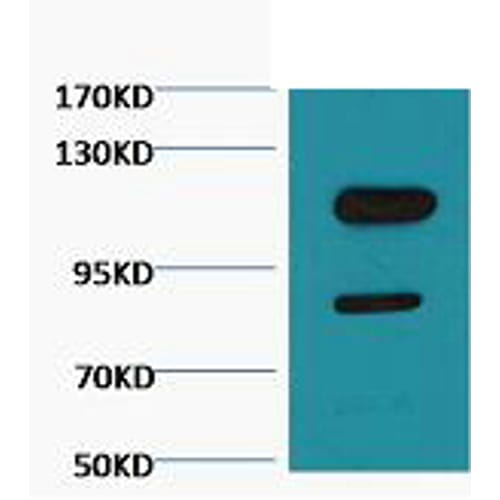
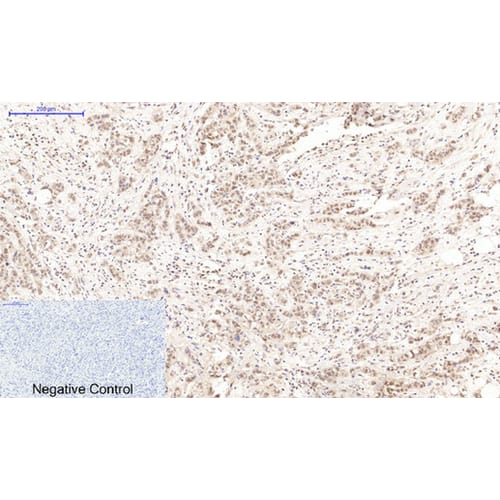
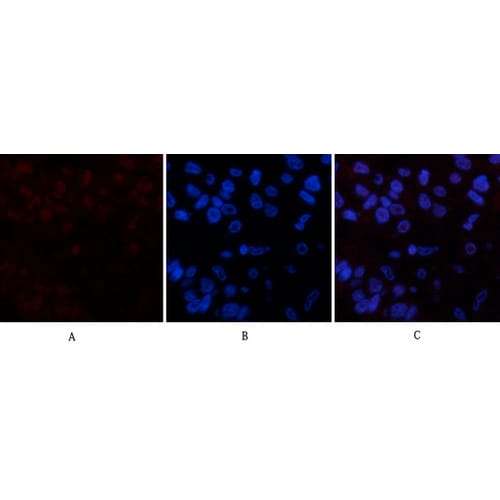
IMPORTANT NOTE This product is custom manufactured with a lead time of 3-4 weeks. Once in production, this item cannot be cancelled from an order and is not eligible for return. Target Protein PARP (Mix) Clonality Monoclonal Storage/Stability -20°C/1 year Application IF,WB,IHC-p, Recommended Dilution IF: 1:50-200 WB: 1:2000-5000 IHC 1:50-300 Concentration 1 mg/ml Reactive Species Human Host Species Mouse Immunogen Synthetic Peptide of Cleaved PARP Specificity The antibody detects endogenous pro and active PARP protein. Purification The antibody was affinity-purified from mouse ascites by affinity-chromatography using specific immunogen Form PBS, pH 7.4, containing 0.02% sodium azide as Preservative and 50% Glycerol. Gene Name PARP1 Accession No. P09874 P11103 P27008 Alternate Names PARP1; ADPRT; PPOL; Poly [ADP-ribose] polymerase 1; PARP-1; ADP-ribosyltransferase diphtheria toxin-like 1; ARTD1; NAD(+) ADP-ribosyltransferase 1; ADPRT 1; Poly[ADP-ribose] synthase 1 Description poly(ADP-ribose) polymerase 1(PARP1) Homo sapiens This gene encodes a chromatin-associated enzyme, poly(ADP-ribosyl)transferase, which modifies various nuclear proteins by poly(ADP-ribosyl)ation. The modification is dependent on DNA and is involved in the regulation of various important cellular processes such as differentiation, proliferation, and tumor transformation and also in the regulation of the molecular events involved in the recovery of cell from DNA damage. In addition, this enzyme may be the site of mutation in Fanconi anemia, and may participate in the pathophysiology of type I diabetes. [provided by RefSeq, Jul 2008], Cell Pathway/ Category Base excision repair, Protein Expression Brain,Colon carcinoma,Fibroblast,Lung,Ovarian carcinoma,Skin, Subcellular Localization nuclear chromosome, telomeric region,nucleus,nuclear envelope,nucleoplasm,transcription factor complex,nucleolus,mitochondrion,membrane,protein complex, Protein Function catalytic activity:NAD(+) + (ADP-D-ribosyl)(n)-acceptor = nicotinamide + (ADP-D-ribosyl)(n+1)-acceptor.,function:Involved in the base excision repair (BER) pathway, by catalyzing the poly(ADP-ribosyl)ation of a limited number of acceptor proteins involved in chromatin architecture and in DNA metabolism. This modification follows DNA damages and appears as an obligatory step in a detection/signaling pathway leading to the reparation of DNA strand breaks.,miscellaneous:The ADP-D-ribosyl group of NAD(+) is transferred to an acceptor carboxyl group on a histone or the enzyme itself, and further ADP-ribosyl groups are transferred to the 2'-position of the terminal adenosine moiety, building up a polymer with an average chain length of 20-30 units.,PTM:Phosphorylated by PRKDC. Phosphorylated upon DNA damage, probably by ATM or ATR.,PTM:Poly-ADP-ribosylated by PARP2.,similarity:Contains 1 BRCT domain.,similarity:Contains 1 PARP alpha-helical domain.,similarity:Contains 1 PARP catalytic domain.,similarity:Contains 2 PARP-type zinc fingers.,subunit:Component of a base excision repair (BER) complex, containing at least XRCC1, PARP2, POLB and LIG3. Homo- and heterodimer with PARP2. Interacts with PARP3, APTX and SRY. The SWAP complex consists of NPM1, NCL, PARP1 and SWAP70. Interacts with TIAM2 and ZNF423., Usage For Research Use Only! Not for diagnostic or therapeutic procedures. - Reviews
| Antibody Specification | |
| Datasheet | |
| IMPORTANT NOTE | This product is custom manufactured with a lead time of 3-4 weeks. Once in production, this item cannot be cancelled from an order and is not eligible for return. |
| Target Protein | PARP (Mix) |
| Clonality | Monoclonal |
| Storage/Stability | -20°C/1 year |
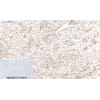
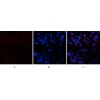
| Application | IF,WB,IHC-p, |
| Recommended Dilution | IF: 1:50-200 WB: 1:2000-5000 IHC 1:50-300 |
| Concentration | 1 mg/ml |
| Reactive Species | Human |
| Host Species | Mouse |
| Immunogen | Synthetic Peptide of Cleaved PARP |
| Specificity | The antibody detects endogenous pro and active PARP protein. |
| Purification | The antibody was affinity-purified from mouse ascites by affinity-chromatography using specific immunogen |
| Form | PBS, pH 7.4, containing 0.02% sodium azide as Preservative and 50% Glycerol. |
| Gene Name | PARP1 |
| Accession No. | P09874 P11103 P27008 |
| Alternate Names | PARP1; ADPRT; PPOL; Poly [ADP-ribose] polymerase 1; PARP-1; ADP-ribosyltransferase diphtheria toxin-like 1; ARTD1; NAD(+) ADP-ribosyltransferase 1; ADPRT 1; Poly[ADP-ribose] synthase 1 |
| Description | poly(ADP-ribose) polymerase 1(PARP1) Homo sapiens This gene encodes a chromatin-associated enzyme, poly(ADP-ribosyl)transferase, which modifies various nuclear proteins by poly(ADP-ribosyl)ation. The modification is dependent on DNA and is involved in the regulation of various important cellular processes such as differentiation, proliferation, and tumor transformation and also in the regulation of the molecular events involved in the recovery of cell from DNA damage. In addition, this enzyme may be the site of mutation in Fanconi anemia, and may participate in the pathophysiology of type I diabetes. [provided by RefSeq, Jul 2008], |
| Cell Pathway/ Category | Base excision repair, |
| Protein Expression | Brain,Colon carcinoma,Fibroblast,Lung,Ovarian carcinoma,Skin, |
| Subcellular Localization | nuclear chromosome, telomeric region,nucleus,nuclear envelope,nucleoplasm,transcription factor complex,nucleolus,mitochondrion,membrane,protein complex, |
| Protein Function | catalytic activity:NAD(+) + (ADP-D-ribosyl)(n)-acceptor = nicotinamide + (ADP-D-ribosyl)(n+1)-acceptor.,function:Involved in the base excision repair (BER) pathway, by catalyzing the poly(ADP-ribosyl)ation of a limited number of acceptor proteins involved in chromatin architecture and in DNA metabolism. This modification follows DNA damages and appears as an obligatory step in a detection/signaling pathway leading to the reparation of DNA strand breaks.,miscellaneous:The ADP-D-ribosyl group of NAD(+) is transferred to an acceptor carboxyl group on a histone or the enzyme itself, and further ADP-ribosyl groups are transferred to the 2'-position of the terminal adenosine moiety, building up a polymer with an average chain length of 20-30 units.,PTM:Phosphorylated by PRKDC. Phosphorylated upon DNA damage, probably by ATM or ATR.,PTM:Poly-ADP-ribosylated by PARP2.,similarity:Contains 1 BRCT domain.,similarity:Contains 1 PARP alpha-helical domain.,similarity:Contains 1 PARP catalytic domain.,similarity:Contains 2 PARP-type zinc fingers.,subunit:Component of a base excision repair (BER) complex, containing at least XRCC1, PARP2, POLB and LIG3. Homo- and heterodimer with PARP2. Interacts with PARP3, APTX and SRY. The SWAP complex consists of NPM1, NCL, PARP1 and SWAP70. Interacts with TIAM2 and ZNF423., |
| Usage | For Research Use Only! Not for diagnostic or therapeutic procedures. |