

ITM3251
ITM3251
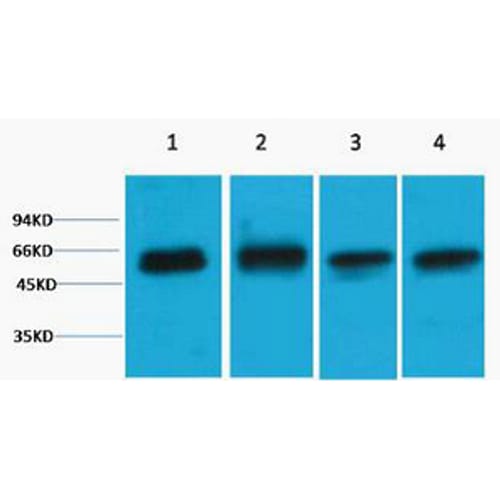
ITM3251
from
$424.00
Price in reward points: 424
- Catalog: ITM3251
- Gene/Protein: AKT3
- Product Description: Immunotag™ Akt3 Polyclonal Antibody
-
Description
-
Specifications
Antibody Specification Datasheet 
IMPORTANT NOTE This product is custom manufactured with a lead time of 3-4 weeks. Once in production, this item cannot be cancelled from an order and is not eligible for return. Target Protein AKT3 Clonality Polyclonal Storage/Stability -20°C/1 year Application WB Recommended Dilution WB: 1:1000-2000 Concentration 1 mg/ml Reactive Species Human,Mouse,Rat Host Species Rabbit Immunogen Recombinant Protein of RAC-gamma serine/threonine-protein kinase Specificity The antibody detects endogenous Akt3 protein. Purification The antibody was affinity-purified from rabbit antiserum by affinity-chromatography using specific immunogen Form PBS, pH 7.4, containing 0.02% sodium azide as Preservative and 50% Glycerol. Gene Name AKT3 Accession No. Q9Y243 Q9WUA6 Q63484 Alternate Names AKT3; PKBG; RAC-gamma serine/threonine-protein kinase; Protein kinase Akt-3; Protein kinase B gamma; PKB gamma; RAC-PK-gamma; STK-2 Description AKT serine/threonine kinase 3(AKT3) Homo sapiens The protein encoded by this gene is a member of the AKT, also called PKB, serine/threonine protein kinase family. AKT kinases are known to be regulators of cell signaling in response to insulin and growth factors. They are involved in a wide variety of biological processes including cell proliferation, differentiation, apoptosis, tumorigenesis, as well as glycogen synthesis and glucose uptake. This kinase has been shown to be stimulated by platelet-derived growth factor (PDGF), insulin, and insulin-like growth factor 1 (IGF1). Alternatively splice transcript variants encoding distinct isoforms have been described. [provided by RefSeq, Jul 2008], Cell Pathway/ Category Akt_PKB,MAPK_ERK_Growth,MAPK_G_Protein,ErbB_HER,Chemokine,mTOR,Apoptosis_Inhibition,Apoptosis_Mitochondrial,Apoptosis_Overview,VEGF,Focal adhesion,Tight junction,Toll_Like,Jak_STAT,T_Cell_Receptor,B_Cell_Antigen,Fc epsilon RI,Fc gamma R-mediated phagocytosis,Neurotrophin,Insulin_Receptor,Progesterone-mediated oocyte maturation,Adipocytokine,Pathways in cancer,Colorectal cancer,Renal cell carcinoma,Pancreatic cancer,Endometrial cancer,Glioma,Prostate cancer,Melanoma,Chronic myeloid leukemia,Acute myeloid leukemia,Small cell lung cancer,Non-small cell lung cancer, Protein Expression Brain,Eye,Testis, Subcellular Localization intracellular,nucleoplasm,cytoplasm,Golgi apparatus,plasma membrane, Protein Function catalytic activity:ATP + a protein = ADP + a phosphoprotein.,domain:Binding of the PH domain to the phosphatidylinositol 3-kinase alpha (PI(3)K) results in its targeting to the plasma membrane.,enzyme regulation:Two specific sites, one in the kinase domain (Thr-305) and the other in the C-terminal regulatory region (Ser-472), need to be phosphorylated for its full activation.,function:IGF-1 leads to the activation of AKT3, which may play a role in regulating cell survival. Capable of phosphorylating several known proteins. Truncated isoform 2/PKB gamma 1 without the second serine phosphorylation site could still be stimulated but to a lesser extent.,PTM:Phosphorylated upon DNA damage, probably by ATM or ATR.,similarity:Belongs to the protein kinase superfamily.,similarity:Belongs to the protein kinase superfamily. AGC Ser/Thr protein kinase family. RAC subfamily.,similarity:Contains 1 AGC-kinase C-terminal domain.,similarity:Contains 1 PH domain.,similarity:Contains 1 protein kinase domain.,subcellular location:Membrane-associated after cell stimulation leading to its translocation.,subunit:Interacts (via PH domain) with TCL1A; this enhances AKT3 phosphorylation and activation.,tissue specificity:In adult tissues, it is highly expressed in brain, lung and kidney, but weakly in heart, testis and liver. In fetal tissues, it is highly expressed in heart, liver and brain and not at all in kidney., Usage For Research Use Only! Not for diagnostic or therapeutic procedures. - Reviews
| Antibody Specification | |
| Datasheet | |
| IMPORTANT NOTE | This product is custom manufactured with a lead time of 3-4 weeks. Once in production, this item cannot be cancelled from an order and is not eligible for return. |
| Target Protein | AKT3 |
| Clonality | Polyclonal |
| Storage/Stability | -20°C/1 year |
| Application | WB |
| Recommended Dilution | WB: 1:1000-2000 |
| Concentration | 1 mg/ml |
| Reactive Species | Human,Mouse,Rat |
| Host Species | Rabbit |
| Immunogen | Recombinant Protein of RAC-gamma serine/threonine-protein kinase |
| Specificity | The antibody detects endogenous Akt3 protein. |
| Purification | The antibody was affinity-purified from rabbit antiserum by affinity-chromatography using specific immunogen |
| Form | PBS, pH 7.4, containing 0.02% sodium azide as Preservative and 50% Glycerol. |
| Gene Name | AKT3 |
| Accession No. | Q9Y243 Q9WUA6 Q63484 |
| Alternate Names | AKT3; PKBG; RAC-gamma serine/threonine-protein kinase; Protein kinase Akt-3; Protein kinase B gamma; PKB gamma; RAC-PK-gamma; STK-2 |
| Description | AKT serine/threonine kinase 3(AKT3) Homo sapiens The protein encoded by this gene is a member of the AKT, also called PKB, serine/threonine protein kinase family. AKT kinases are known to be regulators of cell signaling in response to insulin and growth factors. They are involved in a wide variety of biological processes including cell proliferation, differentiation, apoptosis, tumorigenesis, as well as glycogen synthesis and glucose uptake. This kinase has been shown to be stimulated by platelet-derived growth factor (PDGF), insulin, and insulin-like growth factor 1 (IGF1). Alternatively splice transcript variants encoding distinct isoforms have been described. [provided by RefSeq, Jul 2008], |
| Cell Pathway/ Category | Akt_PKB,MAPK_ERK_Growth,MAPK_G_Protein,ErbB_HER,Chemokine,mTOR,Apoptosis_Inhibition,Apoptosis_Mitochondrial,Apoptosis_Overview,VEGF,Focal adhesion,Tight junction,Toll_Like,Jak_STAT,T_Cell_Receptor,B_Cell_Antigen,Fc epsilon RI,Fc gamma R-mediated phagocytosis,Neurotrophin,Insulin_Receptor,Progesterone-mediated oocyte maturation,Adipocytokine,Pathways in cancer,Colorectal cancer,Renal cell carcinoma,Pancreatic cancer,Endometrial cancer,Glioma,Prostate cancer,Melanoma,Chronic myeloid leukemia,Acute myeloid leukemia,Small cell lung cancer,Non-small cell lung cancer, |
| Protein Expression | Brain,Eye,Testis, |
| Subcellular Localization | intracellular,nucleoplasm,cytoplasm,Golgi apparatus,plasma membrane, |
| Protein Function | catalytic activity:ATP + a protein = ADP + a phosphoprotein.,domain:Binding of the PH domain to the phosphatidylinositol 3-kinase alpha (PI(3)K) results in its targeting to the plasma membrane.,enzyme regulation:Two specific sites, one in the kinase domain (Thr-305) and the other in the C-terminal regulatory region (Ser-472), need to be phosphorylated for its full activation.,function:IGF-1 leads to the activation of AKT3, which may play a role in regulating cell survival. Capable of phosphorylating several known proteins. Truncated isoform 2/PKB gamma 1 without the second serine phosphorylation site could still be stimulated but to a lesser extent.,PTM:Phosphorylated upon DNA damage, probably by ATM or ATR.,similarity:Belongs to the protein kinase superfamily.,similarity:Belongs to the protein kinase superfamily. AGC Ser/Thr protein kinase family. RAC subfamily.,similarity:Contains 1 AGC-kinase C-terminal domain.,similarity:Contains 1 PH domain.,similarity:Contains 1 protein kinase domain.,subcellular location:Membrane-associated after cell stimulation leading to its translocation.,subunit:Interacts (via PH domain) with TCL1A; this enhances AKT3 phosphorylation and activation.,tissue specificity:In adult tissues, it is highly expressed in brain, lung and kidney, but weakly in heart, testis and liver. In fetal tissues, it is highly expressed in heart, liver and brain and not at all in kidney., |
| Usage | For Research Use Only! Not for diagnostic or therapeutic procedures. |