

ITM3611
ITM3611

ITM3611
from
$447.00
Price in reward points: 447
- Catalog: ITM3611
- Gene/Protein: IL8
- Product Description: Immunotag™ IL-8 mouse Monoclonal Antibody(13F8)
-
Description
-
Specifications
Antibody Specification Datasheet 
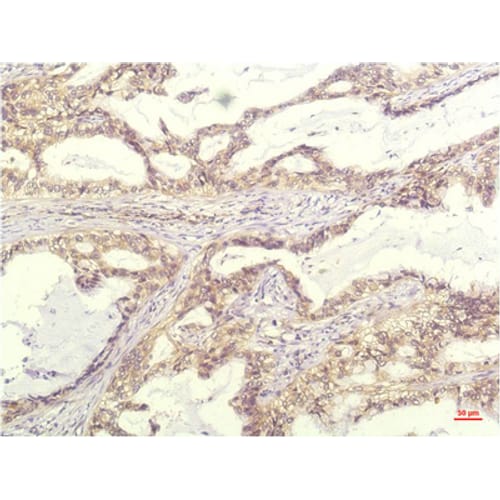
IMPORTANT NOTE This product is custom manufactured with a lead time of 3-4 weeks. Once in production, this item cannot be cancelled from an order and is not eligible for return. Target Protein IL-8 (13F8) Clonality Monoclonal Storage/Stability -20°C/1 year Application IHC-p Recommended Dilution IHC 1:100-200 Concentration 1 mg/ml Reactive Species Human,Rat,Mouse Host Species Mouse Immunogen Synthetic C-TERM Peptide of IL-8 Specificity IL-8 protein detects endogenous levels of IL8 Purification The antibody was affinity-purified from mouse ascites by affinity-chromatography using specific immunogen Form Liquid in PBS containing 50% glycerol, 0.5% BSA and 0.02% sodium azide. Gene Name IL8 Accession No. P10145 Alternate Names IL8 Description C-X-C motif chemokine ligand 8(CXCL8) Homo sapiens The protein encoded by this gene is a member of the CXC chemokine family. This chemokine is one of the major mediators of the inflammatory response. This chemokine is secreted by several cell types. It functions as a chemoattractant, and is also a potent angiogenic factor. This gene is believed to play a role in the pathogenesis of bronchiolitis, a common respiratory tract disease caused by viral infection. This gene and other ten members of the CXC chemokine gene family form a chemokine gene cluster in a region mapped to chromosome 4q. [provided by RefSeq, Jul 2008], Cell Pathway/ Category Cytokine-cytokine receptor interaction,Chemokine,Toll_Like,NOD-like receptor,RIG-I-like receptor,Epithelial cell signaling in Helicobacter pylori infection,Pathways in cancer,Bladder cancer, Protein Expression Chronic myeloid leukemia cell,Kidney,Lung,Lung carcinoma,Neutrophil,Periphe Subcellular Localization extracellular region,extracellular space,intracellular, Protein Function function:IL-8 is a chemotactic factor that attracts neutrophils, basophils, and T-cells, but not monocytes. It is also involved in neutrophil activation. It is released from several cell types in response to an inflammatory stimulus. IL-8(6-77) has a 5-10-fold higher activity on neutrophil activation, IL-8(5-77) has increased activity on neutrophil activation and IL-8(7-77) has a higher affinity to receptors CXCR1 and CXCR2 as compared to IL-8(1-77), respectively.,online information:Interleukin-8 entry,PTM:Several N-terminal processed forms are produced by proteolytic cleavage after secretion from at least peripheral blood monocytes, leukcocytes and endothelial cells. In general, IL-8(1-77) is referred to as interleukin-8. IL-8(6-77) is the most promiment form.,similarity:Belongs to the intercrine alpha (chemokine CxC) family.,subunit:Homodimer., Usage For Research Use Only! Not for diagnostic or therapeutic procedures. - Reviews
| Antibody Specification | |
| Datasheet | |
| IMPORTANT NOTE | This product is custom manufactured with a lead time of 3-4 weeks. Once in production, this item cannot be cancelled from an order and is not eligible for return. |
| Target Protein | IL-8 (13F8) |
| Clonality | Monoclonal |
| Storage/Stability | -20°C/1 year |
| Application | IHC-p |
| Recommended Dilution | IHC 1:100-200 |
| Concentration | 1 mg/ml |
| Reactive Species | Human,Rat,Mouse |
| Host Species | Mouse |
| Immunogen | Synthetic C-TERM Peptide of IL-8 |
| Specificity | IL-8 protein detects endogenous levels of IL8 |
| Purification | The antibody was affinity-purified from mouse ascites by affinity-chromatography using specific immunogen |
| Form | Liquid in PBS containing 50% glycerol, 0.5% BSA and 0.02% sodium azide. |
| Gene Name | IL8 |
| Accession No. | P10145 |
| Alternate Names | IL8 |
| Description | C-X-C motif chemokine ligand 8(CXCL8) Homo sapiens The protein encoded by this gene is a member of the CXC chemokine family. This chemokine is one of the major mediators of the inflammatory response. This chemokine is secreted by several cell types. It functions as a chemoattractant, and is also a potent angiogenic factor. This gene is believed to play a role in the pathogenesis of bronchiolitis, a common respiratory tract disease caused by viral infection. This gene and other ten members of the CXC chemokine gene family form a chemokine gene cluster in a region mapped to chromosome 4q. [provided by RefSeq, Jul 2008], |
| Cell Pathway/ Category | Cytokine-cytokine receptor interaction,Chemokine,Toll_Like,NOD-like receptor,RIG-I-like receptor,Epithelial cell signaling in Helicobacter pylori infection,Pathways in cancer,Bladder cancer, |
| Protein Expression | Chronic myeloid leukemia cell,Kidney,Lung,Lung carcinoma,Neutrophil,Periphe |
| Subcellular Localization | extracellular region,extracellular space,intracellular, |
| Protein Function | function:IL-8 is a chemotactic factor that attracts neutrophils, basophils, and T-cells, but not monocytes. It is also involved in neutrophil activation. It is released from several cell types in response to an inflammatory stimulus. IL-8(6-77) has a 5-10-fold higher activity on neutrophil activation, IL-8(5-77) has increased activity on neutrophil activation and IL-8(7-77) has a higher affinity to receptors CXCR1 and CXCR2 as compared to IL-8(1-77), respectively.,online information:Interleukin-8 entry,PTM:Several N-terminal processed forms are produced by proteolytic cleavage after secretion from at least peripheral blood monocytes, leukcocytes and endothelial cells. In general, IL-8(1-77) is referred to as interleukin-8. IL-8(6-77) is the most promiment form.,similarity:Belongs to the intercrine alpha (chemokine CxC) family.,subunit:Homodimer., |
| Usage | For Research Use Only! Not for diagnostic or therapeutic procedures. |