

ITM3615
ITM3615
ITM3615
from
$447.00
Price in reward points: 447
- Catalog: ITM3615
- Gene/Protein: SGK1
- Product Description: Immunotag™ SGK1 mouse Monoclonal Antibody(4D12)
-
Description
-
Specifications
Antibody Specification Datasheet 
IMPORTANT NOTE This product is custom manufactured with a lead time of 3-4 weeks. Once in production, this item cannot be cancelled from an order and is not eligible for return. Target Protein SGK1 (4D12) Clonality Monoclonal Storage/Stability -20°C/1 year Application IHC-p Recommended Dilution IHC 1:100-200 Concentration 1 mg/ml Reactive Species Human,Rat,Mouse Host Species Mouse Immunogen Synthetic Peptide of SGK1 at AA range of 350-430 Specificity SGK1 protein detects endogenous levels of SGK1 Purification The antibody was affinity-purified from mouse ascites by affinity-chromatography using specific immunogen Form Liquid in PBS containing 50% glycerol, 0.5% BSA and 0.02% sodium azide. Gene Name SGK1 Accession No. O00141 Q9WVC6 Q06226 Alternate Names SGK1 Description serum/glucocorticoid regulated kinase 1(SGK1) Homo sapiens This gene encodes a serine/threonine protein kinase that plays an important role in cellular stress response. This kinase activates certain potassium, sodium, and chloride channels, suggesting an involvement in the regulation of processes such as cell survival, neuronal excitability, and renal sodium excretion. High levels of expression of this gene may contribute to conditions such as hypertension and diabetic nephropathy. Several alternatively spliced transcript variants encoding different isoforms have been noted for this gene. [provided by RefSeq, Jan 2009], Cell Pathway/ Category Aldosterone-regulated sodium reabsorption, Protein Expression Brain,Cervix,Hair follicle dermal papilla,Retina, Subcellular Localization nucleus,nucleoplasm,cytoplasm,mitochondrion,endoplasmic reticulum membrane,cytosol,plasma membrane, Protein Function catalytic activity:ATP + a protein = ADP + a phosphoprotein.,enzyme regulation:Two specific sites, one in the kinase domain (Thr-256) and the other in the C-terminal regulatory region (Ser-422), need to be phosphorylated for its full activation.,function:Protein kinase that plays an important role in cellular stress response. Activates certain potassium, sodium, and chloride channels, suggesting an involvement in the regulation of processes such as cell survival, neuronal excitability, and renal sodium excretion. Sustained high levels and activity may contribute to conditions such as hypertension and diabetic nephropathy. Mediates cell survival signals, phosphorylates and negatively regulates pro-apoptotic FOXO3A. Phosphorylates NEDD4L, which leads to its inactivation and to the subsequent activation of various channels and transporters such as ENaC, Kv1.3, or EAAT1.,induction:By serum and/or glucocorticoids. By excessive extracellular glucose and by TGF-beta, in cultured cells.,PTM:Regulated by phosphorylation. Phosphoinositide 3-kinase (PI3-kinase) pathway promotes phosphorylation at Ser-422 which in turn increases the phosphorylation of Thr-256 by PDPK1.,PTM:Ubiquitinated by NEDD4L; which promotes proteasomal degradation. Ubiquitinated by SYVN1 at the endoplasmic reticulum; which promotes rapid proteasomal degradation and maintains a high turnover rate in resting cells.,similarity:Belongs to the protein kinase superfamily. AGC Ser/Thr protein kinase family.,similarity:Contains 1 AGC-kinase C-terminal domain.,similarity:Contains 1 protein kinase domain.,subcellular location:Nuclear, upon phosphorylation.,subunit:Interacts with NEDD4 and NEDD4L.,tissue specificity:Expressed in most tissues with highest levels in the pancreas, followed by placenta, kidney and lung., Usage For Research Use Only! Not for diagnostic or therapeutic procedures. - Reviews
| Antibody Specification | |
| Datasheet | |
| IMPORTANT NOTE | This product is custom manufactured with a lead time of 3-4 weeks. Once in production, this item cannot be cancelled from an order and is not eligible for return. |
| Target Protein | SGK1 (4D12) |
| Clonality | Monoclonal |
| Storage/Stability | -20°C/1 year |
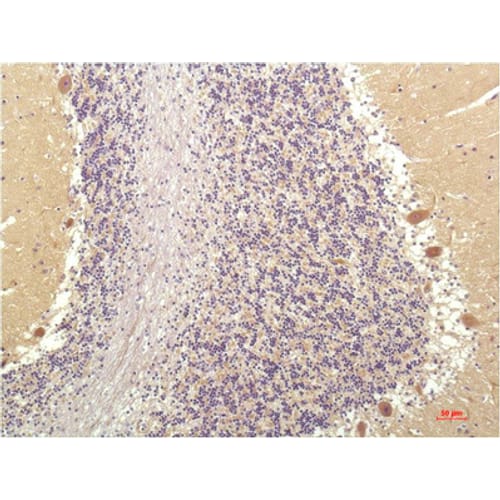
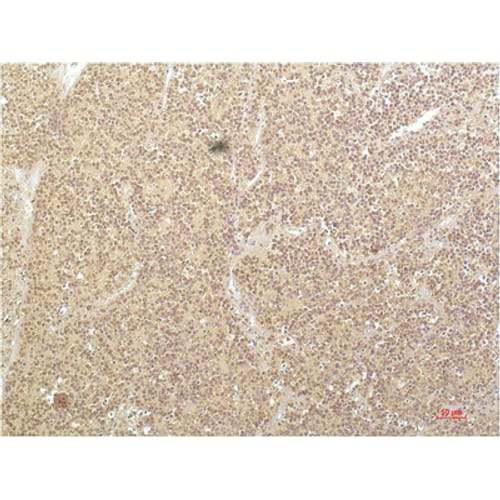
| Application | IHC-p |
| Recommended Dilution | IHC 1:100-200 |
| Concentration | 1 mg/ml |
| Reactive Species | Human,Rat,Mouse |
| Host Species | Mouse |
| Immunogen | Synthetic Peptide of SGK1 at AA range of 350-430 |
| Specificity | SGK1 protein detects endogenous levels of SGK1 |
| Purification | The antibody was affinity-purified from mouse ascites by affinity-chromatography using specific immunogen |
| Form | Liquid in PBS containing 50% glycerol, 0.5% BSA and 0.02% sodium azide. |
| Gene Name | SGK1 |
| Accession No. | O00141 Q9WVC6 Q06226 |
| Alternate Names | SGK1 |
| Description | serum/glucocorticoid regulated kinase 1(SGK1) Homo sapiens This gene encodes a serine/threonine protein kinase that plays an important role in cellular stress response. This kinase activates certain potassium, sodium, and chloride channels, suggesting an involvement in the regulation of processes such as cell survival, neuronal excitability, and renal sodium excretion. High levels of expression of this gene may contribute to conditions such as hypertension and diabetic nephropathy. Several alternatively spliced transcript variants encoding different isoforms have been noted for this gene. [provided by RefSeq, Jan 2009], |
| Cell Pathway/ Category | Aldosterone-regulated sodium reabsorption, |
| Protein Expression | Brain,Cervix,Hair follicle dermal papilla,Retina, |
| Subcellular Localization | nucleus,nucleoplasm,cytoplasm,mitochondrion,endoplasmic reticulum membrane,cytosol,plasma membrane, |
| Protein Function | catalytic activity:ATP + a protein = ADP + a phosphoprotein.,enzyme regulation:Two specific sites, one in the kinase domain (Thr-256) and the other in the C-terminal regulatory region (Ser-422), need to be phosphorylated for its full activation.,function:Protein kinase that plays an important role in cellular stress response. Activates certain potassium, sodium, and chloride channels, suggesting an involvement in the regulation of processes such as cell survival, neuronal excitability, and renal sodium excretion. Sustained high levels and activity may contribute to conditions such as hypertension and diabetic nephropathy. Mediates cell survival signals, phosphorylates and negatively regulates pro-apoptotic FOXO3A. Phosphorylates NEDD4L, which leads to its inactivation and to the subsequent activation of various channels and transporters such as ENaC, Kv1.3, or EAAT1.,induction:By serum and/or glucocorticoids. By excessive extracellular glucose and by TGF-beta, in cultured cells.,PTM:Regulated by phosphorylation. Phosphoinositide 3-kinase (PI3-kinase) pathway promotes phosphorylation at Ser-422 which in turn increases the phosphorylation of Thr-256 by PDPK1.,PTM:Ubiquitinated by NEDD4L; which promotes proteasomal degradation. Ubiquitinated by SYVN1 at the endoplasmic reticulum; which promotes rapid proteasomal degradation and maintains a high turnover rate in resting cells.,similarity:Belongs to the protein kinase superfamily. AGC Ser/Thr protein kinase family.,similarity:Contains 1 AGC-kinase C-terminal domain.,similarity:Contains 1 protein kinase domain.,subcellular location:Nuclear, upon phosphorylation.,subunit:Interacts with NEDD4 and NEDD4L.,tissue specificity:Expressed in most tissues with highest levels in the pancreas, followed by placenta, kidney and lung., |
| Usage | For Research Use Only! Not for diagnostic or therapeutic procedures. |