

ITM3627
ITM3627
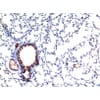
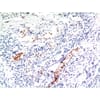
ITM3627
from
$447.00
Price in reward points: 447
- Catalog: ITM3627
- Gene/Protein: TGFB1
- Product Description: Immunotag™ TGFβ1 mouse Monoclonal Antibody(10E5)
-
Description
-
Specifications
Antibody Specification Datasheet 
IMPORTANT NOTE This product is custom manufactured with a lead time of 3-4 weeks. Once in production, this item cannot be cancelled from an order and is not eligible for return. Target Protein TGFβ1 (10E5) Clonality Monoclonal Storage/Stability -20°C/1 year Application IHC-p Recommended Dilution IHC 1:100-200 Concentration 1 mg/ml Reactive Species Human,Rat,Mouse Host Species Mouse Immunogen Synthetic Peptide of TGFβ1 at AA range of 310-390 Specificity TGFβ1 protein detects endogenous levels of TGFB1 Purification The antibody was affinity-purified from mouse ascites by affinity-chromatography using specific immunogen Form Liquid in PBS containing 50% glycerol, 0.5% BSA and 0.02% sodium azide. Gene Name TGFB1 Accession No. P01137 P04202 P17246 Alternate Names TGFB1 Description transforming growth factor beta 1(TGFB1) Homo sapiens This gene encodes a secreted ligand of the TGF-beta (transforming growth factor-beta) superfamily of proteins. Ligands of this family bind various TGF-beta receptors leading to recruitment and activation of SMAD family transcription factors that regulate gene expression. The encoded preproprotein is proteolytically processed to generate a latency-associated peptide (LAP) and a mature peptide, and is found in either a latent form composed of a mature peptide homodimer, a LAP homodimer, and a latent TGF-beta binding protein, or in an active form consisting solely of the mature peptide homodimer. The mature peptide may also form heterodimers with other TGFB family members. This encoded protein regulates cell proliferation, differentiation and growth, and can modulate expression and activation of other growth factors including interferon gamma and tumor necrosis factor alpha. This gene i Cell Pathway/ Category MAPK_ERK_Growth,MAPK_G_Protein,Cytokine-cytokine receptor interaction,Cell_Cycle_G1S,Cell_Cycle_G2M_DNA,TGF-beta,Intestinal immune network for IgA production,Pathways in cancer,Colorectal cancer,Renal cell carcinoma,Pancreatic cancer,Chronic myeloid leukemia,Hypertrophic cardiomyopathy (HCM),Dilated cardiomyopathy, Protein Expression Carcinoma,Duodenum,Eye,Plasma,Platelet,Urinary bladder carcinoma, Subcellular Localization extracellular region,proteinaceous extracellular matrix,extracellular space,nucleus,cytoplasm,Golgi lumen,plasma membrane,microvillus,cell surface,axon,extracellular matrix,platelet alpha granule lumen, Protein Function disease:Defects in TGFB1 are the cause of Camurati-Engelmann disease (CED) [MIM:131300]; also known as progressive diaphyseal dysplasia 1 (DPD1). CED is an autosomal dominant disorder characterized by hyperostosis and sclerosis of the diaphyses of long bones. The disease typically presents in early childhood with pain, muscular weakness and waddling gait, and in some cases other features such as exophthalmos, facial paralysis, hearing difficulties and loss of vision.,function:Multifunctional protein that controls proliferation, differentiation and other functions in many cell types. Many cells synthesize TGFB1 and have specific receptors for it. It positively and negatively regulates many other growth factors. It plays an important role in bone remodeling as it is a potent stimulator of osteoblastic bone formation, causing chemotaxis, proliferation and differentiation in committed osteoblasts.,induction:Activated in vitro at pH below 3.5 and over 12.5.,online information:TGF beta-1 entry,polymorphism:In post-menopausal Japanese women, the frequency of Leu-10 is higher in subjects with osteoporosis than in controls.,PTM:Glycosylated.,PTM:The precursor is cleaved into mature TGF-beta-1 and LAP, which remains non-covalently linked to mature TGF-beta-1 rendering it inactive.,similarity:Belongs to the TGF-beta family.,subunit:The inactive form consists of a TGFB1 homodimer non-covalently linked to a latency-associated peptide (LAP) homodimer. The inactive complex can contain a latent TGFB1-binding protein. The active form is a homodimer of mature TGFB1; disulfide-linked. Heterodimers of TGFB1/TGFB2 have been found in bone. Interacts with CD109 and DPT.,tissue specificity:Highly expressed in bone., Usage For Research Use Only! Not for diagnostic or therapeutic procedures. - Reviews
| Antibody Specification | |
| Datasheet | |
| IMPORTANT NOTE | This product is custom manufactured with a lead time of 3-4 weeks. Once in production, this item cannot be cancelled from an order and is not eligible for return. |
| Target Protein | TGFβ1 (10E5) |
| Clonality | Monoclonal |
| Storage/Stability | -20°C/1 year |
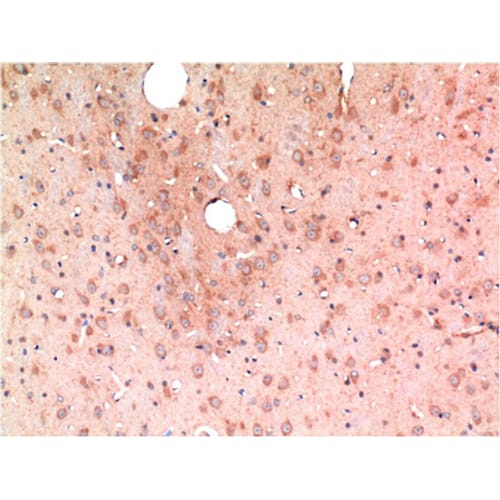
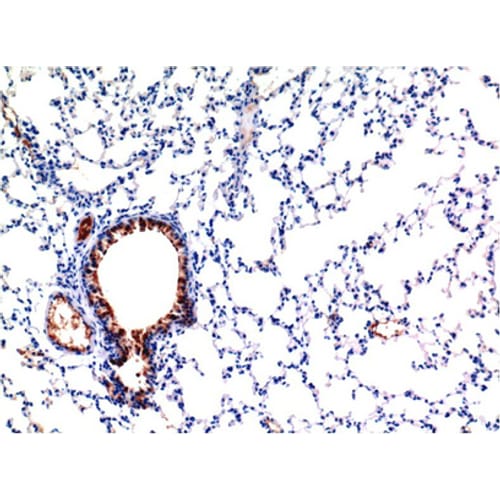
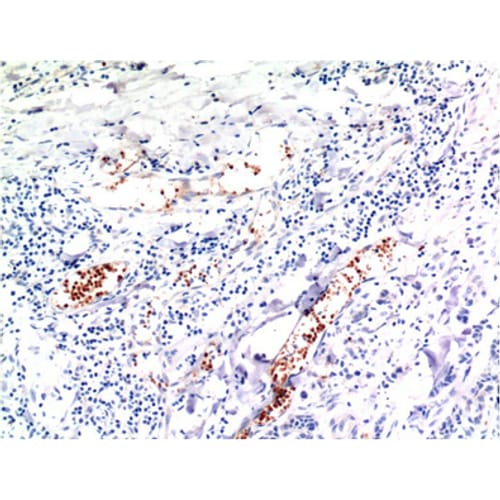
| Application | IHC-p |
| Recommended Dilution | IHC 1:100-200 |
| Concentration | 1 mg/ml |
| Reactive Species | Human,Rat,Mouse |
| Host Species | Mouse |
| Immunogen | Synthetic Peptide of TGFβ1 at AA range of 310-390 |
| Specificity | TGFβ1 protein detects endogenous levels of TGFB1 |
| Purification | The antibody was affinity-purified from mouse ascites by affinity-chromatography using specific immunogen |
| Form | Liquid in PBS containing 50% glycerol, 0.5% BSA and 0.02% sodium azide. |
| Gene Name | TGFB1 |
| Accession No. | P01137 P04202 P17246 |
| Alternate Names | TGFB1 |
| Description | transforming growth factor beta 1(TGFB1) Homo sapiens This gene encodes a secreted ligand of the TGF-beta (transforming growth factor-beta) superfamily of proteins. Ligands of this family bind various TGF-beta receptors leading to recruitment and activation of SMAD family transcription factors that regulate gene expression. The encoded preproprotein is proteolytically processed to generate a latency-associated peptide (LAP) and a mature peptide, and is found in either a latent form composed of a mature peptide homodimer, a LAP homodimer, and a latent TGF-beta binding protein, or in an active form consisting solely of the mature peptide homodimer. The mature peptide may also form heterodimers with other TGFB family members. This encoded protein regulates cell proliferation, differentiation and growth, and can modulate expression and activation of other growth factors including interferon gamma and tumor necrosis factor alpha. This gene i |
| Cell Pathway/ Category | MAPK_ERK_Growth,MAPK_G_Protein,Cytokine-cytokine receptor interaction,Cell_Cycle_G1S,Cell_Cycle_G2M_DNA,TGF-beta,Intestinal immune network for IgA production,Pathways in cancer,Colorectal cancer,Renal cell carcinoma,Pancreatic cancer,Chronic myeloid leukemia,Hypertrophic cardiomyopathy (HCM),Dilated cardiomyopathy, |
| Protein Expression | Carcinoma,Duodenum,Eye,Plasma,Platelet,Urinary bladder carcinoma, |
| Subcellular Localization | extracellular region,proteinaceous extracellular matrix,extracellular space,nucleus,cytoplasm,Golgi lumen,plasma membrane,microvillus,cell surface,axon,extracellular matrix,platelet alpha granule lumen, |
| Protein Function | disease:Defects in TGFB1 are the cause of Camurati-Engelmann disease (CED) [MIM:131300]; also known as progressive diaphyseal dysplasia 1 (DPD1). CED is an autosomal dominant disorder characterized by hyperostosis and sclerosis of the diaphyses of long bones. The disease typically presents in early childhood with pain, muscular weakness and waddling gait, and in some cases other features such as exophthalmos, facial paralysis, hearing difficulties and loss of vision.,function:Multifunctional protein that controls proliferation, differentiation and other functions in many cell types. Many cells synthesize TGFB1 and have specific receptors for it. It positively and negatively regulates many other growth factors. It plays an important role in bone remodeling as it is a potent stimulator of osteoblastic bone formation, causing chemotaxis, proliferation and differentiation in committed osteoblasts.,induction:Activated in vitro at pH below 3.5 and over 12.5.,online information:TGF beta-1 entry,polymorphism:In post-menopausal Japanese women, the frequency of Leu-10 is higher in subjects with osteoporosis than in controls.,PTM:Glycosylated.,PTM:The precursor is cleaved into mature TGF-beta-1 and LAP, which remains non-covalently linked to mature TGF-beta-1 rendering it inactive.,similarity:Belongs to the TGF-beta family.,subunit:The inactive form consists of a TGFB1 homodimer non-covalently linked to a latency-associated peptide (LAP) homodimer. The inactive complex can contain a latent TGFB1-binding protein. The active form is a homodimer of mature TGFB1; disulfide-linked. Heterodimers of TGFB1/TGFB2 have been found in bone. Interacts with CD109 and DPT.,tissue specificity:Highly expressed in bone., |
| Usage | For Research Use Only! Not for diagnostic or therapeutic procedures. |