

ITM3678
ITM3678
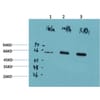

ITM3678
from
$447.00
Price in reward points: 447
- Catalog: ITM3678
- Gene/Protein: PRKAA1
- Product Description: Immunotag™ AMPKα1 mouse Monoclonal Antibody(9G3)
-
Description
-
Specifications
Antibody Specification Datasheet 
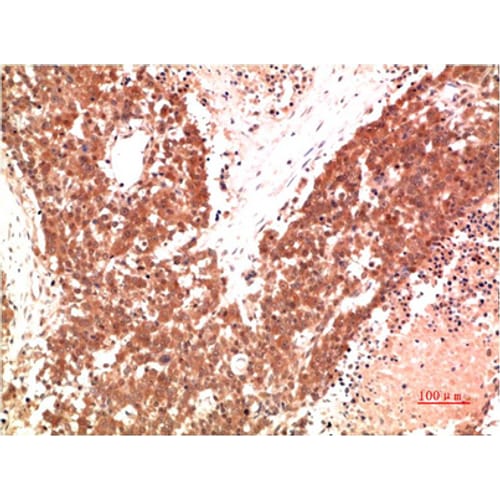
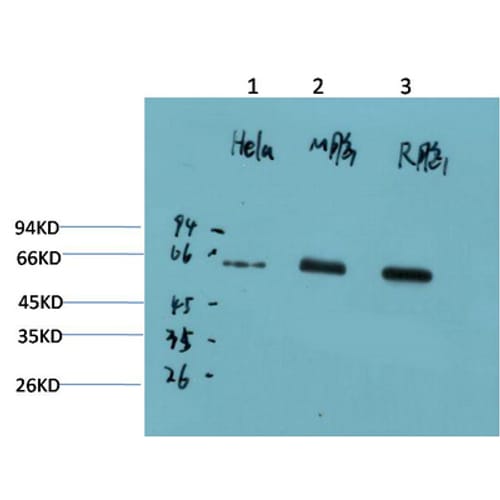
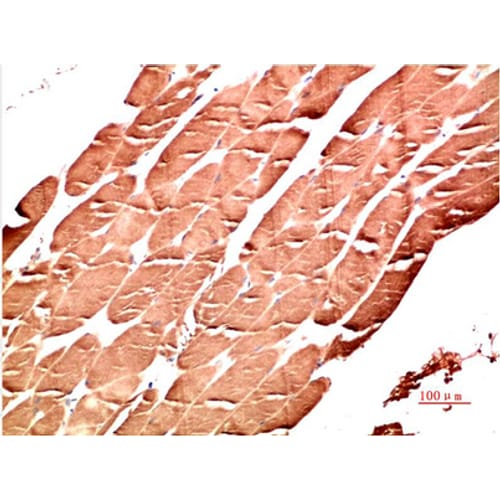
IMPORTANT NOTE This product is custom manufactured with a lead time of 3-4 weeks. Once in production, this item cannot be cancelled from an order and is not eligible for return. Target Protein AMPKα1 (9G3) Clonality Monoclonal Storage/Stability -20°C/1 year Application WB,IHC-p Recommended Dilution WB 1:1000-2000, IHC 1:100-200 Concentration 1 mg/ml Reactive Species Human,Rat,Mouse Host Species Mouse Immunogen Recombinant Protein of AMPKα1 of PRKAA1 Specificity AMPKα1 protein detects endogenous levels of PRKAA1 Purification The antibody was affinity-purified from mouse ascites by affinity-chromatography using specific immunogen Form Liquid in PBS containing 50% glycerol, 0.5% BSA and 0.02% sodium azide. Gene Name PRKAA1 Accession No. Q13131 Q5EG47 P54645 Alternate Names PRKAA1 Description protein kinase AMP-activated catalytic subunit alpha 1(PRKAA1) Homo sapiens The protein encoded by this gene belongs to the ser/thr protein kinase family. It is the catalytic subunit of the 5'-prime-AMP-activated protein kinase (AMPK). AMPK is a cellular energy sensor conserved in all eukaryotic cells. The kinase activity of AMPK is activated by the stimuli that increase the cellular AMP/ATP ratio. AMPK regulates the activities of a number of key metabolic enzymes through phosphorylation. It protects cells from stresses that cause ATP depletion by switching off ATP-consuming biosynthetic pathways. Alternatively spliced transcript variants encoding distinct isoforms have been observed. [provided by RefSeq, Jul 2008], Cell Pathway/ Category Regulation of autophagy,mTOR,Insulin_Receptor,Adipocytokine,Hypertrophic cardiomyopathy (HCM), Protein Expression Brain,Intestine,Liver,Mammary gland,Platelet,Testis Subcellular Localization intracellular,nucleus,nucleoplasm,cytoplasm,cytosol,apical plasma membrane,nucleotide-activated protein kinase complex, Protein Function catalytic activity:ATP + a protein = ADP + a phosphoprotein.,cofactor:Magnesium.,enzyme regulation:Binding of AMP results in allosteric activation, inducing phosphorylation on Thr-174 by STK11 in complex with STE20-related adapter-alpha (STRAD alpha) pseudo kinase and CAB39. Also activated by phosphorylation by CAMKK2 triggered by a rise in intracellular calcium ions, without detectable changes in the AMP/ATP ratio.,function:Responsible for the regulation of fatty acid synthesis by phosphorylation of acetyl-CoA carboxylase. It also regulates cholesterol synthesis via phosphorylation and inactivation of hormone-sensitive lipase and hydroxymethylglutaryl-CoA reductase. Appears to act as a metabolic stress-sensing protein kinase switching off biosynthetic pathways when cellular ATP levels are depleted and when 5'-AMP rises in response to fuel limitation and/or hypoxia. This is a catalytic subunit.,sequence caution:Translation N-terminally shortened.,similarity:Belongs to the protein kinase superfamily.,similarity:Belongs to the protein kinase superfamily. CAMK Ser/Thr protein kinase family. SNF1 subfamily.,similarity:Contains 1 protein kinase domain.,subunit:Heterotrimer of an alpha catalytic subunit, a beta and a gamma non-catalytic subunits. Interacts with FNIP1 and FNIP2., Usage For Research Use Only! Not for diagnostic or therapeutic procedures. - Reviews
| Antibody Specification | |
| Datasheet | |
| IMPORTANT NOTE | This product is custom manufactured with a lead time of 3-4 weeks. Once in production, this item cannot be cancelled from an order and is not eligible for return. |
| Target Protein | AMPKα1 (9G3) |
| Clonality | Monoclonal |
| Storage/Stability | -20°C/1 year |
| Application | WB,IHC-p |
| Recommended Dilution | WB 1:1000-2000, IHC 1:100-200 |
| Concentration | 1 mg/ml |
| Reactive Species | Human,Rat,Mouse |
| Host Species | Mouse |
| Immunogen | Recombinant Protein of AMPKα1 of PRKAA1 |
| Specificity | AMPKα1 protein detects endogenous levels of PRKAA1 |
| Purification | The antibody was affinity-purified from mouse ascites by affinity-chromatography using specific immunogen |
| Form | Liquid in PBS containing 50% glycerol, 0.5% BSA and 0.02% sodium azide. |
| Gene Name | PRKAA1 |
| Accession No. | Q13131 Q5EG47 P54645 |
| Alternate Names | PRKAA1 |
| Description | protein kinase AMP-activated catalytic subunit alpha 1(PRKAA1) Homo sapiens The protein encoded by this gene belongs to the ser/thr protein kinase family. It is the catalytic subunit of the 5'-prime-AMP-activated protein kinase (AMPK). AMPK is a cellular energy sensor conserved in all eukaryotic cells. The kinase activity of AMPK is activated by the stimuli that increase the cellular AMP/ATP ratio. AMPK regulates the activities of a number of key metabolic enzymes through phosphorylation. It protects cells from stresses that cause ATP depletion by switching off ATP-consuming biosynthetic pathways. Alternatively spliced transcript variants encoding distinct isoforms have been observed. [provided by RefSeq, Jul 2008], |
| Cell Pathway/ Category | Regulation of autophagy,mTOR,Insulin_Receptor,Adipocytokine,Hypertrophic cardiomyopathy (HCM), |
| Protein Expression | Brain,Intestine,Liver,Mammary gland,Platelet,Testis |
| Subcellular Localization | intracellular,nucleus,nucleoplasm,cytoplasm,cytosol,apical plasma membrane,nucleotide-activated protein kinase complex, |
| Protein Function | catalytic activity:ATP + a protein = ADP + a phosphoprotein.,cofactor:Magnesium.,enzyme regulation:Binding of AMP results in allosteric activation, inducing phosphorylation on Thr-174 by STK11 in complex with STE20-related adapter-alpha (STRAD alpha) pseudo kinase and CAB39. Also activated by phosphorylation by CAMKK2 triggered by a rise in intracellular calcium ions, without detectable changes in the AMP/ATP ratio.,function:Responsible for the regulation of fatty acid synthesis by phosphorylation of acetyl-CoA carboxylase. It also regulates cholesterol synthesis via phosphorylation and inactivation of hormone-sensitive lipase and hydroxymethylglutaryl-CoA reductase. Appears to act as a metabolic stress-sensing protein kinase switching off biosynthetic pathways when cellular ATP levels are depleted and when 5'-AMP rises in response to fuel limitation and/or hypoxia. This is a catalytic subunit.,sequence caution:Translation N-terminally shortened.,similarity:Belongs to the protein kinase superfamily.,similarity:Belongs to the protein kinase superfamily. CAMK Ser/Thr protein kinase family. SNF1 subfamily.,similarity:Contains 1 protein kinase domain.,subunit:Heterotrimer of an alpha catalytic subunit, a beta and a gamma non-catalytic subunits. Interacts with FNIP1 and FNIP2., |
| Usage | For Research Use Only! Not for diagnostic or therapeutic procedures. |