

ITP0248
ITP0248
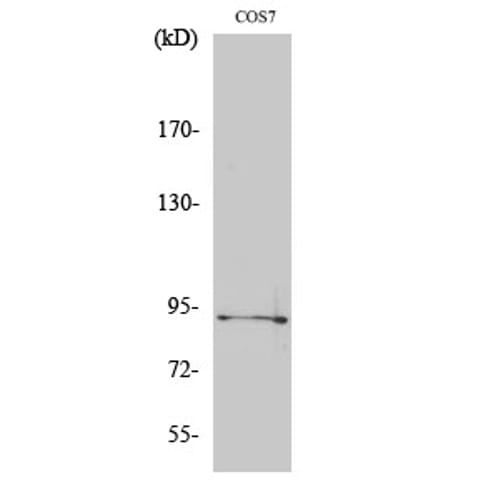
ITP0248
from
$541.00
Price in reward points: 541
- Catalog: ITP0248
- Gene/Protein: SP1
- Product Description: Immunotag™ Sp1 (phospho Thr739) Polyclonal Antibody
-
Description
-
Specifications
Antibody Specification Datasheet 
IMPORTANT NOTE This product is custom manufactured with a lead time of 3-4 weeks. Once in production, this item cannot be cancelled from an order and is not eligible for return. Target Protein SP1 (Thr739) Clonality Polyclonal Storage/Stability -20°C/1 year Application WB,IHC-p,ELISA Recommended Dilution Western Blot: 1/500 - 1/2000. Immunohistochemistry: 1/100 - 1/300. ELISA: 1/5000. Not yet tested in other applications. Concentration 1 mg/ml Reactive Species Human,Mouse,Rat,Monkey Host Species Rabbit Immunogen Synthesized phospho-peptide around the phosphorylation site of human Sp1 (phospho Thr739) Specificity Phospho-Sp1 (T739) Polyclonal Antibody detects endogenous levels of Sp1 protein only when phosphorylated at T739. Purification The antibody was affinity-purified from rabbit antiserum by affinity-chromatography using epitope-specific immunogen Form Liquid in PBS containing 50% glycerol, 0.5% BSA and 0.02% sodium azide. Gene Name SP1 Accession No. P08047 O89090 Q01714 Alternate Names SP1; TSFP1; Transcription factor Sp1 Description Sp1 transcription factor(SP1) Homo sapiens The protein encoded by this gene is a zinc finger transcription factor that binds to GC-rich motifs of many promoters. The encoded protein is involved in many cellular processes, including cell differentiation, cell growth, apoptosis, immune responses, response to DNA damage, and chromatin remodeling. Post-translational modifications such as phosphorylation, acetylation, glycosylation, and proteolytic processing significantly affect the activity of this protein, which can be an activator or a repressor. Three transcript variants encoding different isoforms have been found for this gene. [provided by RefSeq, Nov 2014], Cell Pathway/ Category TGF-beta,Huntington's disease, Protein Expression Brain,Cervix carcinoma,Colon,Epithelium,Testis, Subcellular Localization nuclear chromatin,nucleus,nucleoplasm,cytoplasm,protein-DNA complex, Protein Function function:Binds to GC box promoters elements and selectively activates mRNA synthesis from genes that contain functional recognition sites. Can interact with G/C-rich motifs from serotonin receptor promoter.,PTM:O-glycosylated; contains N-acetylglucosamine side chains.,similarity:Belongs to the Sp1 C2H2-type zinc-finger protein family.,similarity:Contains 3 C2H2-type zinc fingers.,subunit:Interacts with ATF7IP, ATF7IP2, POGZ, HCFC1, AATF and PHC2. Interacts with varicella-zoster virus IE62 protein and HIV-1 Vpr. Interacts with SV40 VP2/3 proteins. Interacts with SV40 major capsid protein VP1; this interaction leads to a cooperativity between the two proteins in DNA binding., Usage For Research Use Only! Not for diagnostic or therapeutic procedures. - Reviews
| Antibody Specification | |
| Datasheet | |
| IMPORTANT NOTE | This product is custom manufactured with a lead time of 3-4 weeks. Once in production, this item cannot be cancelled from an order and is not eligible for return. |
| Target Protein | SP1 (Thr739) |
| Clonality | Polyclonal |
| Storage/Stability | -20°C/1 year |
| Application | WB,IHC-p,ELISA |
| Recommended Dilution | Western Blot: 1/500 - 1/2000. Immunohistochemistry: 1/100 - 1/300. ELISA: 1/5000. Not yet tested in other applications. |
| Concentration | 1 mg/ml |
| Reactive Species | Human,Mouse,Rat,Monkey |
| Host Species | Rabbit |
| Immunogen | Synthesized phospho-peptide around the phosphorylation site of human Sp1 (phospho Thr739) |
| Specificity | Phospho-Sp1 (T739) Polyclonal Antibody detects endogenous levels of Sp1 protein only when phosphorylated at T739. |
| Purification | The antibody was affinity-purified from rabbit antiserum by affinity-chromatography using epitope-specific immunogen |
| Form | Liquid in PBS containing 50% glycerol, 0.5% BSA and 0.02% sodium azide. |
| Gene Name | SP1 |
| Accession No. | P08047 O89090 Q01714 |
| Alternate Names | SP1; TSFP1; Transcription factor Sp1 |
| Description | Sp1 transcription factor(SP1) Homo sapiens The protein encoded by this gene is a zinc finger transcription factor that binds to GC-rich motifs of many promoters. The encoded protein is involved in many cellular processes, including cell differentiation, cell growth, apoptosis, immune responses, response to DNA damage, and chromatin remodeling. Post-translational modifications such as phosphorylation, acetylation, glycosylation, and proteolytic processing significantly affect the activity of this protein, which can be an activator or a repressor. Three transcript variants encoding different isoforms have been found for this gene. [provided by RefSeq, Nov 2014], |
| Cell Pathway/ Category | TGF-beta,Huntington's disease, |
| Protein Expression | Brain,Cervix carcinoma,Colon,Epithelium,Testis, |
| Subcellular Localization | nuclear chromatin,nucleus,nucleoplasm,cytoplasm,protein-DNA complex, |
| Protein Function | function:Binds to GC box promoters elements and selectively activates mRNA synthesis from genes that contain functional recognition sites. Can interact with G/C-rich motifs from serotonin receptor promoter.,PTM:O-glycosylated; contains N-acetylglucosamine side chains.,similarity:Belongs to the Sp1 C2H2-type zinc-finger protein family.,similarity:Contains 3 C2H2-type zinc fingers.,subunit:Interacts with ATF7IP, ATF7IP2, POGZ, HCFC1, AATF and PHC2. Interacts with varicella-zoster virus IE62 protein and HIV-1 Vpr. Interacts with SV40 VP2/3 proteins. Interacts with SV40 major capsid protein VP1; this interaction leads to a cooperativity between the two proteins in DNA binding., |
| Usage | For Research Use Only! Not for diagnostic or therapeutic procedures. |