

ITP0437
ITP0437
ITP0437
from
$541.00
Price in reward points: 541
- Catalog: ITP0437
- Gene/Protein: TEK
- Product Description: Immunotag™ Tie-2 (phospho Tyr992) Polyclonal Antibody
-
Description
-
Specifications
Antibody Specification Datasheet 
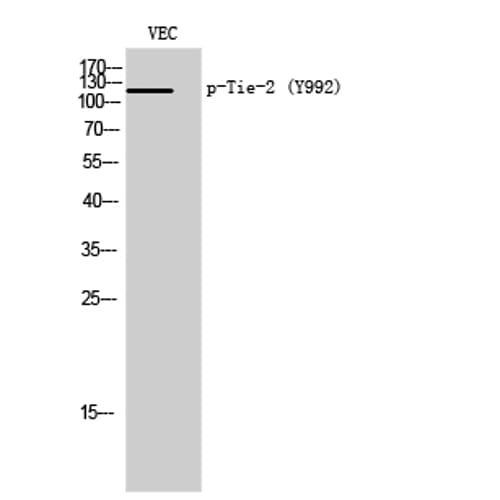
IMPORTANT NOTE This product is custom manufactured with a lead time of 3-4 weeks. Once in production, this item cannot be cancelled from an order and is not eligible for return. Target Protein Tie-2 (Tyr992) Clonality Polyclonal Storage/Stability -20°C/1 year Application WB,ELISA Recommended Dilution Western Blot: 1/500 - 1/2000. ELISA: 1/10000. Not yet tested in other applications. Concentration 1 mg/ml Reactive Species Human,Mouse Host Species Rabbit Immunogen Synthesized phospho-peptide around the phosphorylation site of human Tie-2 (phospho Tyr992) Specificity Phospho-Tie-2 (Y992) Polyclonal Antibody detects endogenous levels of Tie-2 protein only when phosphorylated at Y992. Purification The antibody was affinity-purified from rabbit antiserum by affinity-chromatography using epitope-specific immunogen Form Liquid in PBS containing 50% glycerol, 0.5% BSA and 0.02% sodium azide. Gene Name TEK Accession No. Q02763 Q02858 Alternate Names TEK; TIE2; VMCM; VMCM1; Angiopoietin-1 receptor; Endothelial tyrosine kinase; Tunica interna endothelial cell kinase; Tyrosine kinase with Ig and EGF homology domains-2; Tyrosine-protein kinase receptor TEK; Tyrosine-protein kinase receptor Description TEK receptor tyrosine kinase(TEK) Homo sapiens This gene encodes a receptor that belongs to the protein tyrosine kinase Tie2 family. The encoded protein possesses a unique extracellular region that contains two immunoglobulin-like domains, three epidermal growth factor (EGF)-like domains and three fibronectin type III repeats. The ligand angiopoietin-1 binds to this receptor and mediates a signaling pathway that functions in embryonic vascular development. Mutations in this gene are associated with inherited venous malformations of the skin and mucous membranes. Alternative splicing results in multiple transcript variants. Additional alternatively spliced transcript variants of this gene have been described, but their full-length nature is not known. [provided by RefSeq, Feb 2014], Cell Pathway/ Category Angiogenesis Protein Expression Brain,Liver,Pancreas,Placenta, Subcellular Localization stress fiber,extracellular region,cytoplasm,cytoskeleton,actin filament,plasma membrane,integral component of plasma membrane,microvillus,cell-cell junction,focal adhesion,basal plasma membrane,cell surface,ba Protein Function catalytic activity:ATP + a [protein]-L-tyrosine = ADP + a [protein]-L-tyrosine phosphate.,disease:Defects in TEK are a cause of dominantly inherited venous malformations (VMCM) [MIM:600195]; an error of vascular morphogenesis characterized by dilated, serpiginous channels.,function:This protein is a protein tyrosine-kinase transmembrane receptor for angiopoietin 1. It may constitute the earliest mammalian endothelial cell lineage marker. Probably regulates endothelial cell proliferation, differentiation and guides the proper patterning of endothelial cells during blood vessel formation.,similarity:Belongs to the protein kinase superfamily. Tyr protein kinase family.,similarity:Belongs to the protein kinase superfamily. Tyr protein kinase family. Tie subfamily.,similarity:Contains 1 protein kinase domain.,similarity:Contains 2 Ig-like C2-type (immunoglobulin-like) domains.,similarity:Contains 3 EGF-like domains.,similarity:Contains 3 fibronectin type-III domains.,tissue specificity:Predominantly expressed in endothelial cells and their progenitors, the angioblasts. Has been directly found in placenta and lung, with a lower level in umbilical vein endothelial cells, brain and kidney., Usage For Research Use Only! Not for diagnostic or therapeutic procedures. - Reviews
| Antibody Specification | |
| Datasheet | |
| IMPORTANT NOTE | This product is custom manufactured with a lead time of 3-4 weeks. Once in production, this item cannot be cancelled from an order and is not eligible for return. |
| Target Protein | Tie-2 (Tyr992) |
| Clonality | Polyclonal |
| Storage/Stability | -20°C/1 year |
| Application | WB,ELISA |
| Recommended Dilution | Western Blot: 1/500 - 1/2000. ELISA: 1/10000. Not yet tested in other applications. |
| Concentration | 1 mg/ml |
| Reactive Species | Human,Mouse |
| Host Species | Rabbit |
| Immunogen | Synthesized phospho-peptide around the phosphorylation site of human Tie-2 (phospho Tyr992) |
| Specificity | Phospho-Tie-2 (Y992) Polyclonal Antibody detects endogenous levels of Tie-2 protein only when phosphorylated at Y992. |
| Purification | The antibody was affinity-purified from rabbit antiserum by affinity-chromatography using epitope-specific immunogen |
| Form | Liquid in PBS containing 50% glycerol, 0.5% BSA and 0.02% sodium azide. |
| Gene Name | TEK |
| Accession No. | Q02763 Q02858 |
| Alternate Names | TEK; TIE2; VMCM; VMCM1; Angiopoietin-1 receptor; Endothelial tyrosine kinase; Tunica interna endothelial cell kinase; Tyrosine kinase with Ig and EGF homology domains-2; Tyrosine-protein kinase receptor TEK; Tyrosine-protein kinase receptor |
| Description | TEK receptor tyrosine kinase(TEK) Homo sapiens This gene encodes a receptor that belongs to the protein tyrosine kinase Tie2 family. The encoded protein possesses a unique extracellular region that contains two immunoglobulin-like domains, three epidermal growth factor (EGF)-like domains and three fibronectin type III repeats. The ligand angiopoietin-1 binds to this receptor and mediates a signaling pathway that functions in embryonic vascular development. Mutations in this gene are associated with inherited venous malformations of the skin and mucous membranes. Alternative splicing results in multiple transcript variants. Additional alternatively spliced transcript variants of this gene have been described, but their full-length nature is not known. [provided by RefSeq, Feb 2014], |
| Cell Pathway/ Category | Angiogenesis |
| Protein Expression | Brain,Liver,Pancreas,Placenta, |
| Subcellular Localization | stress fiber,extracellular region,cytoplasm,cytoskeleton,actin filament,plasma membrane,integral component of plasma membrane,microvillus,cell-cell junction,focal adhesion,basal plasma membrane,cell surface,ba |
| Protein Function | catalytic activity:ATP + a [protein]-L-tyrosine = ADP + a [protein]-L-tyrosine phosphate.,disease:Defects in TEK are a cause of dominantly inherited venous malformations (VMCM) [MIM:600195]; an error of vascular morphogenesis characterized by dilated, serpiginous channels.,function:This protein is a protein tyrosine-kinase transmembrane receptor for angiopoietin 1. It may constitute the earliest mammalian endothelial cell lineage marker. Probably regulates endothelial cell proliferation, differentiation and guides the proper patterning of endothelial cells during blood vessel formation.,similarity:Belongs to the protein kinase superfamily. Tyr protein kinase family.,similarity:Belongs to the protein kinase superfamily. Tyr protein kinase family. Tie subfamily.,similarity:Contains 1 protein kinase domain.,similarity:Contains 2 Ig-like C2-type (immunoglobulin-like) domains.,similarity:Contains 3 EGF-like domains.,similarity:Contains 3 fibronectin type-III domains.,tissue specificity:Predominantly expressed in endothelial cells and their progenitors, the angioblasts. Has been directly found in placenta and lung, with a lower level in umbilical vein endothelial cells, brain and kidney., |
| Usage | For Research Use Only! Not for diagnostic or therapeutic procedures. |