

ITP0603
ITP0603
ITP0603
from
$541.00
Price in reward points: 541
- Catalog: ITP0603
- Gene/Protein: KSR1
- Product Description: Immunotag™ Ksr-1 (phospho Ser392) Polyclonal Antibody
-
Description
-
Specifications
Antibody Specification Datasheet 
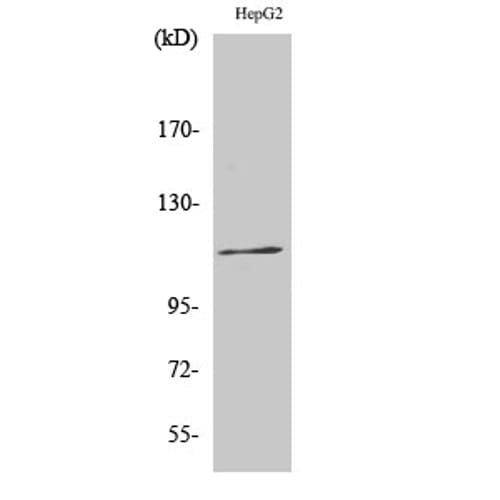
IMPORTANT NOTE This product is custom manufactured with a lead time of 3-4 weeks. Once in production, this item cannot be cancelled from an order and is not eligible for return. Target Protein Ksr-1 (Ser392) Clonality Polyclonal Storage/Stability -20°C/1 year Application WB,IHC-p,ELISA Recommended Dilution Western Blot: 1/500 - 1/2000. Immunohistochemistry: 1/100 - 1/300. ELISA: 1/20000. Not yet tested in other applications. Concentration 1 mg/ml Reactive Species Human,Mouse Host Species Rabbit Immunogen The antiserum was produced against synthesized peptide derived from human KSR around the phosphorylation site of Ser392. AA range:358-407 Specificity Phospho-Ksr-1 (S392) Polyclonal Antibody detects endogenous levels of Ksr-1 protein only when phosphorylated at S392. Purification The antibody was affinity-purified from rabbit antiserum by affinity-chromatography using epitope-specific immunogen Form Liquid in PBS containing 50% glycerol, 0.5% BSA and 0.02% sodium azide. Gene Name KSR1 Accession No. Q8IVT5 Q61097 Alternate Names KSR1; KSR; Kinase suppressor of Ras 1 Description caution:The sequence shown here is derived from an Ensembl automatic analysis pipeline and should be considered as preliminary data.,function:Location-regulated scaffolding protein connecting MEK to RAF. Promotes MEK and RAF phosphorylation and activity through assembly of an activated signaling complex. By itself, it has no demonstrated kinase activity.,PTM:Phosphorylated on Ser-309 and, to a higher extent, on Ser-404 by MARK3. Dephosphorylated on Ser-404 by PPP2CA. In resting cells, phosphorylated KSR1 is cytoplasmic and in stimulated cells, dephosphorylated KSR1 is membrane-associated.,similarity:Belongs to the protein kinase superfamily. TKL Ser/Thr protein kinase family.,similarity:Contains 1 phorbol-ester/DAG-type zinc finger.,similarity:Contains 1 protein kinase domain.,subcellular location:In unstimulated cells, where the phosphorylated form is bound to a 14-3-3 protein, sequestration in the cytoplasm occurs. Following growth factor treatment, the protein is free for membrane translocation, and it moves from the cytoplasm to the cell periphery.,subunit:Interacts with HSPCA/HSP90, YWHAB/14-3-3, CDC37, MAP2K/MEK, MARK3, PPP2R1A and PPP2CA. Also interacts with RAF and MAPK/ERK, in a Ras-dependent manner (By similarity). The binding of 14-3-3 proteins to phosphorylated KSR prevents the membrane localization., Protein Expression Brain,Epithelium,Platelet,Synovial membrane, Subcellular Localization intracellular,endoplasmic reticulum,endoplasmic reticulum membrane,cytosol,membrane,ruffle membrane,protein complex, Protein Function caution:The sequence shown here is derived from an Ensembl automatic analysis pipeline and should be considered as preliminary data.,function:Location-regulated scaffolding protein connecting MEK to RAF. Promotes MEK and RAF phosphorylation and activity through assembly of an activated signaling complex. By itself, it has no demonstrated kinase activity.,PTM:Phosphorylated on Ser-309 and, to a higher extent, on Ser-404 by MARK3. Dephosphorylated on Ser-404 by PPP2CA. In resting cells, phosphorylated KSR1 is cytoplasmic and in stimulated cells, dephosphorylated KSR1 is membrane-associated.,similarity:Belongs to the protein kinase superfamily. TKL Ser/Thr protein kinase family.,similarity:Contains 1 phorbol-ester/DAG-type zinc finger.,similarity:Contains 1 protein kinase domain.,subcellular location:In unstimulated cells, where the phosphorylated form is bound to a 14-3-3 protein, sequestration in the cytoplasm occurs. Following growth factor treatment, the protein is free for membrane translocation, and it moves from the cytoplasm to the cell periphery.,subunit:Interacts with HSPCA/HSP90, YWHAB/14-3-3, CDC37, MAP2K/MEK, MARK3, PPP2R1A and PPP2CA. Also interacts with RAF and MAPK/ERK, in a Ras-dependent manner (By similarity). The binding of 14-3-3 proteins to phosphorylated KSR prevents the membrane localization., Usage For Research Use Only! Not for diagnostic or therapeutic procedures. - Reviews
| Antibody Specification | |
| Datasheet | |
| IMPORTANT NOTE | This product is custom manufactured with a lead time of 3-4 weeks. Once in production, this item cannot be cancelled from an order and is not eligible for return. |
| Target Protein | Ksr-1 (Ser392) |
| Clonality | Polyclonal |
| Storage/Stability | -20°C/1 year |
| Application | WB,IHC-p,ELISA |
| Recommended Dilution | Western Blot: 1/500 - 1/2000. Immunohistochemistry: 1/100 - 1/300. ELISA: 1/20000. Not yet tested in other applications. |
| Concentration | 1 mg/ml |
| Reactive Species | Human,Mouse |
| Host Species | Rabbit |
| Immunogen | The antiserum was produced against synthesized peptide derived from human KSR around the phosphorylation site of Ser392. AA range:358-407 |
| Specificity | Phospho-Ksr-1 (S392) Polyclonal Antibody detects endogenous levels of Ksr-1 protein only when phosphorylated at S392. |
| Purification | The antibody was affinity-purified from rabbit antiserum by affinity-chromatography using epitope-specific immunogen |
| Form | Liquid in PBS containing 50% glycerol, 0.5% BSA and 0.02% sodium azide. |
| Gene Name | KSR1 |
| Accession No. | Q8IVT5 Q61097 |
| Alternate Names | KSR1; KSR; Kinase suppressor of Ras 1 |
| Description | caution:The sequence shown here is derived from an Ensembl automatic analysis pipeline and should be considered as preliminary data.,function:Location-regulated scaffolding protein connecting MEK to RAF. Promotes MEK and RAF phosphorylation and activity through assembly of an activated signaling complex. By itself, it has no demonstrated kinase activity.,PTM:Phosphorylated on Ser-309 and, to a higher extent, on Ser-404 by MARK3. Dephosphorylated on Ser-404 by PPP2CA. In resting cells, phosphorylated KSR1 is cytoplasmic and in stimulated cells, dephosphorylated KSR1 is membrane-associated.,similarity:Belongs to the protein kinase superfamily. TKL Ser/Thr protein kinase family.,similarity:Contains 1 phorbol-ester/DAG-type zinc finger.,similarity:Contains 1 protein kinase domain.,subcellular location:In unstimulated cells, where the phosphorylated form is bound to a 14-3-3 protein, sequestration in the cytoplasm occurs. Following growth factor treatment, the protein is free for membrane translocation, and it moves from the cytoplasm to the cell periphery.,subunit:Interacts with HSPCA/HSP90, YWHAB/14-3-3, CDC37, MAP2K/MEK, MARK3, PPP2R1A and PPP2CA. Also interacts with RAF and MAPK/ERK, in a Ras-dependent manner (By similarity). The binding of 14-3-3 proteins to phosphorylated KSR prevents the membrane localization., |
| Protein Expression | Brain,Epithelium,Platelet,Synovial membrane, |
| Subcellular Localization | intracellular,endoplasmic reticulum,endoplasmic reticulum membrane,cytosol,membrane,ruffle membrane,protein complex, |
| Protein Function | caution:The sequence shown here is derived from an Ensembl automatic analysis pipeline and should be considered as preliminary data.,function:Location-regulated scaffolding protein connecting MEK to RAF. Promotes MEK and RAF phosphorylation and activity through assembly of an activated signaling complex. By itself, it has no demonstrated kinase activity.,PTM:Phosphorylated on Ser-309 and, to a higher extent, on Ser-404 by MARK3. Dephosphorylated on Ser-404 by PPP2CA. In resting cells, phosphorylated KSR1 is cytoplasmic and in stimulated cells, dephosphorylated KSR1 is membrane-associated.,similarity:Belongs to the protein kinase superfamily. TKL Ser/Thr protein kinase family.,similarity:Contains 1 phorbol-ester/DAG-type zinc finger.,similarity:Contains 1 protein kinase domain.,subcellular location:In unstimulated cells, where the phosphorylated form is bound to a 14-3-3 protein, sequestration in the cytoplasm occurs. Following growth factor treatment, the protein is free for membrane translocation, and it moves from the cytoplasm to the cell periphery.,subunit:Interacts with HSPCA/HSP90, YWHAB/14-3-3, CDC37, MAP2K/MEK, MARK3, PPP2R1A and PPP2CA. Also interacts with RAF and MAPK/ERK, in a Ras-dependent manner (By similarity). The binding of 14-3-3 proteins to phosphorylated KSR prevents the membrane localization., |
| Usage | For Research Use Only! Not for diagnostic or therapeutic procedures. |