

ITP0648
ITP0648
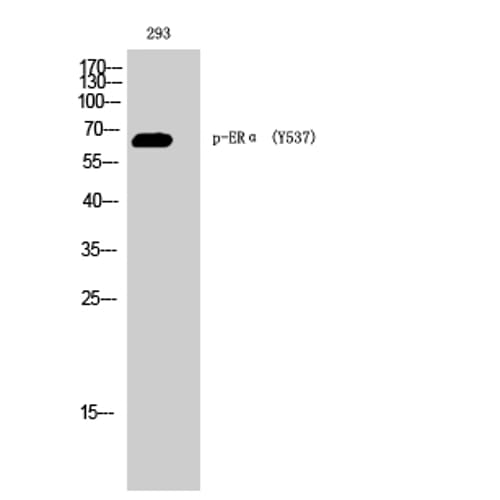
ITP0648
from
$541.00
Price in reward points: 541
- Catalog: ITP0648
- Gene/Protein: ESR1
- Product Description: Immunotag™ ERα (phospho Tyr537) Polyclonal Antibody
-
Description
-
Specifications
Antibody Specification Datasheet 
IMPORTANT NOTE This product is custom manufactured with a lead time of 3-4 weeks. Once in production, this item cannot be cancelled from an order and is not eligible for return. Target Protein ERα (Tyr537) Clonality Polyclonal Storage/Stability -20°C/1 year Application WB,IHC-p,ELISA Recommended Dilution Western Blot: 1/500 - 1/2000. Immunohistochemistry: 1/100 - 1/300. ELISA: 1/10000. Not yet tested in other applications. Concentration 1 mg/ml Reactive Species Human,Mouse,Rat Host Species Rabbit Immunogen Synthesized phospho-peptide around the phosphorylation site of human ERα (phospho Tyr537) Specificity Phospho-ERα (Y537) Polyclonal Antibody detects endogenous levels of ERα protein only when phosphorylated at Y537. Purification The antibody was affinity-purified from rabbit antiserum by affinity-chromatography using epitope-specific immunogen Form Liquid in PBS containing 50% glycerol, 0.5% BSA and 0.02% sodium azide. Gene Name ESR1 Accession No. P03372 P19785 P06211 Alternate Names ESR1; ESR; NR3A1; Estrogen receptor; ER; ER-alpha; Estradiol receptor; Nuclear receptor subfamily 3 group A member 1 Description estrogen receptor 1(ESR1) Homo sapiens This gene encodes an estrogen receptor, a ligand-activated transcription factor composed of several domains important for hormone binding, DNA binding, and activation of transcription. The protein localizes to the nucleus where it may form a homodimer or a heterodimer with estrogen receptor 2. Estrogen and its receptors are essential for sexual development and reproductive function, but also play a role in other tissues such as bone. Estrogen receptors are also involved in pathological processes including breast cancer, endometrial cancer, and osteoporosis. Alternative promoter usage and alternative splicing result in dozens of transcript variants, but the full-length nature of many of these variants has not been determined. [provided by RefSeq, Mar 2014], Protein Expression Brain,Breast,Breast adenocarcinoma,Breast cancer,Mammary carcinoma,Mammary gland,PC Subcellular Localization nuclear chromatin,nucleus,nucleoplasm,cytoplasm,Golgi apparatus,plasma membrane,membrane,integral component of membrane,transcriptionally active chromatin, Protein Function domain:Composed of three domains: a modulating N-terminal domain, a DNA-binding domain and a C-terminal steroid-binding domain.,function:Nuclear hormone receptor. The steroid hormones and their receptors are involved in the regulation of eukaryotic gene expression and affect cellular proliferation and differentiation in target tissues.,online information:Estrogen receptor entry,polymorphism:Genetic variations in ESR1 are correlated with bone mineral density (BMD). Low BMD is a risk factor for osteoporotic fracture. Osteoporosis is characterized by reduced bone mineral density, disrutption of bone microarchitecture, and the alteration of the amount and variety of non-collagenous proteins in bone. Osteoporotic bones are more at risk of fracture.,PTM:Glycosylated; contains N-acetylglucosamine, probably O-linked.,PTM:Phosphorylated by cyclin A/CDK2. Phosphorylation probably enhances transcriptional activity.,similarity:Belongs to the nuclear hormone receptor family.,similarity:Belongs to the nuclear hormone receptor family. NR3 subfamily.,similarity:Contains 1 nuclear receptor DNA-binding domain.,subunit:Interacts with SLC30A9 (By similarity). Binds DNA as a homodimer. Can form a heterodimer with ESR2. Interacts with NCOA3, NCOA5 and NCOA6 coactivators, leading to a strong increase of transcription of target genes. Interacts with NCOA7 in a ligand-inducible manner. Interacts with PHB2, PELP1 and UBE1C. Interacts with AKAP13. Interacts with CUEDC2. Interacts with KDM5A. Interacts with SMARD1. Interacts with HEXIM1 and MAP1S. Interacts with PBXIP1. Interaction with MUC1 is stimulated by 7 beta-estradiol (E2) and enhances ERS1-mediated transcription. Interacts with DNTTIP2, FAM120B and UIMC1. Interacts with isoform 4 of TXNRD1. Interacts with MLL2. Interacts with ATAD2 and this interaction is enhanced by estradiol., Usage For Research Use Only! Not for diagnostic or therapeutic procedures. - Reviews
| Antibody Specification | |
| Datasheet | |
| IMPORTANT NOTE | This product is custom manufactured with a lead time of 3-4 weeks. Once in production, this item cannot be cancelled from an order and is not eligible for return. |
| Target Protein | ERα (Tyr537) |
| Clonality | Polyclonal |
| Storage/Stability | -20°C/1 year |
| Application | WB,IHC-p,ELISA |
| Recommended Dilution | Western Blot: 1/500 - 1/2000. Immunohistochemistry: 1/100 - 1/300. ELISA: 1/10000. Not yet tested in other applications. |
| Concentration | 1 mg/ml |
| Reactive Species | Human,Mouse,Rat |
| Host Species | Rabbit |
| Immunogen | Synthesized phospho-peptide around the phosphorylation site of human ERα (phospho Tyr537) |
| Specificity | Phospho-ERα (Y537) Polyclonal Antibody detects endogenous levels of ERα protein only when phosphorylated at Y537. |
| Purification | The antibody was affinity-purified from rabbit antiserum by affinity-chromatography using epitope-specific immunogen |
| Form | Liquid in PBS containing 50% glycerol, 0.5% BSA and 0.02% sodium azide. |
| Gene Name | ESR1 |
| Accession No. | P03372 P19785 P06211 |
| Alternate Names | ESR1; ESR; NR3A1; Estrogen receptor; ER; ER-alpha; Estradiol receptor; Nuclear receptor subfamily 3 group A member 1 |
| Description | estrogen receptor 1(ESR1) Homo sapiens This gene encodes an estrogen receptor, a ligand-activated transcription factor composed of several domains important for hormone binding, DNA binding, and activation of transcription. The protein localizes to the nucleus where it may form a homodimer or a heterodimer with estrogen receptor 2. Estrogen and its receptors are essential for sexual development and reproductive function, but also play a role in other tissues such as bone. Estrogen receptors are also involved in pathological processes including breast cancer, endometrial cancer, and osteoporosis. Alternative promoter usage and alternative splicing result in dozens of transcript variants, but the full-length nature of many of these variants has not been determined. [provided by RefSeq, Mar 2014], |
| Protein Expression | Brain,Breast,Breast adenocarcinoma,Breast cancer,Mammary carcinoma,Mammary gland,PC |
| Subcellular Localization | nuclear chromatin,nucleus,nucleoplasm,cytoplasm,Golgi apparatus,plasma membrane,membrane,integral component of membrane,transcriptionally active chromatin, |
| Protein Function | domain:Composed of three domains: a modulating N-terminal domain, a DNA-binding domain and a C-terminal steroid-binding domain.,function:Nuclear hormone receptor. The steroid hormones and their receptors are involved in the regulation of eukaryotic gene expression and affect cellular proliferation and differentiation in target tissues.,online information:Estrogen receptor entry,polymorphism:Genetic variations in ESR1 are correlated with bone mineral density (BMD). Low BMD is a risk factor for osteoporotic fracture. Osteoporosis is characterized by reduced bone mineral density, disrutption of bone microarchitecture, and the alteration of the amount and variety of non-collagenous proteins in bone. Osteoporotic bones are more at risk of fracture.,PTM:Glycosylated; contains N-acetylglucosamine, probably O-linked.,PTM:Phosphorylated by cyclin A/CDK2. Phosphorylation probably enhances transcriptional activity.,similarity:Belongs to the nuclear hormone receptor family.,similarity:Belongs to the nuclear hormone receptor family. NR3 subfamily.,similarity:Contains 1 nuclear receptor DNA-binding domain.,subunit:Interacts with SLC30A9 (By similarity). Binds DNA as a homodimer. Can form a heterodimer with ESR2. Interacts with NCOA3, NCOA5 and NCOA6 coactivators, leading to a strong increase of transcription of target genes. Interacts with NCOA7 in a ligand-inducible manner. Interacts with PHB2, PELP1 and UBE1C. Interacts with AKAP13. Interacts with CUEDC2. Interacts with KDM5A. Interacts with SMARD1. Interacts with HEXIM1 and MAP1S. Interacts with PBXIP1. Interaction with MUC1 is stimulated by 7 beta-estradiol (E2) and enhances ERS1-mediated transcription. Interacts with DNTTIP2, FAM120B and UIMC1. Interacts with isoform 4 of TXNRD1. Interacts with MLL2. Interacts with ATAD2 and this interaction is enhanced by estradiol., |
| Usage | For Research Use Only! Not for diagnostic or therapeutic procedures. |