

ITP0687
ITP0687
ITP0687
from
$541.00
Price in reward points: 541
- Catalog: ITP0687
- Gene/Protein: BLNK
- Product Description: Immunotag™ BLNK (phospho Tyr96) Polyclonal Antibody
-
Description
-
Specifications
Antibody Specification Datasheet 
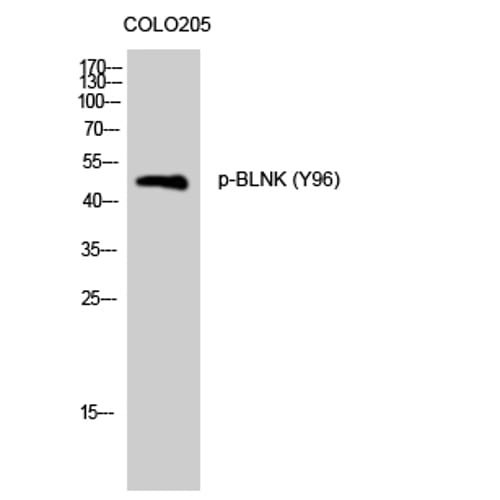
IMPORTANT NOTE This product is custom manufactured with a lead time of 3-4 weeks. Once in production, this item cannot be cancelled from an order and is not eligible for return. Target Protein BLNK (Tyr96) Clonality Polyclonal Storage/Stability -20°C/1 year Application WB,IHC-p,ELISA Recommended Dilution Western Blot: 1/500 - 1/2000. Immunohistochemistry: 1/100 - 1/300. ELISA: 1/20000. Not yet tested in other applications. Concentration 1 mg/ml Reactive Species Human,Mouse,Monkey Host Species Rabbit Immunogen The antiserum was produced against synthesized peptide derived from human BLNK around the phosphorylation site of Tyr96. AA range:62-111 Specificity Phospho-BLNK (Y96) Polyclonal Antibody detects endogenous levels of BLNK protein only when phosphorylated at Y96. Purification The antibody was affinity-purified from rabbit antiserum by affinity-chromatography using epitope-specific immunogen Form Liquid in PBS containing 50% glycerol, 0.5% BSA and 0.02% sodium azide. Gene Name BLNK Accession No. Q8WV28 Q9QUN3 Alternate Names BLNK; BASH; SLP65; B-cell linker protein; B-cell adapter containing a SH2 domain protein; B-cell adapter containing a Src homology 2 domain protein; Cytoplasmic adapter protein; Src homology 2 domain-containing leukocyte protein of 65 kDa; Description B-cell linker(BLNK) Homo sapiens This gene encodes a cytoplasmic linker or adaptor protein that plays a critical role in B cell development. This protein bridges B cell receptor-associated kinase activation with downstream signaling pathways, thereby affecting various biological functions. The phosphorylation of five tyrosine residues is necessary for this protein to nucleate distinct signaling effectors following B cell receptor activation. Mutations in this gene cause hypoglobulinemia and absent B cells, a disease in which the pro- to pre-B-cell transition is developmentally blocked. Deficiency in this protein has also been shown in some cases of pre-B acute lymphoblastic leukemia. Alternatively spliced transcript variants have been found for this gene. [provided by RefSeq, May 2012], Cell Pathway/ Category B_Cell_Antigen,Primary immunodeficiency, Protein Expression B-cell, Subcellular Localization intracellular,cytoplasm,cytosol,plasma membrane, Protein Function disease:Defects in BLNK are the cause of hypoglobulinemia and absent B-cells [MIM:604515]. This is a developmental blockage at the pro- to pre-B-cell transition.,disease:In 6 of 34 childhood pre-B acute lymphoblastic leukemia (ALL) samples that were tested showed a complete loss or drastic reduction of BLNK expression.,function:Functions as a central linker protein that bridges kinases associated with the B-cell receptor (BCR) with a multitude of signaling pathways, regulating biological outcomes of B-cell function and development. Plays a role in the activation of ERK/EPHB2, MAP kinase p38 and JNK. Modulates AP1 activation. Important for the activation of NF-kappa-B and NFAT. Plays an important role in BCR-mediated PLCG1 and PLCG2 activation and Ca(2+) mobilization and is required for trafficking of the BCR to late endosomes. However, does not seem to be required for pre-BCR-mediated activation of MAP kinase and phosphatidyl-inositol 3 (PI3) kinase signaling. May be required for the RAC1-JNK pathway. Plays a critical role in orchestrating the pro-B cell to pre-B cell transition (By similarity). Plays an important role in BCR-induced B-cell apoptosis.,online information:BLNK mutation db,PTM:Following BCR activation, phosphorylated on tyrosine residues by SYK and LYN. When phosphorylated, serves as a scaffold to assemble downstream targets of antigen activation, including PLCG1, VAV1, GRB2 and NCK1. Phosphorylation of Tyr-84, Tyr-178 and Tyr-189 facilitates PLCG1 binding. Phosphorylation of Tyr-96 facilitates BTK binding. Phosphorylation of Tyr-72 facilitates VAV1 and NCK1 binding. Phosphorylation is required for both Ca(2+) and MAPK signaling pathways.,similarity:Contains 1 SH2 domain.,subcellular location:BCR activation results in the translocation to membrane fraction.,subunit:Associates with PLCG1, VAV1 and NCK1 in a B-cell antigen receptor-dependent fashion. Interacts with VAV3, PLCG2 and GRB2. Interacts through its SH2 domain with CD79A.,tissue specificity:Expressed in B-cell lineage and fibroblast cell lines (at protein level). Highest levels of expression in the spleen, with lower levels in the liver, kidney, pancreas, small intestines and colon., Usage For Research Use Only! Not for diagnostic or therapeutic procedures. - Reviews
| Antibody Specification | |
| Datasheet | |
| IMPORTANT NOTE | This product is custom manufactured with a lead time of 3-4 weeks. Once in production, this item cannot be cancelled from an order and is not eligible for return. |
| Target Protein | BLNK (Tyr96) |
| Clonality | Polyclonal |
| Storage/Stability | -20°C/1 year |
| Application | WB,IHC-p,ELISA |
| Recommended Dilution | Western Blot: 1/500 - 1/2000. Immunohistochemistry: 1/100 - 1/300. ELISA: 1/20000. Not yet tested in other applications. |
| Concentration | 1 mg/ml |
| Reactive Species | Human,Mouse,Monkey |
| Host Species | Rabbit |
| Immunogen | The antiserum was produced against synthesized peptide derived from human BLNK around the phosphorylation site of Tyr96. AA range:62-111 |
| Specificity | Phospho-BLNK (Y96) Polyclonal Antibody detects endogenous levels of BLNK protein only when phosphorylated at Y96. |
| Purification | The antibody was affinity-purified from rabbit antiserum by affinity-chromatography using epitope-specific immunogen |
| Form | Liquid in PBS containing 50% glycerol, 0.5% BSA and 0.02% sodium azide. |
| Gene Name | BLNK |
| Accession No. | Q8WV28 Q9QUN3 |
| Alternate Names | BLNK; BASH; SLP65; B-cell linker protein; B-cell adapter containing a SH2 domain protein; B-cell adapter containing a Src homology 2 domain protein; Cytoplasmic adapter protein; Src homology 2 domain-containing leukocyte protein of 65 kDa; |
| Description | B-cell linker(BLNK) Homo sapiens This gene encodes a cytoplasmic linker or adaptor protein that plays a critical role in B cell development. This protein bridges B cell receptor-associated kinase activation with downstream signaling pathways, thereby affecting various biological functions. The phosphorylation of five tyrosine residues is necessary for this protein to nucleate distinct signaling effectors following B cell receptor activation. Mutations in this gene cause hypoglobulinemia and absent B cells, a disease in which the pro- to pre-B-cell transition is developmentally blocked. Deficiency in this protein has also been shown in some cases of pre-B acute lymphoblastic leukemia. Alternatively spliced transcript variants have been found for this gene. [provided by RefSeq, May 2012], |
| Cell Pathway/ Category | B_Cell_Antigen,Primary immunodeficiency, |
| Protein Expression | B-cell, |
| Subcellular Localization | intracellular,cytoplasm,cytosol,plasma membrane, |
| Protein Function | disease:Defects in BLNK are the cause of hypoglobulinemia and absent B-cells [MIM:604515]. This is a developmental blockage at the pro- to pre-B-cell transition.,disease:In 6 of 34 childhood pre-B acute lymphoblastic leukemia (ALL) samples that were tested showed a complete loss or drastic reduction of BLNK expression.,function:Functions as a central linker protein that bridges kinases associated with the B-cell receptor (BCR) with a multitude of signaling pathways, regulating biological outcomes of B-cell function and development. Plays a role in the activation of ERK/EPHB2, MAP kinase p38 and JNK. Modulates AP1 activation. Important for the activation of NF-kappa-B and NFAT. Plays an important role in BCR-mediated PLCG1 and PLCG2 activation and Ca(2+) mobilization and is required for trafficking of the BCR to late endosomes. However, does not seem to be required for pre-BCR-mediated activation of MAP kinase and phosphatidyl-inositol 3 (PI3) kinase signaling. May be required for the RAC1-JNK pathway. Plays a critical role in orchestrating the pro-B cell to pre-B cell transition (By similarity). Plays an important role in BCR-induced B-cell apoptosis.,online information:BLNK mutation db,PTM:Following BCR activation, phosphorylated on tyrosine residues by SYK and LYN. When phosphorylated, serves as a scaffold to assemble downstream targets of antigen activation, including PLCG1, VAV1, GRB2 and NCK1. Phosphorylation of Tyr-84, Tyr-178 and Tyr-189 facilitates PLCG1 binding. Phosphorylation of Tyr-96 facilitates BTK binding. Phosphorylation of Tyr-72 facilitates VAV1 and NCK1 binding. Phosphorylation is required for both Ca(2+) and MAPK signaling pathways.,similarity:Contains 1 SH2 domain.,subcellular location:BCR activation results in the translocation to membrane fraction.,subunit:Associates with PLCG1, VAV1 and NCK1 in a B-cell antigen receptor-dependent fashion. Interacts with VAV3, PLCG2 and GRB2. Interacts through its SH2 domain with CD79A.,tissue specificity:Expressed in B-cell lineage and fibroblast cell lines (at protein level). Highest levels of expression in the spleen, with lower levels in the liver, kidney, pancreas, small intestines and colon., |
| Usage | For Research Use Only! Not for diagnostic or therapeutic procedures. |