

ITP0843
ITP0843
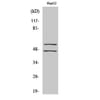
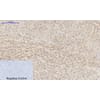
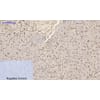
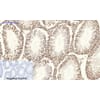
ITP0843
from
$541.00
Price in reward points: 541
- Catalog: ITP0843
- Gene/Protein: MAPK8/9/10
- Product Description: Immunotag™ JNK1/2/3 (phospho Tyr185) Polyclonal Antibody
-
Description
-
Specifications
Antibody Specification Datasheet 
IMPORTANT NOTE This product is custom manufactured with a lead time of 3-4 weeks. Once in production, this item cannot be cancelled from an order and is not eligible for return. Target Protein JNK1/2/3 (Tyr19000) Clonality Polyclonal Storage/Stability -20°C/1 year Application IF,WB,IHC-p,ELISA Recommended Dilution IF: 1:50-200 Western Blot: 1/500 - 1/2000. Immunohistochemistry: 1/100 - 1/300. ELISA: 1/20000. Not yet tested in other applications. Concentration 1 mg/ml Reactive Species Human,Mouse,Rat Host Species Rabbit Immunogen Synthesized phospho-peptide around the phosphorylation site of human JNK1/2/3 (phospho Tyr185) Specificity Phospho-JNK1/2/3 (Y185) Polyclonal Antibody detects endogenous levels of JNK1/2/3 protein only when phosphorylated at Y185. Purification The antibody was affinity-purified from rabbit antiserum by affinity-chromatography using epitope-specific immunogen Form Liquid in PBS containing 50% glycerol, 0.5% BSA and 0.02% sodium azide. Gene Name MAPK8/9/10 Accession No. P45983/P45984/P53779 P49185/P49186/P49187 Alternate Names MAPK8; JNK1; PRKM8; SAPK1; SAPK1C; Mitogen-activated protein kinase 8; MAP kinase 8; MAPK 8; JNK-46; Stress-activated protein kinase 1c; SAPK1c; Stress-activated protein kinase JNK1; c-Jun N-terminal kinase 1; MAPK9; JNK2; PRKM9; SAPK1A; Mi Description mitogen-activated protein kinase 8(MAPK8) Homo sapiens The protein encoded by this gene is a member of the MAP kinase family. MAP kinases act as an integration point for multiple biochemical signals, and are involved in a wide variety of cellular processes such as proliferation, differentiation, transcription regulation and development. This kinase is activated by various cell stimuli, and targets specific transcription factors, and thus mediates immediate-early gene expression in response to cell stimuli. The activation of this kinase by tumor-necrosis factor alpha (TNF-alpha) is found to be required for TNF-alpha induced apoptosis. This kinase is also involved in UV radiation induced apoptosis, which is thought to be related to cytochrom c-mediated cell death pathway. Studies of the mouse counterpart of this gene suggested that this kinase play a key role in T cell proliferation, apoptosis and differentiation. Several alternatively spl Cell Pathway/ Category Toll_Like, Cell Growth, Stem cell pathway, Insulin Receptor, MAPK_ERK_Growth,MAPK_G_Protein, ErbB/HER, B Cell Receptor, SAPK_JNK, WNT,WNT-T CELL,β-Catenin Protein Expression Brain,Epithelium,Fetal brain,Lung,Pooled,Testis, Subcellular Localization intracellular,nucleus,nucleoplasm,mitochondrion,cytosol, Protein Function catalytic activity:ATP + a protein = ADP + a phosphoprotein.,cofactor:Magnesium.,domain:The TXY motif contains the threonine and tyrosine residues whose phosphorylation activates the MAP kinases.,enzyme regulation:Activated by threonine and tyrosine phosphorylation by either of two dual specificity kinases, MAP2K4 and MAP2K7. Inhibited by dual specificity phosphatases, such as DUSP1.,function:JNK1 isoforms display different binding patterns: beta-1 preferentially binds to c-Jun, whereas alpha-1, alpha-2, and beta-2 have a similar low level of binding to both c-Jun or ATF2. However, there is no correlation between binding and phosphorylation, which is achieved at about the same efficiency by all isoforms.,function:Responds to activation by environmental stress and pro-inflammatory cytokines by phosphorylating a number of transcription factors, primarily components of AP-1 such as JUN, JDP2 and ATF2 and thus regulates AP-1 transcriptional activity. In T-cells, JNK1 and JNK2 are required for polarized differentiation of T-helper cells into Th1 cells (By similarity). Phosphorylates heat shock factor protein 4 (HSF4).,online information:C-Jun N-terminal kinases entry,PTM:Dually phosphorylated on Thr-183 and Tyr-185, which activates the enzyme.,similarity:Belongs to the protein kinase superfamily. CMGC Ser/Thr protein kinase family. MAP kinase subfamily.,similarity:Contains 1 protein kinase domain.,subunit:Binds to at least four scaffolding proteins, MAPK8IP1/JIP-1, MAPK8IP2/JIP-2, MAPK8IP3/JIP-3/JSAP1 and SPAG9/MAPK8IP4/JIP-4. These proteins also bind other components of the JNK signaling pathway. Interacts with TP53 and WWOX. Interacts with JAMP. Forms a complex with MAPK8IP1 and RGNEF (By similarity). Interacts with NFATC4., Usage For Research Use Only! Not for diagnostic or therapeutic procedures. - Reviews
| Antibody Specification | |
| Datasheet | |
| IMPORTANT NOTE | This product is custom manufactured with a lead time of 3-4 weeks. Once in production, this item cannot be cancelled from an order and is not eligible for return. |
| Target Protein | JNK1/2/3 (Tyr19000) |
| Clonality | Polyclonal |
| Storage/Stability | -20°C/1 year |
| Application | IF,WB,IHC-p,ELISA |
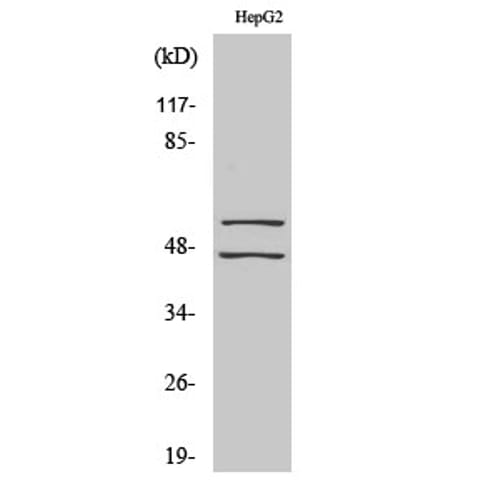
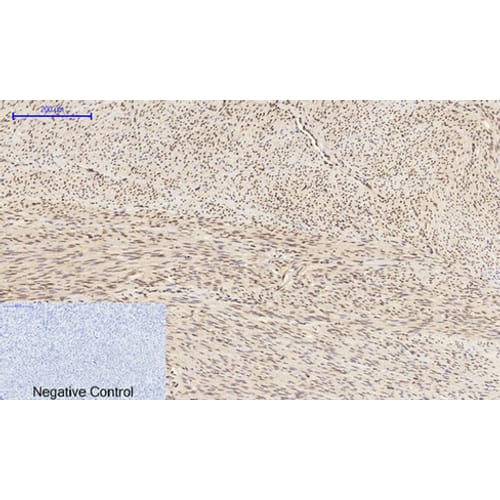
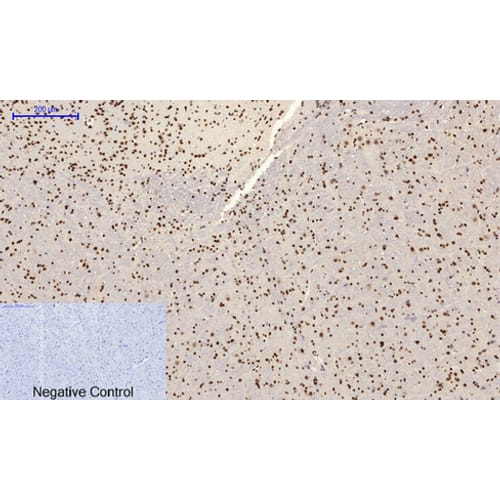
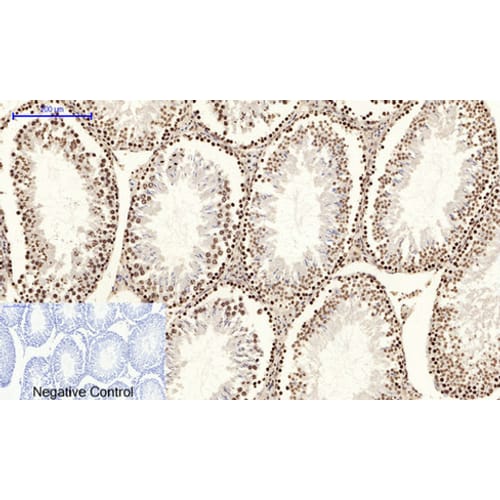
| Recommended Dilution | IF: 1:50-200 Western Blot: 1/500 - 1/2000. Immunohistochemistry: 1/100 - 1/300. ELISA: 1/20000. Not yet tested in other applications. |
| Concentration | 1 mg/ml |
| Reactive Species | Human,Mouse,Rat |
| Host Species | Rabbit |
| Immunogen | Synthesized phospho-peptide around the phosphorylation site of human JNK1/2/3 (phospho Tyr185) |
| Specificity | Phospho-JNK1/2/3 (Y185) Polyclonal Antibody detects endogenous levels of JNK1/2/3 protein only when phosphorylated at Y185. |
| Purification | The antibody was affinity-purified from rabbit antiserum by affinity-chromatography using epitope-specific immunogen |
| Form | Liquid in PBS containing 50% glycerol, 0.5% BSA and 0.02% sodium azide. |
| Gene Name | MAPK8/9/10 |
| Accession No. | P45983/P45984/P53779 P49185/P49186/P49187 |
| Alternate Names | MAPK8; JNK1; PRKM8; SAPK1; SAPK1C; Mitogen-activated protein kinase 8; MAP kinase 8; MAPK 8; JNK-46; Stress-activated protein kinase 1c; SAPK1c; Stress-activated protein kinase JNK1; c-Jun N-terminal kinase 1; MAPK9; JNK2; PRKM9; SAPK1A; Mi |
| Description | mitogen-activated protein kinase 8(MAPK8) Homo sapiens The protein encoded by this gene is a member of the MAP kinase family. MAP kinases act as an integration point for multiple biochemical signals, and are involved in a wide variety of cellular processes such as proliferation, differentiation, transcription regulation and development. This kinase is activated by various cell stimuli, and targets specific transcription factors, and thus mediates immediate-early gene expression in response to cell stimuli. The activation of this kinase by tumor-necrosis factor alpha (TNF-alpha) is found to be required for TNF-alpha induced apoptosis. This kinase is also involved in UV radiation induced apoptosis, which is thought to be related to cytochrom c-mediated cell death pathway. Studies of the mouse counterpart of this gene suggested that this kinase play a key role in T cell proliferation, apoptosis and differentiation. Several alternatively spl |
| Cell Pathway/ Category | Toll_Like, Cell Growth, Stem cell pathway, Insulin Receptor, MAPK_ERK_Growth,MAPK_G_Protein, ErbB/HER, B Cell Receptor, SAPK_JNK, WNT,WNT-T CELL,β-Catenin |
| Protein Expression | Brain,Epithelium,Fetal brain,Lung,Pooled,Testis, |
| Subcellular Localization | intracellular,nucleus,nucleoplasm,mitochondrion,cytosol, |
| Protein Function | catalytic activity:ATP + a protein = ADP + a phosphoprotein.,cofactor:Magnesium.,domain:The TXY motif contains the threonine and tyrosine residues whose phosphorylation activates the MAP kinases.,enzyme regulation:Activated by threonine and tyrosine phosphorylation by either of two dual specificity kinases, MAP2K4 and MAP2K7. Inhibited by dual specificity phosphatases, such as DUSP1.,function:JNK1 isoforms display different binding patterns: beta-1 preferentially binds to c-Jun, whereas alpha-1, alpha-2, and beta-2 have a similar low level of binding to both c-Jun or ATF2. However, there is no correlation between binding and phosphorylation, which is achieved at about the same efficiency by all isoforms.,function:Responds to activation by environmental stress and pro-inflammatory cytokines by phosphorylating a number of transcription factors, primarily components of AP-1 such as JUN, JDP2 and ATF2 and thus regulates AP-1 transcriptional activity. In T-cells, JNK1 and JNK2 are required for polarized differentiation of T-helper cells into Th1 cells (By similarity). Phosphorylates heat shock factor protein 4 (HSF4).,online information:C-Jun N-terminal kinases entry,PTM:Dually phosphorylated on Thr-183 and Tyr-185, which activates the enzyme.,similarity:Belongs to the protein kinase superfamily. CMGC Ser/Thr protein kinase family. MAP kinase subfamily.,similarity:Contains 1 protein kinase domain.,subunit:Binds to at least four scaffolding proteins, MAPK8IP1/JIP-1, MAPK8IP2/JIP-2, MAPK8IP3/JIP-3/JSAP1 and SPAG9/MAPK8IP4/JIP-4. These proteins also bind other components of the JNK signaling pathway. Interacts with TP53 and WWOX. Interacts with JAMP. Forms a complex with MAPK8IP1 and RGNEF (By similarity). Interacts with NFATC4., |
| Usage | For Research Use Only! Not for diagnostic or therapeutic procedures. |