

ITP0868
ITP0868
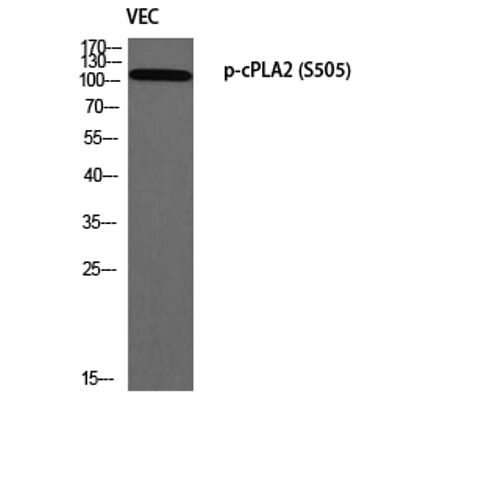
ITP0868
from
$541.00
Price in reward points: 541
- Catalog: ITP0868
- Gene/Protein: PLA2G4A
- Product Description: Immunotag™ cPLA2 (phospho Ser505) Polyclonal Antibody
-
Description
-
Specifications
Antibody Specification Datasheet 
IMPORTANT NOTE This product is custom manufactured with a lead time of 3-4 weeks. Once in production, this item cannot be cancelled from an order and is not eligible for return. Target Protein cPLA2 (Ser505) Clonality Polyclonal Storage/Stability -20°C/1 year Application WB,IHC-p,IF,ELISA Recommended Dilution Western Blot: 1/500 - 1/2000. Immunohistochemistry: 1/100 - 1/300. Immunofluorescence: 1/200 - 1/1000. ELISA: 1/10000. Not yet tested in other applications. Concentration 1 mg/ml Reactive Species Human,Mouse,Rat Host Species Rabbit Immunogen Synthesized phospho-peptide around the phosphorylation site of human cPLA2 (phospho Ser505) Specificity Phospho-cPLA2 (S505) Polyclonal Antibody detects endogenous levels of cPLA2 protein only when phosphorylated at S505. Purification The antibody was affinity-purified from rabbit antiserum by affinity-chromatography using epitope-specific immunogen Form Liquid in PBS containing 50% glycerol, 0.5% BSA and 0.02% sodium azide. Gene Name PLA2G4A Accession No. P47712 P47713 P50393 Alternate Names PLA2G4A; CPLA2; PLA2G4; Cytosolic phospholipase A2; cPLA2; Phospholipase A2 group IVA Description phospholipase A2 group IVA(PLA2G4A) Homo sapiens This gene encodes a member of the cytosolic phospholipase A2 group IV family. The enzyme catalyzes the hydrolysis of membrane phospholipids to release arachidonic acid which is subsequently metabolized into eicosanoids. Eicosanoids, including prostaglandins and leukotrienes, are lipid-based cellular hormones that regulate hemodynamics, inflammatory responses, and other intracellular pathways. The hydrolysis reaction also produces lysophospholipids that are converted into platelet-activating factor. The enzyme is activated by increased intracellular Ca(2+) levels and phosphorylation, resulting in its translocation from the cytosol and nucleus to perinuclear membrane vesicles. Alternative splicing results in multiple transcript variants. [provided by RefSeq, Jul 2015], Cell Pathway/ Category Glycerophospholipid metabolism,Ether lipid metabolism,Arachidonic acid metabolism,Linoleic acid metabolism,alpha-Linolenic acid metabolism,MAPK_ERK_Growth,MAPK_G_Protein,Vascular smooth muscle contraction,VEGF,Fc epsilon RI,Fc gamma R-mediated phagocytosis,Long-term depression,GnRH, Protein Expression Epithelium,Platelet, Subcellular Localization cytoplasm,mitochondrial inner membrane,endoplasmic reticulum membrane,Golgi apparatus,cytosol,cytoplasmic, membrane-bounded vesicle,cytoplasmic vesicle, Protein Function catalytic activity:2-lysophosphatidylcholine + H(2)O = glycerophosphocholine + a carboxylate.,catalytic activity:Phosphatidylcholine + H(2)O = 1-acylglycerophosphocholine + a carboxylate.,domain:The N-terminal C2 domain, by its association with lipid membranes, mediates the regulation of CPLA2 by presenting the active site to its substrate in response to elevations of cytosolic Ca(2+).,enzyme regulation:Stimulated by agonists such as ATP, EGF, thrombin and bradykinin as well as by cytosolic Ca(2+).,function:Selectively hydrolyzes arachidonyl phospholipids in the sn-2 position releasing arachidonic acid. Together with its lysophospholipid activity, it is implicated in the initiation of the inflammatory response.,PTM:Activated by phosphorylation at both Ser-505 and Ser-727.,similarity:Contains 1 C2 domain.,similarity:Contains 1 PLA2c domain.,subcellular location:Translocates to membrane vesicles in a calcium-dependent fashion.,subunit:Interacts with HTATIP.,tissue specificity:Expressed in various tissues such as macrophages, platelets, neutrophils, fibroblasts and lung endothelium., Usage For Research Use Only! Not for diagnostic or therapeutic procedures. - Reviews
| Antibody Specification | |
| Datasheet | |
| IMPORTANT NOTE | This product is custom manufactured with a lead time of 3-4 weeks. Once in production, this item cannot be cancelled from an order and is not eligible for return. |
| Target Protein | cPLA2 (Ser505) |
| Clonality | Polyclonal |
| Storage/Stability | -20°C/1 year |
| Application | WB,IHC-p,IF,ELISA |
| Recommended Dilution | Western Blot: 1/500 - 1/2000. Immunohistochemistry: 1/100 - 1/300. Immunofluorescence: 1/200 - 1/1000. ELISA: 1/10000. Not yet tested in other applications. |
| Concentration | 1 mg/ml |
| Reactive Species | Human,Mouse,Rat |
| Host Species | Rabbit |
| Immunogen | Synthesized phospho-peptide around the phosphorylation site of human cPLA2 (phospho Ser505) |
| Specificity | Phospho-cPLA2 (S505) Polyclonal Antibody detects endogenous levels of cPLA2 protein only when phosphorylated at S505. |
| Purification | The antibody was affinity-purified from rabbit antiserum by affinity-chromatography using epitope-specific immunogen |
| Form | Liquid in PBS containing 50% glycerol, 0.5% BSA and 0.02% sodium azide. |
| Gene Name | PLA2G4A |
| Accession No. | P47712 P47713 P50393 |
| Alternate Names | PLA2G4A; CPLA2; PLA2G4; Cytosolic phospholipase A2; cPLA2; Phospholipase A2 group IVA |
| Description | phospholipase A2 group IVA(PLA2G4A) Homo sapiens This gene encodes a member of the cytosolic phospholipase A2 group IV family. The enzyme catalyzes the hydrolysis of membrane phospholipids to release arachidonic acid which is subsequently metabolized into eicosanoids. Eicosanoids, including prostaglandins and leukotrienes, are lipid-based cellular hormones that regulate hemodynamics, inflammatory responses, and other intracellular pathways. The hydrolysis reaction also produces lysophospholipids that are converted into platelet-activating factor. The enzyme is activated by increased intracellular Ca(2+) levels and phosphorylation, resulting in its translocation from the cytosol and nucleus to perinuclear membrane vesicles. Alternative splicing results in multiple transcript variants. [provided by RefSeq, Jul 2015], |
| Cell Pathway/ Category | Glycerophospholipid metabolism,Ether lipid metabolism,Arachidonic acid metabolism,Linoleic acid metabolism,alpha-Linolenic acid metabolism,MAPK_ERK_Growth,MAPK_G_Protein,Vascular smooth muscle contraction,VEGF,Fc epsilon RI,Fc gamma R-mediated phagocytosis,Long-term depression,GnRH, |
| Protein Expression | Epithelium,Platelet, |
| Subcellular Localization | cytoplasm,mitochondrial inner membrane,endoplasmic reticulum membrane,Golgi apparatus,cytosol,cytoplasmic, membrane-bounded vesicle,cytoplasmic vesicle, |
| Protein Function | catalytic activity:2-lysophosphatidylcholine + H(2)O = glycerophosphocholine + a carboxylate.,catalytic activity:Phosphatidylcholine + H(2)O = 1-acylglycerophosphocholine + a carboxylate.,domain:The N-terminal C2 domain, by its association with lipid membranes, mediates the regulation of CPLA2 by presenting the active site to its substrate in response to elevations of cytosolic Ca(2+).,enzyme regulation:Stimulated by agonists such as ATP, EGF, thrombin and bradykinin as well as by cytosolic Ca(2+).,function:Selectively hydrolyzes arachidonyl phospholipids in the sn-2 position releasing arachidonic acid. Together with its lysophospholipid activity, it is implicated in the initiation of the inflammatory response.,PTM:Activated by phosphorylation at both Ser-505 and Ser-727.,similarity:Contains 1 C2 domain.,similarity:Contains 1 PLA2c domain.,subcellular location:Translocates to membrane vesicles in a calcium-dependent fashion.,subunit:Interacts with HTATIP.,tissue specificity:Expressed in various tissues such as macrophages, platelets, neutrophils, fibroblasts and lung endothelium., |
| Usage | For Research Use Only! Not for diagnostic or therapeutic procedures. |