

ITP0881
ITP0881
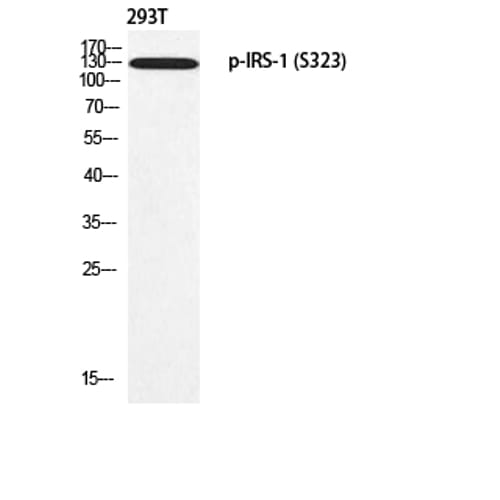
ITP0881
from
$541.00
Price in reward points: 541
- Catalog: ITP0881
- Gene/Protein: IRS1
- Product Description: Immunotag™ IRS-1 (phospho Ser323) Polyclonal Antibody
-
Description
-
Specifications
Antibody Specification Datasheet 
IMPORTANT NOTE This product is custom manufactured with a lead time of 3-4 weeks. Once in production, this item cannot be cancelled from an order and is not eligible for return. Target Protein IRS-1 (Ser323) Clonality Polyclonal Storage/Stability -20°C/1 year Application WB,IHC-p,IF,ELISA Recommended Dilution Western Blot: 1/500 - 1/2000. Immunohistochemistry: 1/100 - 1/300. Immunofluorescence: 1/200 - 1/1000. ELISA: 1/10000. Not yet tested in other applications. Concentration 1 mg/ml Reactive Species Human,Mouse,Rat,Monkey Host Species Rabbit Immunogen Synthesized phospho-peptide around the phosphorylation site of human IRS-1 (phospho Ser323) Specificity Phospho-IRS-1 (S323) Polyclonal Antibody detects endogenous levels of IRS-1 protein only when phosphorylated at S323. Purification The antibody was affinity-purified from rabbit antiserum by affinity-chromatography using epitope-specific immunogen Form Liquid in PBS containing 50% glycerol, 0.5% BSA and 0.02% sodium azide. Gene Name IRS1 Accession No. P35568 P35569 P35570 Alternate Names IRS1; Insulin receptor substrate 1; IRS-1 Description insulin receptor substrate 1(IRS1) Homo sapiens This gene encodes a protein which is phosphorylated by insulin receptor tyrosine kinase. Mutations in this gene are associated with type II diabetes and susceptibility to insulin resistance. [provided by RefSeq, Nov 2009], Cell Pathway/ Category Neurotrophin,Insulin_Receptor,Adipocytokine,Type II diabetes mellitus,Aldosterone-regulated sodium reabsorption, Protein Expression Epithelium,Eye,Skeletal muscle, Subcellular Localization nucleus,cytoplasm,cytosol,plasma membrane,insulin receptor complex,caveola,intracellular membrane-bounded organelle, Protein Function disease:Polymorphisms in IRS1 may be involved in the etiology of non-insulin-dependent diabetes mellitus (NIDDM) [MIM:125853].,function:May mediate the control of various cellular processes by insulin. When phosphorylated by the insulin receptor binds specifically to various cellular proteins containing SH2 domains such as phosphatidylinositol 3-kinase p85 subunit or GRB2. Activates phosphatidylinositol 3-kinase when bound to the regulatory p85 subunit.,polymorphism:The Arg-971 polymorphism impairs the ability of insulin to stimulate glucose transport, glucose transporter translocation, and glycogen synthesis by affecting the PI3K/AKT1/GSK3 signaling pathway. The polymorphism at Arg-971 may contribute to the in vivo insulin resistance observed in carriers of this variant. Arg-971 could contribute to the risk for atherosclerotic cardiovascular diseases associated with non-insulin-dependent diabetes mellitus (NIDDM) by producing a cluster of insulin resistance-related metabolic abnormalities. In insulin-stimulated human endothelial cells from carriers of the Arg-971 polymorphism, genetic impairment of the IRS1/PI3K/PDPK1/AKT1 insulin signaling cascade results in impaired insulin-stimulated nitric oxide (NO) release and suggested that this may be a mechanism through which the Arg-971 polymorphism contributes to the genetic predisposition to develop endothelial dysfunction and cardiovascular disease. The Arg-971 polymorphism not only reduces phosphorylation of the substrate but allows IRS1 to act as an inhibitor of PI3K, producing global insulin resistance.,PTM:Phosphorylation of Tyr-896 is required for GRB2-binding.,PTM:Serine phosphorylation of IRS1 is a mechanism for insulin resistance. Ser-312 phosphorylation inhibits insulin action through disruption of IRS1 interaction with the insulin receptor.,similarity:Contains 1 IRS-type PTB domain.,similarity:Contains 1 PH domain.,subunit:Interacts with the NPXY motif of tyrosine-phosphorylated IGF1R and INSR via the PTB domain. Binds to phosphatidylinositol 3-kinase p85 subunit via the phosphorylated YXXM motifs. Binds ROCK1. Binds to UBTF and PIK3CA in nuclear extracts (By similarity). Interacts with SOCS7., Usage For Research Use Only! Not for diagnostic or therapeutic procedures. - Reviews
| Antibody Specification | |
| Datasheet | |
| IMPORTANT NOTE | This product is custom manufactured with a lead time of 3-4 weeks. Once in production, this item cannot be cancelled from an order and is not eligible for return. |
| Target Protein | IRS-1 (Ser323) |
| Clonality | Polyclonal |
| Storage/Stability | -20°C/1 year |
| Application | WB,IHC-p,IF,ELISA |
| Recommended Dilution | Western Blot: 1/500 - 1/2000. Immunohistochemistry: 1/100 - 1/300. Immunofluorescence: 1/200 - 1/1000. ELISA: 1/10000. Not yet tested in other applications. |
| Concentration | 1 mg/ml |
| Reactive Species | Human,Mouse,Rat,Monkey |
| Host Species | Rabbit |
| Immunogen | Synthesized phospho-peptide around the phosphorylation site of human IRS-1 (phospho Ser323) |
| Specificity | Phospho-IRS-1 (S323) Polyclonal Antibody detects endogenous levels of IRS-1 protein only when phosphorylated at S323. |
| Purification | The antibody was affinity-purified from rabbit antiserum by affinity-chromatography using epitope-specific immunogen |
| Form | Liquid in PBS containing 50% glycerol, 0.5% BSA and 0.02% sodium azide. |
| Gene Name | IRS1 |
| Accession No. | P35568 P35569 P35570 |
| Alternate Names | IRS1; Insulin receptor substrate 1; IRS-1 |
| Description | insulin receptor substrate 1(IRS1) Homo sapiens This gene encodes a protein which is phosphorylated by insulin receptor tyrosine kinase. Mutations in this gene are associated with type II diabetes and susceptibility to insulin resistance. [provided by RefSeq, Nov 2009], |
| Cell Pathway/ Category | Neurotrophin,Insulin_Receptor,Adipocytokine,Type II diabetes mellitus,Aldosterone-regulated sodium reabsorption, |
| Protein Expression | Epithelium,Eye,Skeletal muscle, |
| Subcellular Localization | nucleus,cytoplasm,cytosol,plasma membrane,insulin receptor complex,caveola,intracellular membrane-bounded organelle, |
| Protein Function | disease:Polymorphisms in IRS1 may be involved in the etiology of non-insulin-dependent diabetes mellitus (NIDDM) [MIM:125853].,function:May mediate the control of various cellular processes by insulin. When phosphorylated by the insulin receptor binds specifically to various cellular proteins containing SH2 domains such as phosphatidylinositol 3-kinase p85 subunit or GRB2. Activates phosphatidylinositol 3-kinase when bound to the regulatory p85 subunit.,polymorphism:The Arg-971 polymorphism impairs the ability of insulin to stimulate glucose transport, glucose transporter translocation, and glycogen synthesis by affecting the PI3K/AKT1/GSK3 signaling pathway. The polymorphism at Arg-971 may contribute to the in vivo insulin resistance observed in carriers of this variant. Arg-971 could contribute to the risk for atherosclerotic cardiovascular diseases associated with non-insulin-dependent diabetes mellitus (NIDDM) by producing a cluster of insulin resistance-related metabolic abnormalities. In insulin-stimulated human endothelial cells from carriers of the Arg-971 polymorphism, genetic impairment of the IRS1/PI3K/PDPK1/AKT1 insulin signaling cascade results in impaired insulin-stimulated nitric oxide (NO) release and suggested that this may be a mechanism through which the Arg-971 polymorphism contributes to the genetic predisposition to develop endothelial dysfunction and cardiovascular disease. The Arg-971 polymorphism not only reduces phosphorylation of the substrate but allows IRS1 to act as an inhibitor of PI3K, producing global insulin resistance.,PTM:Phosphorylation of Tyr-896 is required for GRB2-binding.,PTM:Serine phosphorylation of IRS1 is a mechanism for insulin resistance. Ser-312 phosphorylation inhibits insulin action through disruption of IRS1 interaction with the insulin receptor.,similarity:Contains 1 IRS-type PTB domain.,similarity:Contains 1 PH domain.,subunit:Interacts with the NPXY motif of tyrosine-phosphorylated IGF1R and INSR via the PTB domain. Binds to phosphatidylinositol 3-kinase p85 subunit via the phosphorylated YXXM motifs. Binds ROCK1. Binds to UBTF and PIK3CA in nuclear extracts (By similarity). Interacts with SOCS7., |
| Usage | For Research Use Only! Not for diagnostic or therapeutic procedures. |