

ITT0687
ITT0687
ITT0687
from
$424.00
Price in reward points: 424
- Catalog: ITT0687
- Gene/Protein: CNR1
- Product Description: Immunotag™ CB1 Polyclonal Antibody
-
Description
-
Specifications
Antibody Specification Datasheet 
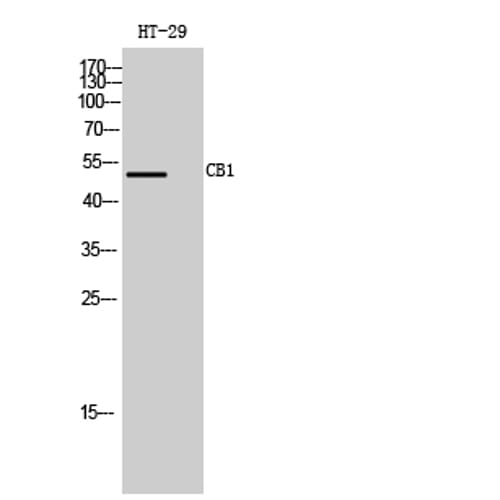
IMPORTANT NOTE This product is custom manufactured with a lead time of 3-4 weeks. Once in production, this item cannot be cancelled from an order and is not eligible for return. Target Protein CB1 Clonality Polyclonal Storage/Stability -20°C/1 year Application WB,IHC-p,IF,ELISA Recommended Dilution Western Blot: 1/500 - 1/2000. Immunohistochemistry: 1/100 - 1/300. Immunofluorescence: 1/200 - 1/1000. ELISA: 1/10000. Not yet tested in other applications. Concentration 1 mg/ml Reactive Species Human,Mouse,Rat,Monkey Host Species Rabbit Immunogen Synthesized peptide derived from CB1, at AA range: 120-200 Specificity CB1 Polyclonal Antibody detects endogenous levels of CB1 protein. Purification The antibody was affinity-purified from rabbit antiserum by affinity-chromatography using epitope-specific immunogen Form Liquid in PBS containing 50% glycerol, 0.5% BSA and 0.02% sodium azide. Gene Name CNR1 Accession No. P21554 P47746 P20272 Alternate Names CNR1; CNR; Cannabinoid receptor 1; CB-R; CB1; CANN6 Description cannabinoid receptor 1(CNR1) Homo sapiens This gene encodes one of two cannabinoid receptors. The cannabinoids, principally delta-9-tetrahydrocannabinol and synthetic analogs, are psychoactive ingredients of marijuana. The cannabinoid receptors are members of the guanine-nucleotide-binding protein (G-protein) coupled receptor family, which inhibit adenylate cyclase activity in a dose-dependent, stereoselective and pertussis toxin-sensitive manner. The two receptors have been found to be involved in the cannabinoid-induced CNS effects (including alterations in mood and cognition) experienced by users of marijuana. Multiple transcript variants encoding two different protein isoforms have been described for this gene. [provided by RefSeq, May 2009], Cell Pathway/ Category Neuroactive ligand-receptor interaction, Protein Expression Brain,Brain stem,Brain tumor,Hippocampus,Lung, Subcellular Localization plasma membrane,integral component of plasma membrane,integral component of membrane,axon,growth cone,intracellular membrane-bounded organelle,membrane raft, Protein Function function:Involved in cannabinoid-induced CNS effects. Acts by inhibiting adenylate cyclase. Could be a receptor for anandamide. Inhibits L-type Ca(2+) channel current. Isoform 2 and isoform 3 have altered ligand binding.,similarity:Belongs to the G-protein coupled receptor 1 family.,subunit:Interacts (via C-terminus) with CNRIP1.,tissue specificity:Widely expressed., Usage For Research Use Only! Not for diagnostic or therapeutic procedures. - Reviews
| Antibody Specification | |
| Datasheet | |
| IMPORTANT NOTE | This product is custom manufactured with a lead time of 3-4 weeks. Once in production, this item cannot be cancelled from an order and is not eligible for return. |
| Target Protein | CB1 |
| Clonality | Polyclonal |
| Storage/Stability | -20°C/1 year |
| Application | WB,IHC-p,IF,ELISA |
| Recommended Dilution | Western Blot: 1/500 - 1/2000. Immunohistochemistry: 1/100 - 1/300. Immunofluorescence: 1/200 - 1/1000. ELISA: 1/10000. Not yet tested in other applications. |
| Concentration | 1 mg/ml |
| Reactive Species | Human,Mouse,Rat,Monkey |
| Host Species | Rabbit |
| Immunogen | Synthesized peptide derived from CB1, at AA range: 120-200 |
| Specificity | CB1 Polyclonal Antibody detects endogenous levels of CB1 protein. |
| Purification | The antibody was affinity-purified from rabbit antiserum by affinity-chromatography using epitope-specific immunogen |
| Form | Liquid in PBS containing 50% glycerol, 0.5% BSA and 0.02% sodium azide. |
| Gene Name | CNR1 |
| Accession No. | P21554 P47746 P20272 |
| Alternate Names | CNR1; CNR; Cannabinoid receptor 1; CB-R; CB1; CANN6 |
| Description | cannabinoid receptor 1(CNR1) Homo sapiens This gene encodes one of two cannabinoid receptors. The cannabinoids, principally delta-9-tetrahydrocannabinol and synthetic analogs, are psychoactive ingredients of marijuana. The cannabinoid receptors are members of the guanine-nucleotide-binding protein (G-protein) coupled receptor family, which inhibit adenylate cyclase activity in a dose-dependent, stereoselective and pertussis toxin-sensitive manner. The two receptors have been found to be involved in the cannabinoid-induced CNS effects (including alterations in mood and cognition) experienced by users of marijuana. Multiple transcript variants encoding two different protein isoforms have been described for this gene. [provided by RefSeq, May 2009], |
| Cell Pathway/ Category | Neuroactive ligand-receptor interaction, |
| Protein Expression | Brain,Brain stem,Brain tumor,Hippocampus,Lung, |
| Subcellular Localization | plasma membrane,integral component of plasma membrane,integral component of membrane,axon,growth cone,intracellular membrane-bounded organelle,membrane raft, |
| Protein Function | function:Involved in cannabinoid-induced CNS effects. Acts by inhibiting adenylate cyclase. Could be a receptor for anandamide. Inhibits L-type Ca(2+) channel current. Isoform 2 and isoform 3 have altered ligand binding.,similarity:Belongs to the G-protein coupled receptor 1 family.,subunit:Interacts (via C-terminus) with CNRIP1.,tissue specificity:Widely expressed., |
| Usage | For Research Use Only! Not for diagnostic or therapeutic procedures. |