

ITT0833
ITT0833
ITT0833
from
$424.00
Price in reward points: 424
- Catalog: ITT0833
- Gene/Protein: CDK2
- Product Description: Immunotag™ Cdk2 Polyclonal Antibody
-
Description
-
Specifications
Antibody Specification Datasheet 
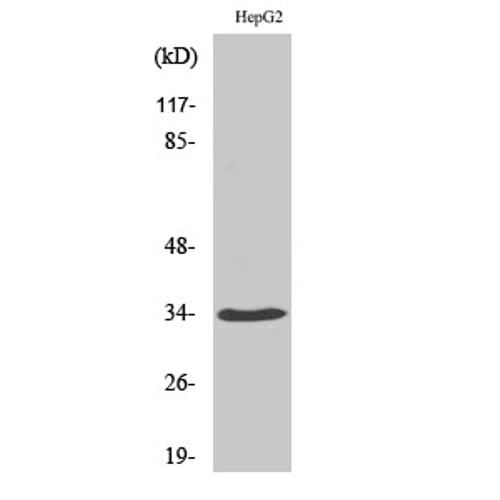
IMPORTANT NOTE This product is custom manufactured with a lead time of 3-4 weeks. Once in production, this item cannot be cancelled from an order and is not eligible for return. Target Protein CDK2 Clonality Polyclonal Storage/Stability -20°C/1 year Application WB,ELISA Recommended Dilution Western Blot: 1/500 - 1/2000. ELISA: 1/10000. Not yet tested in other applications. Concentration 1 mg/ml Reactive Species Human,Mouse,Rat Host Species Rabbit Immunogen Synthesized peptide derived from Cdk2, at AA range: 100-180 Specificity Cdk2 Polyclonal Antibody detects endogenous levels of Cdk2 protein. Purification The antibody was affinity-purified from rabbit antiserum by affinity-chromatography using epitope-specific immunogen Form Liquid in PBS containing 50% glycerol, 0.5% BSA and 0.02% sodium azide. Gene Name CDK2 Accession No. P24941 P97377 Q63699 Alternate Names CDK2; CDKN2; Cyclin-dependent kinase 2; Cell division protein kinase 2; p33 protein kinase Description cyclin dependent kinase 2(CDK2) Homo sapiens This gene encodes a member of a family of serine/threonine protein kinases that participate in cell cycle regulation. The encoded protein is the catalytic subunit of the cyclin-dependent protein kinase complex, which regulates progression through the cell cycle. Activity of this protein is especially critical during the G1 to S phase transition. This protein associates with and regulated by other subunits of the complex including cyclin A or E, CDK inhibitor p21Cip1 (CDKN1A), and p27Kip1 (CDKN1B). Alternative splicing results in multiple transcript variants. [provided by RefSeq, Mar 2014], Cell Pathway/ Category Cell_Cycle_G1S,Cell_Cycle_G2M_DNA,Oocyte meiosis,p53,Progesterone-mediated oocyte maturation,Pathways in cancer,Prostate cancer,Small cell lung cancer, Protein Expression Epithelium,Lung,Placenta, Subcellular Localization cyclin-dependent protein kinase holoenzyme complex,chromosome, telomeric region,condensed chromosome,X chromosome,Y chromosome,nucleus,nucleoplasm,transcription factor complex,cytoplasm,endosome,centrosome,cytosol,Caj Protein Function catalytic activity:ATP + a protein = ADP + a phosphoprotein.,enzyme regulation:Phosphorylation at Thr-14 or Tyr-15 inactivates the enzyme, while phosphorylation at Thr-160 activates it.,function:Involved in the control of the cell cycle. Interacts with cyclins A, B1, B3, D, or E. Activity of CDK2 is maximal during S phase and G2.,similarity:Belongs to the protein kinase superfamily.,similarity:Belongs to the protein kinase superfamily. CMGC Ser/Thr protein kinase family. CDC2/CDKX subfamily.,similarity:Contains 1 protein kinase domain.,subunit:Found in a complex with CABLES1, CCNA1 and CCNE1. Interacts with CABLES1 (By similarity). Interacts with UHRF2. Part of a complex consisting of UHRF2, CDK2 and CCNE1. Interacts with the Speedy/Ringo proteins SPDYA and SPDYC. Found in a complex with both SPDYA and CDKN1B/KIP1., Usage For Research Use Only! Not for diagnostic or therapeutic procedures. - Reviews
| Antibody Specification | |
| Datasheet | |
| IMPORTANT NOTE | This product is custom manufactured with a lead time of 3-4 weeks. Once in production, this item cannot be cancelled from an order and is not eligible for return. |
| Target Protein | CDK2 |
| Clonality | Polyclonal |
| Storage/Stability | -20°C/1 year |
| Application | WB,ELISA |
| Recommended Dilution | Western Blot: 1/500 - 1/2000. ELISA: 1/10000. Not yet tested in other applications. |
| Concentration | 1 mg/ml |
| Reactive Species | Human,Mouse,Rat |
| Host Species | Rabbit |
| Immunogen | Synthesized peptide derived from Cdk2, at AA range: 100-180 |
| Specificity | Cdk2 Polyclonal Antibody detects endogenous levels of Cdk2 protein. |
| Purification | The antibody was affinity-purified from rabbit antiserum by affinity-chromatography using epitope-specific immunogen |
| Form | Liquid in PBS containing 50% glycerol, 0.5% BSA and 0.02% sodium azide. |
| Gene Name | CDK2 |
| Accession No. | P24941 P97377 Q63699 |
| Alternate Names | CDK2; CDKN2; Cyclin-dependent kinase 2; Cell division protein kinase 2; p33 protein kinase |
| Description | cyclin dependent kinase 2(CDK2) Homo sapiens This gene encodes a member of a family of serine/threonine protein kinases that participate in cell cycle regulation. The encoded protein is the catalytic subunit of the cyclin-dependent protein kinase complex, which regulates progression through the cell cycle. Activity of this protein is especially critical during the G1 to S phase transition. This protein associates with and regulated by other subunits of the complex including cyclin A or E, CDK inhibitor p21Cip1 (CDKN1A), and p27Kip1 (CDKN1B). Alternative splicing results in multiple transcript variants. [provided by RefSeq, Mar 2014], |
| Cell Pathway/ Category | Cell_Cycle_G1S,Cell_Cycle_G2M_DNA,Oocyte meiosis,p53,Progesterone-mediated oocyte maturation,Pathways in cancer,Prostate cancer,Small cell lung cancer, |
| Protein Expression | Epithelium,Lung,Placenta, |
| Subcellular Localization | cyclin-dependent protein kinase holoenzyme complex,chromosome, telomeric region,condensed chromosome,X chromosome,Y chromosome,nucleus,nucleoplasm,transcription factor complex,cytoplasm,endosome,centrosome,cytosol,Caj |
| Protein Function | catalytic activity:ATP + a protein = ADP + a phosphoprotein.,enzyme regulation:Phosphorylation at Thr-14 or Tyr-15 inactivates the enzyme, while phosphorylation at Thr-160 activates it.,function:Involved in the control of the cell cycle. Interacts with cyclins A, B1, B3, D, or E. Activity of CDK2 is maximal during S phase and G2.,similarity:Belongs to the protein kinase superfamily.,similarity:Belongs to the protein kinase superfamily. CMGC Ser/Thr protein kinase family. CDC2/CDKX subfamily.,similarity:Contains 1 protein kinase domain.,subunit:Found in a complex with CABLES1, CCNA1 and CCNE1. Interacts with CABLES1 (By similarity). Interacts with UHRF2. Part of a complex consisting of UHRF2, CDK2 and CCNE1. Interacts with the Speedy/Ringo proteins SPDYA and SPDYC. Found in a complex with both SPDYA and CDKN1B/KIP1., |
| Usage | For Research Use Only! Not for diagnostic or therapeutic procedures. |