

ITT1115
ITT1115
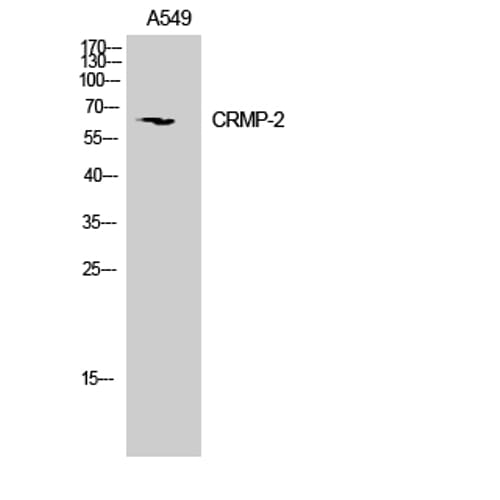
ITT1115
from
$424.00
Price in reward points: 424
- Catalog: ITT1115
- Gene/Protein: DPYSL2
- Product Description: Immunotag™ CRMP-2 Polyclonal Antibody
-
Description
-
Specifications
Antibody Specification Datasheet 
IMPORTANT NOTE This product is custom manufactured with a lead time of 3-4 weeks. Once in production, this item cannot be cancelled from an order and is not eligible for return. Target Protein CRMP-2 Clonality Polyclonal Storage/Stability -20°C/1 year Application WB,IHC-p,IF,ELISA Recommended Dilution Western Blot: 1/500 - 1/2000. Immunohistochemistry: 1/100 - 1/300. Immunofluorescence: 1/200 - 1/1000. ELISA: 1/20000. Not yet tested in other applications. Concentration 1 mg/ml Reactive Species Human,Mouse,Rat Host Species Rabbit Immunogen Synthesized peptide derived from CRMP-2, at AA range: 450-530 Specificity CRMP-2 Polyclonal Antibody detects endogenous levels of CRMP-2 protein. Purification The antibody was affinity-purified from rabbit antiserum by affinity-chromatography using epitope-specific immunogen Form Liquid in PBS containing 50% glycerol, 0.5% BSA and 0.02% sodium azide. Gene Name DPYSL2 Accession No. Q16555 O08553 P47942 Alternate Names DPYSL2; CRMP2; ULIP2; Dihydropyrimidinase-related protein 2; DRP-2; Collapsin response mediator protein 2; CRMP-2; N2A3; Unc-33-like phosphoprotein 2; ULIP-2 Description dihydropyrimidinase like 2(DPYSL2) Homo sapiens This gene encodes a member of the collapsin response mediator protein family. Collapsin response mediator proteins form homo- and hetero-tetramers and facilitate neuron guidance, growth and polarity. The encoded protein promotes microtubule assembly and is required for Sema3A-mediated growth cone collapse, and also plays a role in synaptic signaling through interactions with calcium channels. This gene has been implicated in multiple neurological disorders, and hyperphosphorylation of the encoded protein may play a key role in the development of Alzheimer's disease. Alternatively spliced transcript variants encoding multiple isoforms have been observed for this gene. [provided by RefSeq, Sep 2011], Cell Pathway/ Category Axon guidance, Protein Expression Brain,Cajal-Retzius cell,Epithelium,Eye,Fetal brain cortex,Fetal liver,Test Subcellular Localization cytoplasm,mitochondrion,cytosol,cytoskeleton,microtubule,membrane,dendrite,growth cone,neuronal cell body,terminal bouton,myelin sheath,protein complex,extracellular exosome, Protein Function function:Necessary for signaling by class 3 semaphorins and subsequent remodeling of the cytoskeleton. Plays a role in axon guidance, neuronal growth cone collapse and cell migration.,PTM:3F4, a monoclonal antibody which strongly stains neurofibrillary tangles in Alzheimer disease brains, specifically labels DPYSL2 when phosphorylated on Ser-518, Ser-522 and Thr-509.,similarity:Belongs to the DHOase family. Hydantoinase/dihydropyrimidinase subfamily.,subunit:Homotetramer, and heterotetramer with CRMP1, DPYSL3, DPYSL4 or DPYSL5 (By similarity). Interacts through its C-terminus with the C-terminus of CYFIP1/SRA1. Interacts with HTR4.,tissue specificity:Ubiquitous., Usage For Research Use Only! Not for diagnostic or therapeutic procedures. - Reviews
| Antibody Specification | |
| Datasheet | |
| IMPORTANT NOTE | This product is custom manufactured with a lead time of 3-4 weeks. Once in production, this item cannot be cancelled from an order and is not eligible for return. |
| Target Protein | CRMP-2 |
| Clonality | Polyclonal |
| Storage/Stability | -20°C/1 year |
| Application | WB,IHC-p,IF,ELISA |
| Recommended Dilution | Western Blot: 1/500 - 1/2000. Immunohistochemistry: 1/100 - 1/300. Immunofluorescence: 1/200 - 1/1000. ELISA: 1/20000. Not yet tested in other applications. |
| Concentration | 1 mg/ml |
| Reactive Species | Human,Mouse,Rat |
| Host Species | Rabbit |
| Immunogen | Synthesized peptide derived from CRMP-2, at AA range: 450-530 |
| Specificity | CRMP-2 Polyclonal Antibody detects endogenous levels of CRMP-2 protein. |
| Purification | The antibody was affinity-purified from rabbit antiserum by affinity-chromatography using epitope-specific immunogen |
| Form | Liquid in PBS containing 50% glycerol, 0.5% BSA and 0.02% sodium azide. |
| Gene Name | DPYSL2 |
| Accession No. | Q16555 O08553 P47942 |
| Alternate Names | DPYSL2; CRMP2; ULIP2; Dihydropyrimidinase-related protein 2; DRP-2; Collapsin response mediator protein 2; CRMP-2; N2A3; Unc-33-like phosphoprotein 2; ULIP-2 |
| Description | dihydropyrimidinase like 2(DPYSL2) Homo sapiens This gene encodes a member of the collapsin response mediator protein family. Collapsin response mediator proteins form homo- and hetero-tetramers and facilitate neuron guidance, growth and polarity. The encoded protein promotes microtubule assembly and is required for Sema3A-mediated growth cone collapse, and also plays a role in synaptic signaling through interactions with calcium channels. This gene has been implicated in multiple neurological disorders, and hyperphosphorylation of the encoded protein may play a key role in the development of Alzheimer's disease. Alternatively spliced transcript variants encoding multiple isoforms have been observed for this gene. [provided by RefSeq, Sep 2011], |
| Cell Pathway/ Category | Axon guidance, |
| Protein Expression | Brain,Cajal-Retzius cell,Epithelium,Eye,Fetal brain cortex,Fetal liver,Test |
| Subcellular Localization | cytoplasm,mitochondrion,cytosol,cytoskeleton,microtubule,membrane,dendrite,growth cone,neuronal cell body,terminal bouton,myelin sheath,protein complex,extracellular exosome, |
| Protein Function | function:Necessary for signaling by class 3 semaphorins and subsequent remodeling of the cytoskeleton. Plays a role in axon guidance, neuronal growth cone collapse and cell migration.,PTM:3F4, a monoclonal antibody which strongly stains neurofibrillary tangles in Alzheimer disease brains, specifically labels DPYSL2 when phosphorylated on Ser-518, Ser-522 and Thr-509.,similarity:Belongs to the DHOase family. Hydantoinase/dihydropyrimidinase subfamily.,subunit:Homotetramer, and heterotetramer with CRMP1, DPYSL3, DPYSL4 or DPYSL5 (By similarity). Interacts through its C-terminus with the C-terminus of CYFIP1/SRA1. Interacts with HTR4.,tissue specificity:Ubiquitous., |
| Usage | For Research Use Only! Not for diagnostic or therapeutic procedures. |