

ITT1137
ITT1137
ITT1137
from
$424.00
Price in reward points: 424
- Catalog: ITT1137
- Gene/Protein: SRC
- Product Description: Immunotag™ c-Src Polyclonal Antibody
-
Description
-
Specifications
Antibody Specification Datasheet 
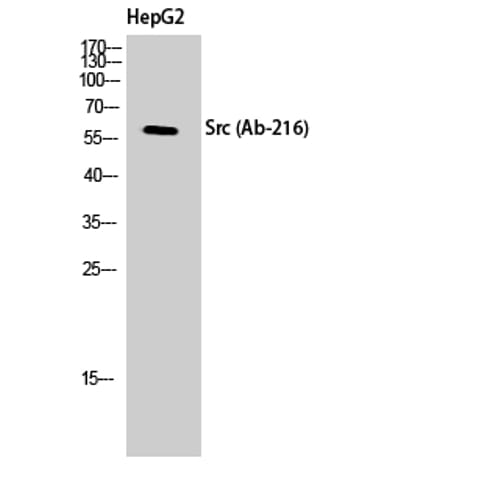
IMPORTANT NOTE This product is custom manufactured with a lead time of 3-4 weeks. Once in production, this item cannot be cancelled from an order and is not eligible for return. Target Protein c-Src Clonality Polyclonal Storage/Stability -20°C/1 year Application WB,ELISA Recommended Dilution Western Blot: 1/500 - 1/2000. ELISA: 1/5000. Not yet tested in other applications. Concentration 1 mg/ml Reactive Species Human,Mouse,Rat Host Species Rabbit Immunogen Synthesized peptide derived from c-Src, at AA range: 150-230 Specificity c-Src Polyclonal Antibody detects endogenous levels of c-Src protein. Purification The antibody was affinity-purified from rabbit antiserum by affinity-chromatography using epitope-specific immunogen Form Liquid in PBS containing 50% glycerol, 0.5% BSA and 0.02% sodium azide. Gene Name SRC Accession No. P12931 P05480 Q9WUD9 Alternate Names SRC; SRC1; Proto-oncogene tyrosine-protein kinase Src; Proto-oncogene c-Src; pp60c-src; p60-Src Description SRC proto-oncogene, non-receptor tyrosine kinase(SRC) Homo sapiens This gene is highly similar to the v-src gene of Rous sarcoma virus. This proto-oncogene may play a role in the regulation of embryonic development and cell growth. The protein encoded by this gene is a tyrosine-protein kinase whose activity can be inhibited by phosphorylation by c-SRC kinase. Mutations in this gene could be involved in the malignant progression of colon cancer. Two transcript variants encoding the same protein have been found for this gene. [provided by RefSeq, Jul 2008], Cell Pathway/ Category ErbB_HER,Endocytosis,VEGF,Focal adhesion,Adherens_Junction,Adherens_Junction,Gap junction,GnRH,Epithelial cell signaling in Helicobacter pylori infection, Protein Expression Lung,Platelet,Skin, Subcellular Localization nucleus,cytoplasm,mitochondrion,mitochondrial inner membrane,lysosome,late endosome,cytosol,actin filament,plasma membrane,caveola,cell-cell adherens junction,postsynaptic density,extrinsic com Protein Function catalytic activity:ATP + a [protein]-L-tyrosine = ADP + a [protein]-L-tyrosine phosphate.,PTM:Phosphorylated on Tyr-530 by c-Src kinase (CSK). The phosphorylated form is termed pp60c-src. The phosphorylated tail interacts with the SH2 domain thereby repressing kinase activity.,similarity:Belongs to the protein kinase superfamily. Tyr protein kinase family. SRC subfamily.,similarity:Contains 1 protein kinase domain.,similarity:Contains 1 SH2 domain.,similarity:Contains 1 SH3 domain.,subunit:Interacts with DDEF1/ASAP1; via the SH3 domain. Interacts with CCPG1 (By similarity). Interacts with CDCP1, PELP1, TGFB1I1 and TOM1L2. Interacts with the cytoplasmic domain of MUC1, phosphorylates it and increases binding of MUC1 with beta-catenin. Interacts with RALGPS1; via the SH3 domain. Interacts with HEV ORF3 protein; via the SH3 domain., Usage For Research Use Only! Not for diagnostic or therapeutic procedures. - Reviews
| Antibody Specification | |
| Datasheet | |
| IMPORTANT NOTE | This product is custom manufactured with a lead time of 3-4 weeks. Once in production, this item cannot be cancelled from an order and is not eligible for return. |
| Target Protein | c-Src |
| Clonality | Polyclonal |
| Storage/Stability | -20°C/1 year |
| Application | WB,ELISA |
| Recommended Dilution | Western Blot: 1/500 - 1/2000. ELISA: 1/5000. Not yet tested in other applications. |
| Concentration | 1 mg/ml |
| Reactive Species | Human,Mouse,Rat |
| Host Species | Rabbit |
| Immunogen | Synthesized peptide derived from c-Src, at AA range: 150-230 |
| Specificity | c-Src Polyclonal Antibody detects endogenous levels of c-Src protein. |
| Purification | The antibody was affinity-purified from rabbit antiserum by affinity-chromatography using epitope-specific immunogen |
| Form | Liquid in PBS containing 50% glycerol, 0.5% BSA and 0.02% sodium azide. |
| Gene Name | SRC |
| Accession No. | P12931 P05480 Q9WUD9 |
| Alternate Names | SRC; SRC1; Proto-oncogene tyrosine-protein kinase Src; Proto-oncogene c-Src; pp60c-src; p60-Src |
| Description | SRC proto-oncogene, non-receptor tyrosine kinase(SRC) Homo sapiens This gene is highly similar to the v-src gene of Rous sarcoma virus. This proto-oncogene may play a role in the regulation of embryonic development and cell growth. The protein encoded by this gene is a tyrosine-protein kinase whose activity can be inhibited by phosphorylation by c-SRC kinase. Mutations in this gene could be involved in the malignant progression of colon cancer. Two transcript variants encoding the same protein have been found for this gene. [provided by RefSeq, Jul 2008], |
| Cell Pathway/ Category | ErbB_HER,Endocytosis,VEGF,Focal adhesion,Adherens_Junction,Adherens_Junction,Gap junction,GnRH,Epithelial cell signaling in Helicobacter pylori infection, |
| Protein Expression | Lung,Platelet,Skin, |
| Subcellular Localization | nucleus,cytoplasm,mitochondrion,mitochondrial inner membrane,lysosome,late endosome,cytosol,actin filament,plasma membrane,caveola,cell-cell adherens junction,postsynaptic density,extrinsic com |
| Protein Function | catalytic activity:ATP + a [protein]-L-tyrosine = ADP + a [protein]-L-tyrosine phosphate.,PTM:Phosphorylated on Tyr-530 by c-Src kinase (CSK). The phosphorylated form is termed pp60c-src. The phosphorylated tail interacts with the SH2 domain thereby repressing kinase activity.,similarity:Belongs to the protein kinase superfamily. Tyr protein kinase family. SRC subfamily.,similarity:Contains 1 protein kinase domain.,similarity:Contains 1 SH2 domain.,similarity:Contains 1 SH3 domain.,subunit:Interacts with DDEF1/ASAP1; via the SH3 domain. Interacts with CCPG1 (By similarity). Interacts with CDCP1, PELP1, TGFB1I1 and TOM1L2. Interacts with the cytoplasmic domain of MUC1, phosphorylates it and increases binding of MUC1 with beta-catenin. Interacts with RALGPS1; via the SH3 domain. Interacts with HEV ORF3 protein; via the SH3 domain., |
| Usage | For Research Use Only! Not for diagnostic or therapeutic procedures. |