

ITT1351
ITT1351
ITT1351
from
$424.00
Price in reward points: 424
- Catalog: ITT1351
- Gene/Protein: DIDO1
- Product Description: Immunotag™ Dio-1 Polyclonal Antibody
-
Description
-
Specifications
Antibody Specification Datasheet 
IMPORTANT NOTE This product is custom manufactured with a lead time of 3-4 weeks. Once in production, this item cannot be cancelled from an order and is not eligible for return. Target Protein Dio-1 Clonality Polyclonal Storage/Stability -20°C/1 year Application WB,IHC-p,ELISA Recommended Dilution Western Blot: 1/500 - 1/2000. Immunohistochemistry: 1/100 - 1/300. ELISA: 1/10000. Not yet tested in other applications. Concentration 1 mg/ml Reactive Species Human,Mouse Host Species Rabbit Immunogen The antiserum was produced against synthesized peptide derived from human DIDO1. AA range:161-210 Specificity Dio-1 Polyclonal Antibody detects endogenous levels of Dio-1 protein. Purification The antibody was affinity-purified from rabbit antiserum by affinity-chromatography using epitope-specific immunogen Form Liquid in PBS containing 50% glycerol, 0.5% BSA and 0.02% sodium azide. Gene Name DIDO1 Accession No. Q9BTC0 Q8C9B9 Alternate Names DIDO1; C20orf158; DATF1; KIAA0333; Death-inducer obliterator 1; DIO-1; hDido1; Death-associated transcription factor 1; DATF-1 Description death inducer-obliterator 1(DIDO1) Homo sapiens Apoptosis, a major form of cell death, is an efficient mechanism for eliminating unwanted cells and is of central importance for development and homeostasis in metazoan animals. In mice, the death inducer-obliterator-1 gene is upregulated by apoptotic signals and encodes a cytoplasmic protein that translocates to the nucleus upon apoptotic signal activation. When overexpressed, the mouse protein induced apoptosis in cell lines growing in vitro. This gene is similar to the mouse gene and therefore is thought to be involved in apoptosis. Alternatively spliced transcripts have been found for this gene, encoding multiple isoforms. [provided by RefSeq, Jul 2008], Protein Expression Brain,Colon,Epithelium,Kidney,Muscle,Ovarian carcinoma,Placenta,Testis, Subcellular Localization nucleus,cytoplasm,spindle, Protein Function disease:Defects in DIDO1 may be a cause of myeloid neoplasms.,function:Putative transcription factor, weakly pro-apoptotic when overexpressed (By similarity). Tumor suppressor.,similarity:Contains 1 PHD-type zinc finger.,similarity:Contains 1 TFIIS central domain.,subcellular location:Translocates to the nucleus after pro-apoptotic stimuli.,tissue specificity:Ubiquitous., Usage For Research Use Only! Not for diagnostic or therapeutic procedures. - Reviews
| Antibody Specification | |
| Datasheet | |
| IMPORTANT NOTE | This product is custom manufactured with a lead time of 3-4 weeks. Once in production, this item cannot be cancelled from an order and is not eligible for return. |
| Target Protein | Dio-1 |
| Clonality | Polyclonal |
| Storage/Stability | -20°C/1 year |
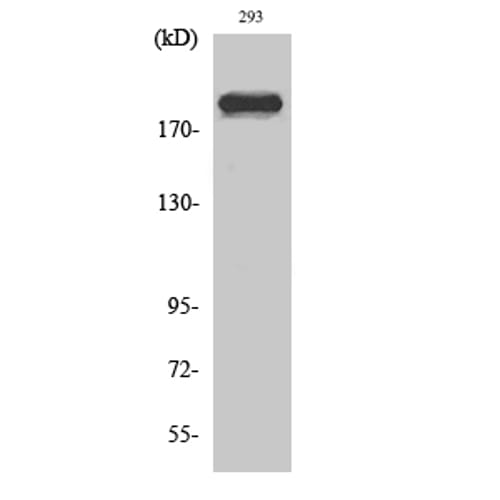
| Application | WB,IHC-p,ELISA |
| Recommended Dilution | Western Blot: 1/500 - 1/2000. Immunohistochemistry: 1/100 - 1/300. ELISA: 1/10000. Not yet tested in other applications. |
| Concentration | 1 mg/ml |
| Reactive Species | Human,Mouse |
| Host Species | Rabbit |
| Immunogen | The antiserum was produced against synthesized peptide derived from human DIDO1. AA range:161-210 |
| Specificity | Dio-1 Polyclonal Antibody detects endogenous levels of Dio-1 protein. |
| Purification | The antibody was affinity-purified from rabbit antiserum by affinity-chromatography using epitope-specific immunogen |
| Form | Liquid in PBS containing 50% glycerol, 0.5% BSA and 0.02% sodium azide. |
| Gene Name | DIDO1 |
| Accession No. | Q9BTC0 Q8C9B9 |
| Alternate Names | DIDO1; C20orf158; DATF1; KIAA0333; Death-inducer obliterator 1; DIO-1; hDido1; Death-associated transcription factor 1; DATF-1 |
| Description | death inducer-obliterator 1(DIDO1) Homo sapiens Apoptosis, a major form of cell death, is an efficient mechanism for eliminating unwanted cells and is of central importance for development and homeostasis in metazoan animals. In mice, the death inducer-obliterator-1 gene is upregulated by apoptotic signals and encodes a cytoplasmic protein that translocates to the nucleus upon apoptotic signal activation. When overexpressed, the mouse protein induced apoptosis in cell lines growing in vitro. This gene is similar to the mouse gene and therefore is thought to be involved in apoptosis. Alternatively spliced transcripts have been found for this gene, encoding multiple isoforms. [provided by RefSeq, Jul 2008], |
| Protein Expression | Brain,Colon,Epithelium,Kidney,Muscle,Ovarian carcinoma,Placenta,Testis, |
| Subcellular Localization | nucleus,cytoplasm,spindle, |
| Protein Function | disease:Defects in DIDO1 may be a cause of myeloid neoplasms.,function:Putative transcription factor, weakly pro-apoptotic when overexpressed (By similarity). Tumor suppressor.,similarity:Contains 1 PHD-type zinc finger.,similarity:Contains 1 TFIIS central domain.,subcellular location:Translocates to the nucleus after pro-apoptotic stimuli.,tissue specificity:Ubiquitous., |
| Usage | For Research Use Only! Not for diagnostic or therapeutic procedures. |