

ITT1448
ITT1448
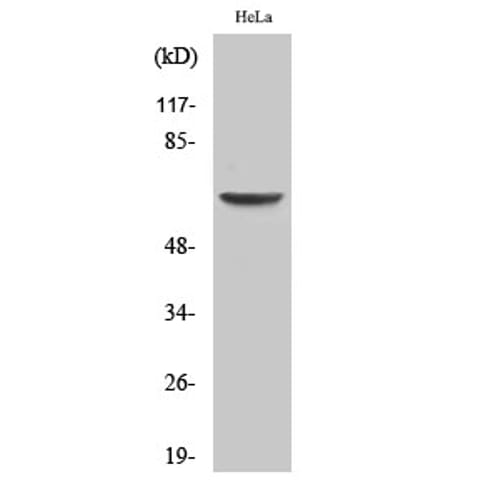
ITT1448
from
$424.00
Price in reward points: 424
- Catalog: ITT1448
- Gene/Protein: SLC1A3
- Product Description: Immunotag™ EAAT1 Polyclonal Antibody
-
Description
-
Specifications
Antibody Specification Datasheet 
IMPORTANT NOTE This product is custom manufactured with a lead time of 3-4 weeks. Once in production, this item cannot be cancelled from an order and is not eligible for return. Target Protein EAAT1 Clonality Polyclonal Storage/Stability -20°C/1 year Application WB,ELISA Recommended Dilution Western Blot: 1/500 - 1/2000. ELISA: 1/10000. Not yet tested in other applications. Concentration 1 mg/ml Reactive Species Human Host Species Rabbit Immunogen The antiserum was produced against synthesized peptide derived from human EAAT1. AA range:492-541 Specificity EAAT1 Polyclonal Antibody detects endogenous levels of EAAT1 protein. Purification The antibody was affinity-purified from rabbit antiserum by affinity-chromatography using epitope-specific immunogen Form Liquid in PBS containing 50% glycerol, 0.5% BSA and 0.02% sodium azide. Gene Name SLC1A3 Accession No. P43003 P56564 Alternate Names SLC1A3; EAAT1; GLAST; GLAST1; Excitatory amino acid transporter 1; Sodium-dependent glutamate/aspartate transporter 1; GLAST-1; Solute carrier family 1 member 3 Description solute carrier family 1 member 3(SLC1A3) Homo sapiens This gene encodes a member of a member of a high affinity glutamate transporter family. This gene functions in the termination of excitatory neurotransmission in central nervous system. Mutations are associated with episodic ataxia, Type 6. Alternative splicing results in multiple transcript variants.[provided by RefSeq, Feb 2014], Protein Expression Brain,Brain cortex,Cerebellum,Lung, Subcellular Localization plasma membrane,cell surface,membrane,integral component of membrane,neuron projection,neuronal cell body,fibril, Protein Function disease:Defects in SLC1A3 are the cause of episodic ataxia type 6 (EA6) [MIM:612656]. EA6 is characterized by episodic ataxia, seizures, migraine and alternating hemiplegia.,function:Transports L-glutamate and also L- and D-aspartate. Essential for terminating the postsynaptic action of glutamate by rapidly removing released glutamate from the synaptic cleft. Acts as a symport by cotransporting sodium.,PTM:Glycosylated.,similarity:Belongs to the sodium:dicarboxylate (SDF) symporter (TC 2.A.23) family.,tissue specificity:Highly expressed in cerebellum, but also found in frontal cortex, hippocampus and basal ganglia., Usage For Research Use Only! Not for diagnostic or therapeutic procedures. - Reviews
| Antibody Specification | |
| Datasheet | |
| IMPORTANT NOTE | This product is custom manufactured with a lead time of 3-4 weeks. Once in production, this item cannot be cancelled from an order and is not eligible for return. |
| Target Protein | EAAT1 |
| Clonality | Polyclonal |
| Storage/Stability | -20°C/1 year |
| Application | WB,ELISA |
| Recommended Dilution | Western Blot: 1/500 - 1/2000. ELISA: 1/10000. Not yet tested in other applications. |
| Concentration | 1 mg/ml |
| Reactive Species | Human |
| Host Species | Rabbit |
| Immunogen | The antiserum was produced against synthesized peptide derived from human EAAT1. AA range:492-541 |
| Specificity | EAAT1 Polyclonal Antibody detects endogenous levels of EAAT1 protein. |
| Purification | The antibody was affinity-purified from rabbit antiserum by affinity-chromatography using epitope-specific immunogen |
| Form | Liquid in PBS containing 50% glycerol, 0.5% BSA and 0.02% sodium azide. |
| Gene Name | SLC1A3 |
| Accession No. | P43003 P56564 |
| Alternate Names | SLC1A3; EAAT1; GLAST; GLAST1; Excitatory amino acid transporter 1; Sodium-dependent glutamate/aspartate transporter 1; GLAST-1; Solute carrier family 1 member 3 |
| Description | solute carrier family 1 member 3(SLC1A3) Homo sapiens This gene encodes a member of a member of a high affinity glutamate transporter family. This gene functions in the termination of excitatory neurotransmission in central nervous system. Mutations are associated with episodic ataxia, Type 6. Alternative splicing results in multiple transcript variants.[provided by RefSeq, Feb 2014], |
| Protein Expression | Brain,Brain cortex,Cerebellum,Lung, |
| Subcellular Localization | plasma membrane,cell surface,membrane,integral component of membrane,neuron projection,neuronal cell body,fibril, |
| Protein Function | disease:Defects in SLC1A3 are the cause of episodic ataxia type 6 (EA6) [MIM:612656]. EA6 is characterized by episodic ataxia, seizures, migraine and alternating hemiplegia.,function:Transports L-glutamate and also L- and D-aspartate. Essential for terminating the postsynaptic action of glutamate by rapidly removing released glutamate from the synaptic cleft. Acts as a symport by cotransporting sodium.,PTM:Glycosylated.,similarity:Belongs to the sodium:dicarboxylate (SDF) symporter (TC 2.A.23) family.,tissue specificity:Highly expressed in cerebellum, but also found in frontal cortex, hippocampus and basal ganglia., |
| Usage | For Research Use Only! Not for diagnostic or therapeutic procedures. |