

ITT1459
ITT1459
ITT1459
from
$424.00
Price in reward points: 424
- Catalog: ITT1459
- Gene/Protein: S1PR1
- Product Description: Immunotag™ EDG-1 Polyclonal Antibody
-
Description
-
Specifications
Antibody Specification Datasheet 
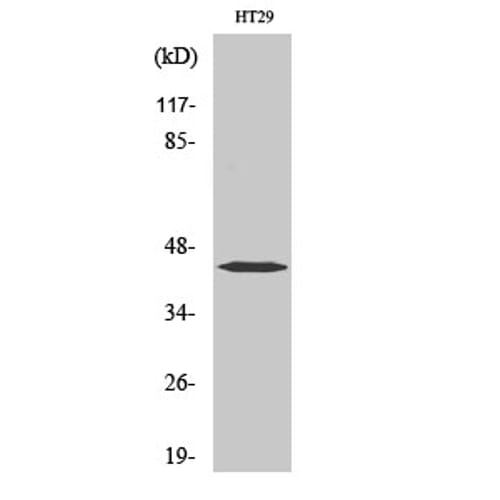
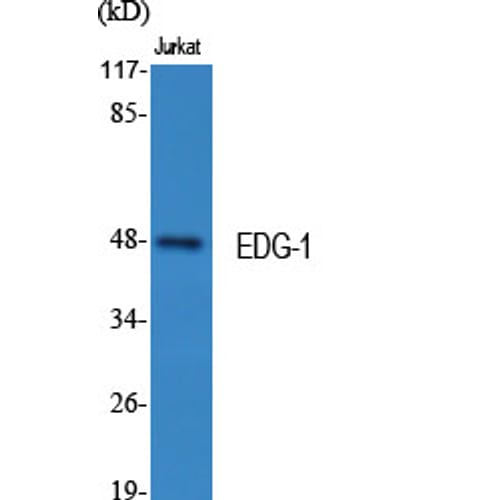
IMPORTANT NOTE This product is custom manufactured with a lead time of 3-4 weeks. Once in production, this item cannot be cancelled from an order and is not eligible for return. Target Protein EDG-1 Clonality Polyclonal Storage/Stability -20°C/1 year Application WB,IF,ELISA Recommended Dilution Western Blot: 1/500 - 1/2000. Immunofluorescence: 1/200 - 1/1000. ELISA: 1/5000. Not yet tested in other applications. Concentration 1 mg/ml Reactive Species Human,Mouse,Rat Host Species Rabbit Immunogen Synthesized peptide derived from EDG-1, at AA range: 180-260 Specificity EDG-1 Polyclonal Antibody detects endogenous levels of EDG-1 protein. Purification The antibody was affinity-purified from rabbit antiserum by affinity-chromatography using epitope-specific immunogen Form Liquid in PBS containing 50% glycerol, 0.5% BSA and 0.02% sodium azide. Gene Name S1PR1 Accession No. P21453 O08530 P48303 Alternate Names S1PR1; CHEDG1; EDG1; Sphingosine 1-phosphate receptor 1; S1P receptor 1; S1P1; Endothelial differentiation G-protein coupled receptor 1; Sphingosine 1-phosphate receptor Edg-1; S1P receptor Edg-1; CD antigen CD363 Description sphingosine-1-phosphate receptor 1(S1PR1) Homo sapiens The protein encoded by this gene is structurally similar to G protein-coupled receptors and is highly expressed in endothelial cells. It binds the ligand sphingosine-1-phosphate with high affinity and high specificity, and suggested to be involved in the processes that regulate the differentiation of endothelial cells. Activation of this receptor induces cell-cell adhesion. Alternative splicing results in multiple transcript variants. [provided by RefSeq, Mar 2016], Cell Pathway/ Category Neuroactive ligand-receptor interaction, Protein Expression Lung,Substantia nigra,Umbilical vein endothelial cell, Subcellular Localization endosome,plasma membrane,external side of plasma membrane,integral component of membrane,intrinsic component of plasma membrane,membrane raft, Protein Function function:Receptor for the lysosphingolipid sphingosine 1-phosphate (S1P). S1P is a bioactive lysophospholipid that elicits diverse physiological effect on most types of cells and tissues. This inducible epithelial cell G-protein-coupled receptor may be involved in the processes that regulate the differentiation of endothelial cells. Seems to be coupled to the G(i) subclass of heteromeric G proteins.,induction:By the tumor promoter phorbol 12-myristate 13-acetate (PME) in the presence of cycloheximide.,PTM:S1P-induced endothelial cell migration requires the PKB/AKT1-mediated phosphorylation of the third intracellular loop at the Thr-236 residue.,similarity:Belongs to the G-protein coupled receptor 1 family.,tissue specificity:Endothelial cells, and to a lesser extent, in vascular smooth muscle cells, fibroblasts, melanocytes, and cells of epithelioid origin., Usage For Research Use Only! Not for diagnostic or therapeutic procedures. - Reviews
| Antibody Specification | |
| Datasheet | |
| IMPORTANT NOTE | This product is custom manufactured with a lead time of 3-4 weeks. Once in production, this item cannot be cancelled from an order and is not eligible for return. |
| Target Protein | EDG-1 |
| Clonality | Polyclonal |
| Storage/Stability | -20°C/1 year |
| Application | WB,IF,ELISA |
| Recommended Dilution | Western Blot: 1/500 - 1/2000. Immunofluorescence: 1/200 - 1/1000. ELISA: 1/5000. Not yet tested in other applications. |
| Concentration | 1 mg/ml |
| Reactive Species | Human,Mouse,Rat |
| Host Species | Rabbit |
| Immunogen | Synthesized peptide derived from EDG-1, at AA range: 180-260 |
| Specificity | EDG-1 Polyclonal Antibody detects endogenous levels of EDG-1 protein. |
| Purification | The antibody was affinity-purified from rabbit antiserum by affinity-chromatography using epitope-specific immunogen |
| Form | Liquid in PBS containing 50% glycerol, 0.5% BSA and 0.02% sodium azide. |
| Gene Name | S1PR1 |
| Accession No. | P21453 O08530 P48303 |
| Alternate Names | S1PR1; CHEDG1; EDG1; Sphingosine 1-phosphate receptor 1; S1P receptor 1; S1P1; Endothelial differentiation G-protein coupled receptor 1; Sphingosine 1-phosphate receptor Edg-1; S1P receptor Edg-1; CD antigen CD363 |
| Description | sphingosine-1-phosphate receptor 1(S1PR1) Homo sapiens The protein encoded by this gene is structurally similar to G protein-coupled receptors and is highly expressed in endothelial cells. It binds the ligand sphingosine-1-phosphate with high affinity and high specificity, and suggested to be involved in the processes that regulate the differentiation of endothelial cells. Activation of this receptor induces cell-cell adhesion. Alternative splicing results in multiple transcript variants. [provided by RefSeq, Mar 2016], |
| Cell Pathway/ Category | Neuroactive ligand-receptor interaction, |
| Protein Expression | Lung,Substantia nigra,Umbilical vein endothelial cell, |
| Subcellular Localization | endosome,plasma membrane,external side of plasma membrane,integral component of membrane,intrinsic component of plasma membrane,membrane raft, |
| Protein Function | function:Receptor for the lysosphingolipid sphingosine 1-phosphate (S1P). S1P is a bioactive lysophospholipid that elicits diverse physiological effect on most types of cells and tissues. This inducible epithelial cell G-protein-coupled receptor may be involved in the processes that regulate the differentiation of endothelial cells. Seems to be coupled to the G(i) subclass of heteromeric G proteins.,induction:By the tumor promoter phorbol 12-myristate 13-acetate (PME) in the presence of cycloheximide.,PTM:S1P-induced endothelial cell migration requires the PKB/AKT1-mediated phosphorylation of the third intracellular loop at the Thr-236 residue.,similarity:Belongs to the G-protein coupled receptor 1 family.,tissue specificity:Endothelial cells, and to a lesser extent, in vascular smooth muscle cells, fibroblasts, melanocytes, and cells of epithelioid origin., |
| Usage | For Research Use Only! Not for diagnostic or therapeutic procedures. |