

ITT1651
ITT1651
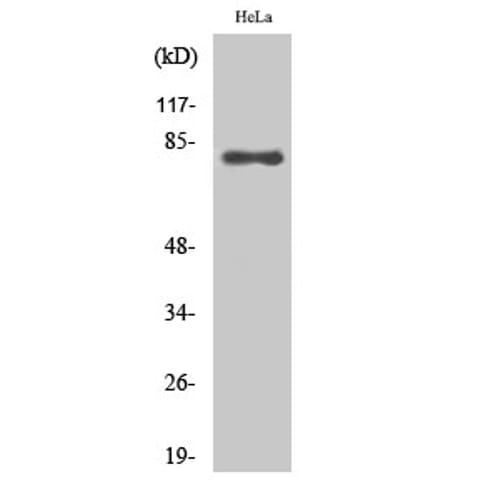
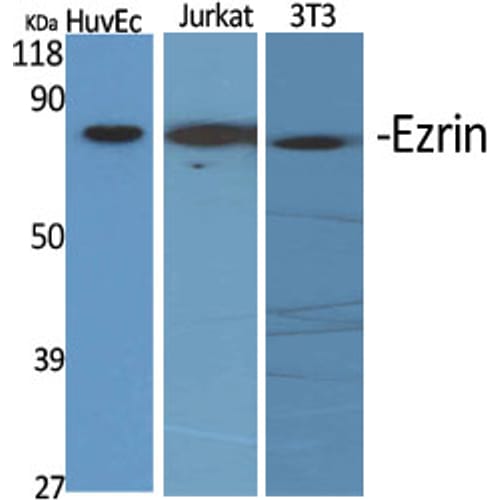
ITT1651
from
$424.00
Price in reward points: 424
- Catalog: ITT1651
- Gene/Protein: EZR
- Product Description: Immunotag™ Ezrin Polyclonal Antibody
-
Description
-
Specifications
Antibody Specification Datasheet 
IMPORTANT NOTE This product is custom manufactured with a lead time of 3-4 weeks. Once in production, this item cannot be cancelled from an order and is not eligible for return. Target Protein Ezrin Clonality Polyclonal Storage/Stability -20°C/1 year Application WB,IHC-p,ELISA Recommended Dilution Western Blot: 1/500 - 1/2000. Immunohistochemistry: 1/100 - 1/300. ELISA: 1/10000. Not yet tested in other applications. Concentration 1 mg/ml Reactive Species Human,Mouse,Rat Host Species Rabbit Immunogen Synthesized peptide derived from Ezrin, at AA range: 480-560 Specificity Ezrin Polyclonal Antibody detects endogenous levels of Ezrin protein. Purification The antibody was affinity-purified from rabbit antiserum by affinity-chromatography using epitope-specific immunogen Form Liquid in PBS containing 50% glycerol, 0.5% BSA and 0.02% sodium azide. Gene Name EZR Accession No. P15311 P26040 P31977 Alternate Names EZR; VIL2; Ezrin; Cytovillin; Villin-2; p81 Description ezrin(EZR) Homo sapiens The cytoplasmic peripheral membrane protein encoded by this gene functions as a protein-tyrosine kinase substrate in microvilli. As a member of the ERM protein family, this protein serves as an intermediate between the plasma membrane and the actin cytoskeleton. This protein plays a key role in cell surface structure adhesion, migration and organization, and it has been implicated in various human cancers. A pseudogene located on chromosome 3 has been identified for this gene. Alternatively spliced variants have also been described for this gene. [provided by RefSeq, Jul 2008], Cell Pathway/ Category Leukocyte transendothelial migration,Regulates Actin and Cytoskeleton,Pathogenic Escherichia coli infection, Protein Expression Brain,Colon,Epidermal carcinoma,Fetal brain cortex,Kidney,Melanoma,Ovary,Placenta, Subcellular Localization ruffle,immunological synapse,uropod,extracellular space,nucleolus,cytoplasm,endosome,cytosol,cytoskeleton,actin filament,plasma membrane,microvillus,brush border,cell-cell adherens junction,focal adhesion, Protein Function developmental stage:Very strong staining is detected in the Purkinje cell layer and in part of the molecular layer of the infant brain compared to adult brain.,function:Probably involved in connections of major cytoskeletal structures to the plasma membrane. In epithelial cells, required for the formation of microvilli and membrane ruffles on the apical pole. Along with PLEKHG6, required for normal macropinocytosis.,PTM:Phosphorylated by tyrosine-protein kinases.,similarity:Contains 1 FERM domain.,subcellular location:Localization to the apical membrane of parietal cells depends on the interaction with MPP5. Localizes to cell extensions and peripheral processes of astrocytes (By similarity). Microvillar peripheral membrane protein (cytoplasmic side).,subunit:Interacts with MPP5 (By similarity). Interacts with SLC9A3R1 and SCYL3/PACE1. Interacts with PLEKHG6. Interacts with NGX6.,tissue specificity:Expressed in cerebral cortex, basal ganglia, hippocampus, hypophysis, and optic nerve. Weakly expressed in brain stem and diencephalon. Stronger expression was detected in gray matter of frontal lobe compared to white matter (at protein level). Component of the microvilli of intestinal epithelial cells. Preferentially expressed in astrocytes of hippocampus, frontal cortex, thalamus, parahippocampal cortex, amygdala, insula, and corpus callosum. Not detected in neurons in most tissues studied., Usage For Research Use Only! Not for diagnostic or therapeutic procedures. - Reviews
| Antibody Specification | |
| Datasheet | |
| IMPORTANT NOTE | This product is custom manufactured with a lead time of 3-4 weeks. Once in production, this item cannot be cancelled from an order and is not eligible for return. |
| Target Protein | Ezrin |
| Clonality | Polyclonal |
| Storage/Stability | -20°C/1 year |
| Application | WB,IHC-p,ELISA |
| Recommended Dilution | Western Blot: 1/500 - 1/2000. Immunohistochemistry: 1/100 - 1/300. ELISA: 1/10000. Not yet tested in other applications. |
| Concentration | 1 mg/ml |
| Reactive Species | Human,Mouse,Rat |
| Host Species | Rabbit |
| Immunogen | Synthesized peptide derived from Ezrin, at AA range: 480-560 |
| Specificity | Ezrin Polyclonal Antibody detects endogenous levels of Ezrin protein. |
| Purification | The antibody was affinity-purified from rabbit antiserum by affinity-chromatography using epitope-specific immunogen |
| Form | Liquid in PBS containing 50% glycerol, 0.5% BSA and 0.02% sodium azide. |
| Gene Name | EZR |
| Accession No. | P15311 P26040 P31977 |
| Alternate Names | EZR; VIL2; Ezrin; Cytovillin; Villin-2; p81 |
| Description | ezrin(EZR) Homo sapiens The cytoplasmic peripheral membrane protein encoded by this gene functions as a protein-tyrosine kinase substrate in microvilli. As a member of the ERM protein family, this protein serves as an intermediate between the plasma membrane and the actin cytoskeleton. This protein plays a key role in cell surface structure adhesion, migration and organization, and it has been implicated in various human cancers. A pseudogene located on chromosome 3 has been identified for this gene. Alternatively spliced variants have also been described for this gene. [provided by RefSeq, Jul 2008], |
| Cell Pathway/ Category | Leukocyte transendothelial migration,Regulates Actin and Cytoskeleton,Pathogenic Escherichia coli infection, |
| Protein Expression | Brain,Colon,Epidermal carcinoma,Fetal brain cortex,Kidney,Melanoma,Ovary,Placenta, |
| Subcellular Localization | ruffle,immunological synapse,uropod,extracellular space,nucleolus,cytoplasm,endosome,cytosol,cytoskeleton,actin filament,plasma membrane,microvillus,brush border,cell-cell adherens junction,focal adhesion, |
| Protein Function | developmental stage:Very strong staining is detected in the Purkinje cell layer and in part of the molecular layer of the infant brain compared to adult brain.,function:Probably involved in connections of major cytoskeletal structures to the plasma membrane. In epithelial cells, required for the formation of microvilli and membrane ruffles on the apical pole. Along with PLEKHG6, required for normal macropinocytosis.,PTM:Phosphorylated by tyrosine-protein kinases.,similarity:Contains 1 FERM domain.,subcellular location:Localization to the apical membrane of parietal cells depends on the interaction with MPP5. Localizes to cell extensions and peripheral processes of astrocytes (By similarity). Microvillar peripheral membrane protein (cytoplasmic side).,subunit:Interacts with MPP5 (By similarity). Interacts with SLC9A3R1 and SCYL3/PACE1. Interacts with PLEKHG6. Interacts with NGX6.,tissue specificity:Expressed in cerebral cortex, basal ganglia, hippocampus, hypophysis, and optic nerve. Weakly expressed in brain stem and diencephalon. Stronger expression was detected in gray matter of frontal lobe compared to white matter (at protein level). Component of the microvilli of intestinal epithelial cells. Preferentially expressed in astrocytes of hippocampus, frontal cortex, thalamus, parahippocampal cortex, amygdala, insula, and corpus callosum. Not detected in neurons in most tissues studied., |
| Usage | For Research Use Only! Not for diagnostic or therapeutic procedures. |