

ITT2246
ITT2246
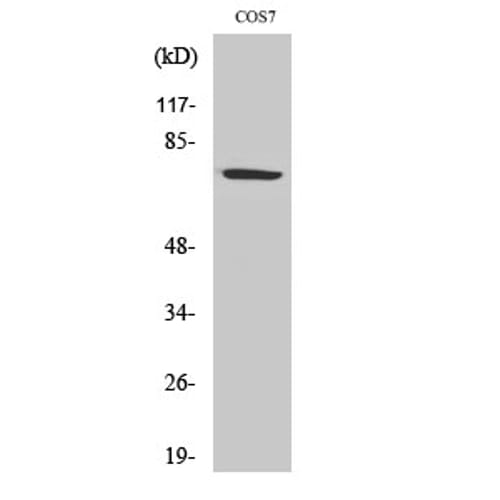
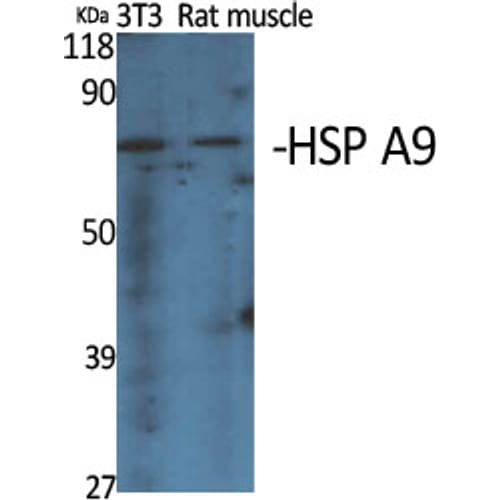
ITT2246
from
$424.00
Price in reward points: 424
- Catalog: ITT2246
- Gene/Protein: HSPA9
- Product Description: Immunotag™ HSP A9 Polyclonal Antibody
-
Description
-
Specifications
Antibody Specification Datasheet 
IMPORTANT NOTE This product is custom manufactured with a lead time of 3-4 weeks. Once in production, this item cannot be cancelled from an order and is not eligible for return. Target Protein HSPA9 Clonality Polyclonal Storage/Stability -20°C/1 year Application WB,IHC-p,IF,ELISA Recommended Dilution Western Blot: 1/500 - 1/2000. Immunohistochemistry: 1/100 - 1/300. Immunofluorescence: 1/200 - 1/1000. ELISA: 1/40000. Not yet tested in other applications. Concentration 1 mg/ml Reactive Species Human,Mouse,Rat,Monkey Host Species Rabbit Immunogen Synthesized peptide derived from HSP A9, at AA range: 600-680 Specificity HSP A9 Polyclonal Antibody detects endogenous levels of HSP A9 protein. Purification The antibody was affinity-purified from rabbit antiserum by affinity-chromatography using epitope-specific immunogen Form Liquid in PBS containing 50% glycerol, 0.5% BSA and 0.02% sodium azide. Gene Name HSPA9 Accession No. P38646/Q8N1C8 P48721 Alternate Names HSPA9; GRP75; HSPA9B; Stress-70 protein; mitochondrial; 75 kDa glucose-regulated protein; GRP-75; Heat shock 70 kDa protein 9; Mortalin; MOT; Peptide-binding protein 74; PBP74 Description heat shock protein family A (Hsp70) member 9(HSPA9) Homo sapiens This gene encodes a member of the heat shock protein 70 gene family. The encoded protein is primarily localized to the mitochondria but is also found in the endoplasmic reticulum, plasma membrane and cytoplasmic vesicles. This protein is a heat-shock cognate protein. This protein plays a role in cell proliferation, stress response and maintenance of the mitochondria. A pseudogene of this gene is found on chromosome 2.[provided by RefSeq, May 2010], Cell Pathway/ Category RNA degradation, Protein Expression B-cell,Brain,Cajal-Retzius cell,Colon carcinoma,Fetal brain Subcellular Localization nucleolus,cytoplasm,mitochondrion,focal adhesion,extracellular matrix,mitochondrial nucleoid,myelin sheath,extracellular exosome, Protein Function function:Implicated in the control of cell proliferation and cellular aging. May also act as a chaperone.,PTM:Phosphorylated upon DNA damage, probably by ATM or ATR.,similarity:Belongs to the heat shock protein 70 family.,subunit:Interacts with FXN., Usage For Research Use Only! Not for diagnostic or therapeutic procedures. - Reviews
| Antibody Specification | |
| Datasheet | |
| IMPORTANT NOTE | This product is custom manufactured with a lead time of 3-4 weeks. Once in production, this item cannot be cancelled from an order and is not eligible for return. |
| Target Protein | HSPA9 |
| Clonality | Polyclonal |
| Storage/Stability | -20°C/1 year |
| Application | WB,IHC-p,IF,ELISA |
| Recommended Dilution | Western Blot: 1/500 - 1/2000. Immunohistochemistry: 1/100 - 1/300. Immunofluorescence: 1/200 - 1/1000. ELISA: 1/40000. Not yet tested in other applications. |
| Concentration | 1 mg/ml |
| Reactive Species | Human,Mouse,Rat,Monkey |
| Host Species | Rabbit |
| Immunogen | Synthesized peptide derived from HSP A9, at AA range: 600-680 |
| Specificity | HSP A9 Polyclonal Antibody detects endogenous levels of HSP A9 protein. |
| Purification | The antibody was affinity-purified from rabbit antiserum by affinity-chromatography using epitope-specific immunogen |
| Form | Liquid in PBS containing 50% glycerol, 0.5% BSA and 0.02% sodium azide. |
| Gene Name | HSPA9 |
| Accession No. | P38646/Q8N1C8 P48721 |
| Alternate Names | HSPA9; GRP75; HSPA9B; Stress-70 protein; mitochondrial; 75 kDa glucose-regulated protein; GRP-75; Heat shock 70 kDa protein 9; Mortalin; MOT; Peptide-binding protein 74; PBP74 |
| Description | heat shock protein family A (Hsp70) member 9(HSPA9) Homo sapiens This gene encodes a member of the heat shock protein 70 gene family. The encoded protein is primarily localized to the mitochondria but is also found in the endoplasmic reticulum, plasma membrane and cytoplasmic vesicles. This protein is a heat-shock cognate protein. This protein plays a role in cell proliferation, stress response and maintenance of the mitochondria. A pseudogene of this gene is found on chromosome 2.[provided by RefSeq, May 2010], |
| Cell Pathway/ Category | RNA degradation, |
| Protein Expression | B-cell,Brain,Cajal-Retzius cell,Colon carcinoma,Fetal brain |
| Subcellular Localization | nucleolus,cytoplasm,mitochondrion,focal adhesion,extracellular matrix,mitochondrial nucleoid,myelin sheath,extracellular exosome, |
| Protein Function | function:Implicated in the control of cell proliferation and cellular aging. May also act as a chaperone.,PTM:Phosphorylated upon DNA damage, probably by ATM or ATR.,similarity:Belongs to the heat shock protein 70 family.,subunit:Interacts with FXN., |
| Usage | For Research Use Only! Not for diagnostic or therapeutic procedures. |