

ITT2257
ITT2257
ITT2257
from
$424.00
Price in reward points: 424
- Catalog: ITT2257
- Gene/Protein: HSP90AA1
- Product Description: Immunotag™ HSP90A Polyclonal Antibody
-
Description
-
Specifications
Antibody Specification Datasheet 
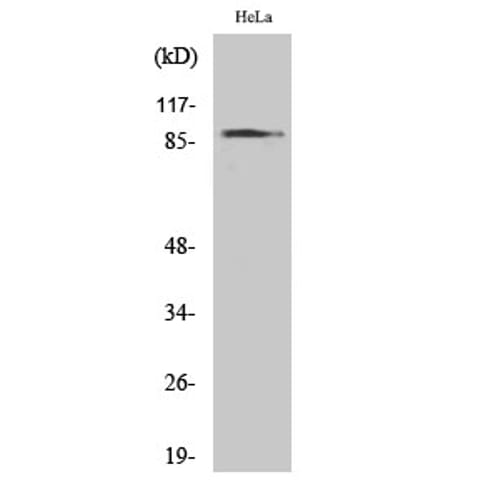
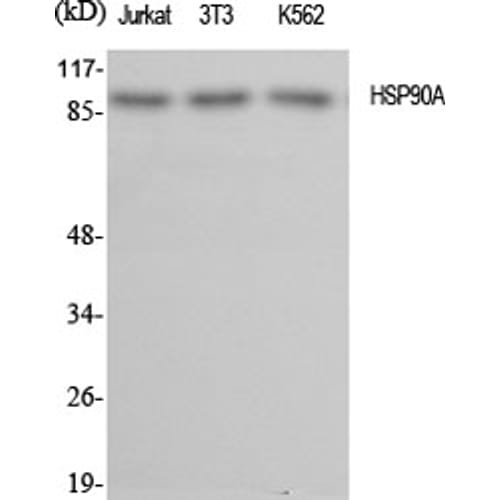
IMPORTANT NOTE This product is custom manufactured with a lead time of 3-4 weeks. Once in production, this item cannot be cancelled from an order and is not eligible for return. Target Protein HSP9000A Clonality Polyclonal Storage/Stability -20°C/1 year Application WB,IHC-p,IF,ELISA Recommended Dilution Western Blot: 1/500 - 1/2000. Immunohistochemistry: 1/100 - 1/300. Immunofluorescence: 1/200 - 1/1000. ELISA: 1/40000. Not yet tested in other applications. Concentration 1 mg/ml Reactive Species Human,Mouse,Rat Host Species Rabbit Immunogen Synthesized peptide derived from HSP90A, at AA range: 660-740 Specificity HSP90A Polyclonal Antibody detects endogenous levels of HSP90A protein. Purification The antibody was affinity-purified from rabbit antiserum by affinity-chromatography using epitope-specific immunogen Form Liquid in PBS containing 50% glycerol, 0.5% BSA and 0.02% sodium azide. Gene Name HSP90AA1 Accession No. P07900 P07901 P82995 Alternate Names HSP90AA1; HSP90A; HSPC1; HSPCA; Heat shock protein HSP 90-alpha; Heat shock 86 kDa; HSP 86; HSP86; Renal carcinoma antigen NY-REN-38 Description heat shock protein 90 alpha family class A member 1(HSP90AA1) Homo sapiens The protein encoded by this gene is an inducible molecular chaperone that functions as a homodimer. The encoded protein aids in the proper folding of specific target proteins by use of an ATPase activity that is modulated by co-chaperones. Two transcript variants encoding different isoforms have been found for this gene. [provided by RefSeq, Jan 2012], Cell Pathway/ Category PI3K/Akt, Protein_Acetylation Protein Expression Adult brain,Brain,Brain cortex,Breast,Cajal-Retzius Subcellular Localization extracellular region,nucleus,nucleoplasm,cytoplasm,cytosol,plasma membrane,cell surface,membrane,basolateral plasma membrane,apical plasma membrane,extracellular matrix,brush border membrane, Protein Function caution:Despite classification as a pseudogene, the existence of this protein is supported by unambiguous mass spectrometry evidence.,function:Molecular chaperone.,function:Molecular chaperone. Has ATPase activity.,similarity:Belongs to the heat shock protein 90 family.,subcellular location:Identified by mass spectrometry in melanosome fractions from stage I to stage IV.,subunit:Homodimer. Interacts with AHSA1, SMYD3 and TOM34. Interacts with FNIP1 and HSF1., Usage For Research Use Only! Not for diagnostic or therapeutic procedures. - Reviews
| Antibody Specification | |
| Datasheet | |
| IMPORTANT NOTE | This product is custom manufactured with a lead time of 3-4 weeks. Once in production, this item cannot be cancelled from an order and is not eligible for return. |
| Target Protein | HSP9000A |
| Clonality | Polyclonal |
| Storage/Stability | -20°C/1 year |
| Application | WB,IHC-p,IF,ELISA |
| Recommended Dilution | Western Blot: 1/500 - 1/2000. Immunohistochemistry: 1/100 - 1/300. Immunofluorescence: 1/200 - 1/1000. ELISA: 1/40000. Not yet tested in other applications. |
| Concentration | 1 mg/ml |
| Reactive Species | Human,Mouse,Rat |
| Host Species | Rabbit |
| Immunogen | Synthesized peptide derived from HSP90A, at AA range: 660-740 |
| Specificity | HSP90A Polyclonal Antibody detects endogenous levels of HSP90A protein. |
| Purification | The antibody was affinity-purified from rabbit antiserum by affinity-chromatography using epitope-specific immunogen |
| Form | Liquid in PBS containing 50% glycerol, 0.5% BSA and 0.02% sodium azide. |
| Gene Name | HSP90AA1 |
| Accession No. | P07900 P07901 P82995 |
| Alternate Names | HSP90AA1; HSP90A; HSPC1; HSPCA; Heat shock protein HSP 90-alpha; Heat shock 86 kDa; HSP 86; HSP86; Renal carcinoma antigen NY-REN-38 |
| Description | heat shock protein 90 alpha family class A member 1(HSP90AA1) Homo sapiens The protein encoded by this gene is an inducible molecular chaperone that functions as a homodimer. The encoded protein aids in the proper folding of specific target proteins by use of an ATPase activity that is modulated by co-chaperones. Two transcript variants encoding different isoforms have been found for this gene. [provided by RefSeq, Jan 2012], |
| Cell Pathway/ Category | PI3K/Akt, Protein_Acetylation |
| Protein Expression | Adult brain,Brain,Brain cortex,Breast,Cajal-Retzius |
| Subcellular Localization | extracellular region,nucleus,nucleoplasm,cytoplasm,cytosol,plasma membrane,cell surface,membrane,basolateral plasma membrane,apical plasma membrane,extracellular matrix,brush border membrane, |
| Protein Function | caution:Despite classification as a pseudogene, the existence of this protein is supported by unambiguous mass spectrometry evidence.,function:Molecular chaperone.,function:Molecular chaperone. Has ATPase activity.,similarity:Belongs to the heat shock protein 90 family.,subcellular location:Identified by mass spectrometry in melanosome fractions from stage I to stage IV.,subunit:Homodimer. Interacts with AHSA1, SMYD3 and TOM34. Interacts with FNIP1 and HSF1., |
| Usage | For Research Use Only! Not for diagnostic or therapeutic procedures. |