

ITT2421
ITT2421
ITT2421
from
$424.00
Price in reward points: 424
- Catalog: ITT2421
- Gene/Protein: NFKBIB
- Product Description: Immunotag™ IκB-β Polyclonal Antibody
-
Description
-
Specifications
Antibody Specification Datasheet 
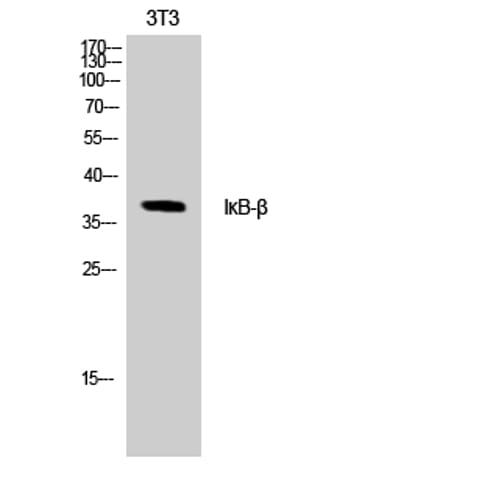
IMPORTANT NOTE This product is custom manufactured with a lead time of 3-4 weeks. Once in production, this item cannot be cancelled from an order and is not eligible for return. Target Protein IκB-β Clonality Polyclonal Storage/Stability -20°C/1 year Application WB,ELISA Recommended Dilution Western Blot: 1/500 - 1/2000. ELISA: 1/5000. Not yet tested in other applications. Concentration 1 mg/ml Reactive Species Human,Mouse Host Species Rabbit Immunogen The antiserum was produced against synthesized peptide derived from human IkappaB-beta. AA range:4-53 Specificity IκB-β Polyclonal Antibody detects endogenous levels of IκB-β protein. Purification The antibody was affinity-purified from rabbit antiserum by affinity-chromatography using epitope-specific immunogen Form Liquid in PBS containing 50% glycerol, 0.5% BSA and 0.02% sodium azide. Gene Name NFKBIB Accession No. Q15653 Q60778 Alternate Names NFKBIB; IKBB; TRIP9; NF-kappa-B inhibitor beta; NF-kappa-BIB; I-kappa-B-beta; IkB-B; IkB-beta; IkappaBbeta; Thyroid receptor-interacting protein 9; TR-interacting protein 9; TRIP-9 Description NFKB inhibitor beta(NFKBIB) Homo sapiens The protein encoded by this gene belongs to the NF-kappa-B inhibitor family, which inhibit NF-kappa-B by complexing with, and trapping it in the cytoplasm. Phosphorylation of serine residues on these proteins by kinases marks them for destruction via the ubiquitination pathway, thereby allowing activation of the NF-kappa-B, which translocates to the nucleus to function as a transcription factor. Alternatively spliced transcript variants have been found for this gene.[provided by RefSeq, Jul 2011], Cell Pathway/ Category Chemokine,NOD-like receptor,RIG-I-like receptor,Cytosolic DNA-sensing pathway,T_Cell_Receptor,B_Cell_Antigen,Neurotrophin,Adipocytokine, Protein Expression Brain,Cervix carcinoma,Pancreas,Uterus, Subcellular Localization nucleus,cytosol, Protein Function function:Inhibits NF-kappa-B by complexing with and trapping it in the cytoplasm. However, the unphosphorylated form resynthesized after cell stimulation is able to bind NF-kappa-B allowing its transport to the nucleus and protecting it to further IKBA-dependent inactivation. Association with inhibitor kappa B-interacting NKIRAS1 and NKIRAS2 prevent its phosphorylation rendering it more resistant to degradation, explaining its slower degradation.,PTM:Phosphorylated; followed by degradation. Interaction with NKIRAS1 and NKIRAS2 probably prevents phosphorylation.,similarity:Belongs to the NF-kappa-B inhibitor family.,similarity:Contains 6 ANK repeats.,subunit:Interacts with THRB (via ligand-binding domain). Interacts with RELA and REL. Interacts with COMMD1 and inhibitor kappa B-interacting Ras-like NKIRAS1 and NKIRAS2.,tissue specificity:Expressed in all tissues examined., Usage For Research Use Only! Not for diagnostic or therapeutic procedures. - Reviews
| Antibody Specification | |
| Datasheet | |
| IMPORTANT NOTE | This product is custom manufactured with a lead time of 3-4 weeks. Once in production, this item cannot be cancelled from an order and is not eligible for return. |
| Target Protein | IκB-β |
| Clonality | Polyclonal |
| Storage/Stability | -20°C/1 year |
| Application | WB,ELISA |
| Recommended Dilution | Western Blot: 1/500 - 1/2000. ELISA: 1/5000. Not yet tested in other applications. |
| Concentration | 1 mg/ml |
| Reactive Species | Human,Mouse |
| Host Species | Rabbit |
| Immunogen | The antiserum was produced against synthesized peptide derived from human IkappaB-beta. AA range:4-53 |
| Specificity | IκB-β Polyclonal Antibody detects endogenous levels of IκB-β protein. |
| Purification | The antibody was affinity-purified from rabbit antiserum by affinity-chromatography using epitope-specific immunogen |
| Form | Liquid in PBS containing 50% glycerol, 0.5% BSA and 0.02% sodium azide. |
| Gene Name | NFKBIB |
| Accession No. | Q15653 Q60778 |
| Alternate Names | NFKBIB; IKBB; TRIP9; NF-kappa-B inhibitor beta; NF-kappa-BIB; I-kappa-B-beta; IkB-B; IkB-beta; IkappaBbeta; Thyroid receptor-interacting protein 9; TR-interacting protein 9; TRIP-9 |
| Description | NFKB inhibitor beta(NFKBIB) Homo sapiens The protein encoded by this gene belongs to the NF-kappa-B inhibitor family, which inhibit NF-kappa-B by complexing with, and trapping it in the cytoplasm. Phosphorylation of serine residues on these proteins by kinases marks them for destruction via the ubiquitination pathway, thereby allowing activation of the NF-kappa-B, which translocates to the nucleus to function as a transcription factor. Alternatively spliced transcript variants have been found for this gene.[provided by RefSeq, Jul 2011], |
| Cell Pathway/ Category | Chemokine,NOD-like receptor,RIG-I-like receptor,Cytosolic DNA-sensing pathway,T_Cell_Receptor,B_Cell_Antigen,Neurotrophin,Adipocytokine, |
| Protein Expression | Brain,Cervix carcinoma,Pancreas,Uterus, |
| Subcellular Localization | nucleus,cytosol, |
| Protein Function | function:Inhibits NF-kappa-B by complexing with and trapping it in the cytoplasm. However, the unphosphorylated form resynthesized after cell stimulation is able to bind NF-kappa-B allowing its transport to the nucleus and protecting it to further IKBA-dependent inactivation. Association with inhibitor kappa B-interacting NKIRAS1 and NKIRAS2 prevent its phosphorylation rendering it more resistant to degradation, explaining its slower degradation.,PTM:Phosphorylated; followed by degradation. Interaction with NKIRAS1 and NKIRAS2 probably prevents phosphorylation.,similarity:Belongs to the NF-kappa-B inhibitor family.,similarity:Contains 6 ANK repeats.,subunit:Interacts with THRB (via ligand-binding domain). Interacts with RELA and REL. Interacts with COMMD1 and inhibitor kappa B-interacting Ras-like NKIRAS1 and NKIRAS2.,tissue specificity:Expressed in all tissues examined., |
| Usage | For Research Use Only! Not for diagnostic or therapeutic procedures. |