

ITT2505
ITT2505
ITT2505
from
$424.00
Price in reward points: 424
- Catalog: ITT2505
- Gene/Protein: KCNA1
- Product Description: Immunotag™ KV1.1 Polyclonal Antibody
-
Description
-
Specifications
Antibody Specification Datasheet 
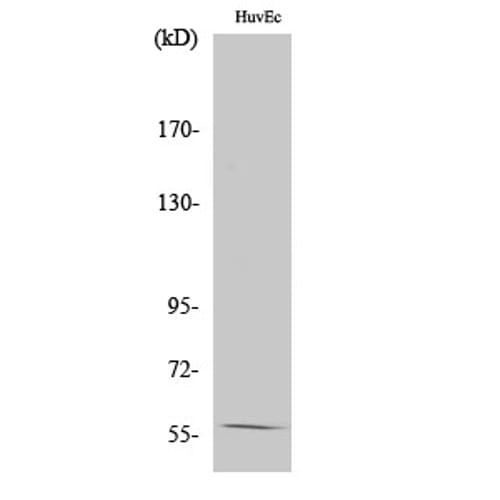
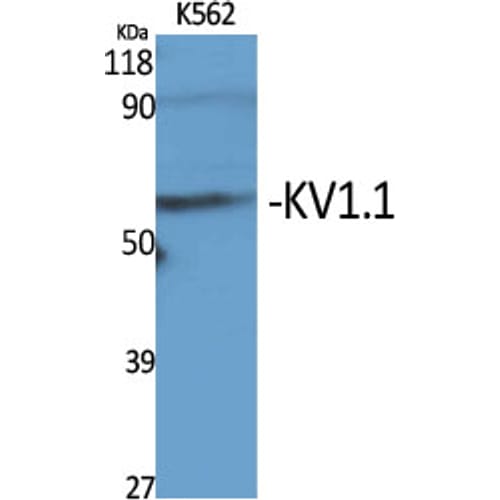
IMPORTANT NOTE This product is custom manufactured with a lead time of 3-4 weeks. Once in production, this item cannot be cancelled from an order and is not eligible for return. Target Protein KV1.1 Clonality Polyclonal Storage/Stability -20°C/1 year Application WB,ELISA Recommended Dilution Western Blot: 1/500 - 1/2000. ELISA: 1/10000. Not yet tested in other applications. Concentration 1 mg/ml Reactive Species Human,Mouse,Rat Host Species Rabbit Immunogen Synthesized peptide derived from KV11, at AA range: 230-310 Specificity KV1.1 Polyclonal Antibody detects endogenous levels of KV1.1 protein. Purification The antibody was affinity-purified from rabbit antiserum by affinity-chromatography using epitope-specific immunogen Form Liquid in PBS containing 50% glycerol, 0.5% BSA and 0.02% sodium azide. Gene Name KCNA1 Accession No. Q09470 P16388 P10499 Alternate Names KCNA1; Potassium voltage-gated channel subfamily A member 1; Voltage-gated K(+) channel HuKI; Voltage-gated potassium channel HBK1; Voltage-gated potassium channel subunit Kv1.1 Description potassium voltage-gated channel subfamily A member 1(KCNA1) Homo sapiens This gene encodes a voltage-gated delayed potassium channel that is phylogenetically related to the Drosophila Shaker channel. The encoded protein has six putative transmembrane segments (S1-S6), and the loop between S5 and S6 forms the pore and contains the conserved selectivity filter motif (GYGD). The functional channel is a homotetramer. The N-terminus of the channel is associated with beta subunits that can modify the inactivation properties of the channel as well as affect expression levels. The C-terminus of the channel is complexed to a PDZ domain protein that is responsible for channel targeting. Mutations in this gene have been associated with myokymia with periodic ataxia (AEMK). [provided by RefSeq, Jul 2008], Protein Expression Brain,Brain cortex, Subcellular Localization endoplasmic reticulum,cytosol,plasma membrane,integral component of plasma membrane,voltage-gated potassium channel complex,cell surface,cytoplasmic, membrane-bounded vesicle,apical plasma membrane,cell junction,dendri Protein Function disease:Defects in KCNA1 are the cause of episodic ataxia type 1 (EA1) [MIM:160120]; also known as paroxysmal or episodic ataxia with myokymia (EAM) or paroxysmal ataxia with neuromyotonia. EA1 is an autosomal dominant disorder characterized by brief episodes of ataxia and dysarthria. Neurological examination during and between the attacks demonstrates spontaneous, repetitive discharges in the distal musculature (myokymia) that arise from peripheral nerve. Nystagmus is absent.,disease:Defects in KCNA1 are the cause of myokymia isolated type 1 (MK1) [MIM:160120]. Myokymia is a condition characterized by spontaneous involuntary contraction of muscle fiber groups that can be observed as vermiform movement of the overlying skin. Electromyography typically shows continuous motor unit activity with spontaneous oligo- and multiplet-discharges of high intraburst frequency (myokymic discharges). Isolated spontaneous muscle twitches occur in many persons and have no grave significance.,domain:The N-terminus may be important in determining the rate of inactivation of the channel while the tail may play a role in modulation of channel activity and/or targeting of the channel to specific subcellular compartments.,domain:The segment S4 is probably the voltage-sensor and is characterized by a series of positively charged amino acids at every third position.,function:Mediates the voltage-dependent potassium ion permeability of excitable membranes. Assuming opened or closed conformations in response to the voltage difference across the membrane, the protein forms a potassium-selective channel through which potassium ions may pass in accordance with their electrochemical gradient.,PTM:Palmitoylated on Cys-243; which may be required for membrane targeting.,RNA editing:Partially edited. RNA editing varies from 17% in the caudate nucleus to 68% in the spinal cord and to 77% in the medulla.,similarity:Belongs to the potassium channel family. A (Shaker) subfamily.,subunit:Heterotetramer of potassium channel proteins. Binds KCNAB2 and PDZ domains of DLG1, DLG2 and DLG4., Usage For Research Use Only! Not for diagnostic or therapeutic procedures. - Reviews
| Antibody Specification | |
| Datasheet | |
| IMPORTANT NOTE | This product is custom manufactured with a lead time of 3-4 weeks. Once in production, this item cannot be cancelled from an order and is not eligible for return. |
| Target Protein | KV1.1 |
| Clonality | Polyclonal |
| Storage/Stability | -20°C/1 year |
| Application | WB,ELISA |
| Recommended Dilution | Western Blot: 1/500 - 1/2000. ELISA: 1/10000. Not yet tested in other applications. |
| Concentration | 1 mg/ml |
| Reactive Species | Human,Mouse,Rat |
| Host Species | Rabbit |
| Immunogen | Synthesized peptide derived from KV11, at AA range: 230-310 |
| Specificity | KV1.1 Polyclonal Antibody detects endogenous levels of KV1.1 protein. |
| Purification | The antibody was affinity-purified from rabbit antiserum by affinity-chromatography using epitope-specific immunogen |
| Form | Liquid in PBS containing 50% glycerol, 0.5% BSA and 0.02% sodium azide. |
| Gene Name | KCNA1 |
| Accession No. | Q09470 P16388 P10499 |
| Alternate Names | KCNA1; Potassium voltage-gated channel subfamily A member 1; Voltage-gated K(+) channel HuKI; Voltage-gated potassium channel HBK1; Voltage-gated potassium channel subunit Kv1.1 |
| Description | potassium voltage-gated channel subfamily A member 1(KCNA1) Homo sapiens This gene encodes a voltage-gated delayed potassium channel that is phylogenetically related to the Drosophila Shaker channel. The encoded protein has six putative transmembrane segments (S1-S6), and the loop between S5 and S6 forms the pore and contains the conserved selectivity filter motif (GYGD). The functional channel is a homotetramer. The N-terminus of the channel is associated with beta subunits that can modify the inactivation properties of the channel as well as affect expression levels. The C-terminus of the channel is complexed to a PDZ domain protein that is responsible for channel targeting. Mutations in this gene have been associated with myokymia with periodic ataxia (AEMK). [provided by RefSeq, Jul 2008], |
| Protein Expression | Brain,Brain cortex, |
| Subcellular Localization | endoplasmic reticulum,cytosol,plasma membrane,integral component of plasma membrane,voltage-gated potassium channel complex,cell surface,cytoplasmic, membrane-bounded vesicle,apical plasma membrane,cell junction,dendri |
| Protein Function | disease:Defects in KCNA1 are the cause of episodic ataxia type 1 (EA1) [MIM:160120]; also known as paroxysmal or episodic ataxia with myokymia (EAM) or paroxysmal ataxia with neuromyotonia. EA1 is an autosomal dominant disorder characterized by brief episodes of ataxia and dysarthria. Neurological examination during and between the attacks demonstrates spontaneous, repetitive discharges in the distal musculature (myokymia) that arise from peripheral nerve. Nystagmus is absent.,disease:Defects in KCNA1 are the cause of myokymia isolated type 1 (MK1) [MIM:160120]. Myokymia is a condition characterized by spontaneous involuntary contraction of muscle fiber groups that can be observed as vermiform movement of the overlying skin. Electromyography typically shows continuous motor unit activity with spontaneous oligo- and multiplet-discharges of high intraburst frequency (myokymic discharges). Isolated spontaneous muscle twitches occur in many persons and have no grave significance.,domain:The N-terminus may be important in determining the rate of inactivation of the channel while the tail may play a role in modulation of channel activity and/or targeting of the channel to specific subcellular compartments.,domain:The segment S4 is probably the voltage-sensor and is characterized by a series of positively charged amino acids at every third position.,function:Mediates the voltage-dependent potassium ion permeability of excitable membranes. Assuming opened or closed conformations in response to the voltage difference across the membrane, the protein forms a potassium-selective channel through which potassium ions may pass in accordance with their electrochemical gradient.,PTM:Palmitoylated on Cys-243; which may be required for membrane targeting.,RNA editing:Partially edited. RNA editing varies from 17% in the caudate nucleus to 68% in the spinal cord and to 77% in the medulla.,similarity:Belongs to the potassium channel family. A (Shaker) subfamily.,subunit:Heterotetramer of potassium channel proteins. Binds KCNAB2 and PDZ domains of DLG1, DLG2 and DLG4., |
| Usage | For Research Use Only! Not for diagnostic or therapeutic procedures. |